The Complete Guide to Going Blonde: Which Blonde Shade Works for Your Skin Tone
The Blonde Paradox: Why the Same Shade Looks Different on Everyone
You've seen the photos. A celebrity walks the red carpet in luminous platinum blonde, and you think: I want that. You show the picture to your colorist, sit through three hours of processing, and walk out looking... tired. Sallow. Maybe even a little orange.
I've been there. And after years of studying how hair color interacts with skin, I've found that the problem almost never comes down to "blonde doesn't suit you." It comes down to choosing the wrong blonde for your specific undertone and color season. The difference between honey and ash is not a matter of preference — it's the difference between glowing and washed out.
In this guide, I'll walk you through exactly how to match a blonde shade to your skin tone, undertone, and color season — so you can walk into the salon (or your bathroom) with confidence instead of Pinterest-fueled hope.
Here's what you'll learn:
- Why blonde is uniquely tricky compared to other hair colors
- How your skin undertone determines whether warm, cool, or neutral blondes flatter you
- The best blonde shades for all 12 color seasons
- Practical salon and at-home tips to avoid brassiness, damage, and regret
- How modern AI tools can preview blonde shades on your actual face before you commit
Why Choosing a Blonde Shade Is So Much Harder Than It Looks
Blonde isn't one color. It's an entire spectrum — from icy platinum to deep honey to strawberry gold — and each shade sits at a different point on the warm-to-cool axis. That axis is exactly where most dye jobs go wrong.
When you choose a brown or black shade, you're mostly deciding on depth. With blonde, you're deciding on depth and temperature simultaneously. A level-9 ash blonde and a level-9 golden blonde are the same lightness but completely different colors. Put the wrong temperature on the wrong undertone, and your skin fights the hair instead of harmonizing with it.
There's also the lift factor. Going blonde almost always requires bleaching, which strips your hair's natural pigment and reveals underlying warmth — yellow, orange, or gold tones that weren't visible before. I've found that many "bad blonde" experiences aren't about the target shade at all. They're about the journey there: insufficient lift, skipped toning, or a formula that didn't account for how your natural pigment would react.
Finally, blonde is unforgiving in a way darker colors aren't. A slightly too-cool brown might read as "rich." A slightly too-cool blonde reads as "dull" or "grey." A slightly too-warm blonde reads as "brassy" or "cheap." The margin for error is razor-thin, which is why undertone matching matters more here than for virtually any other hair color.
There's one more factor that complicates things: your natural hair color. Someone starting from dark brown (level 3) and someone starting from light brown (level 6) can both end up at "blonde," but the processing required — and the warmth that emerges during lifting — will be completely different. I've watched two friends request the same "honey blonde" reference photo and walk out with entirely different results, simply because their starting levels were three shades apart.
The Most Popular Blonde Shades, Decoded
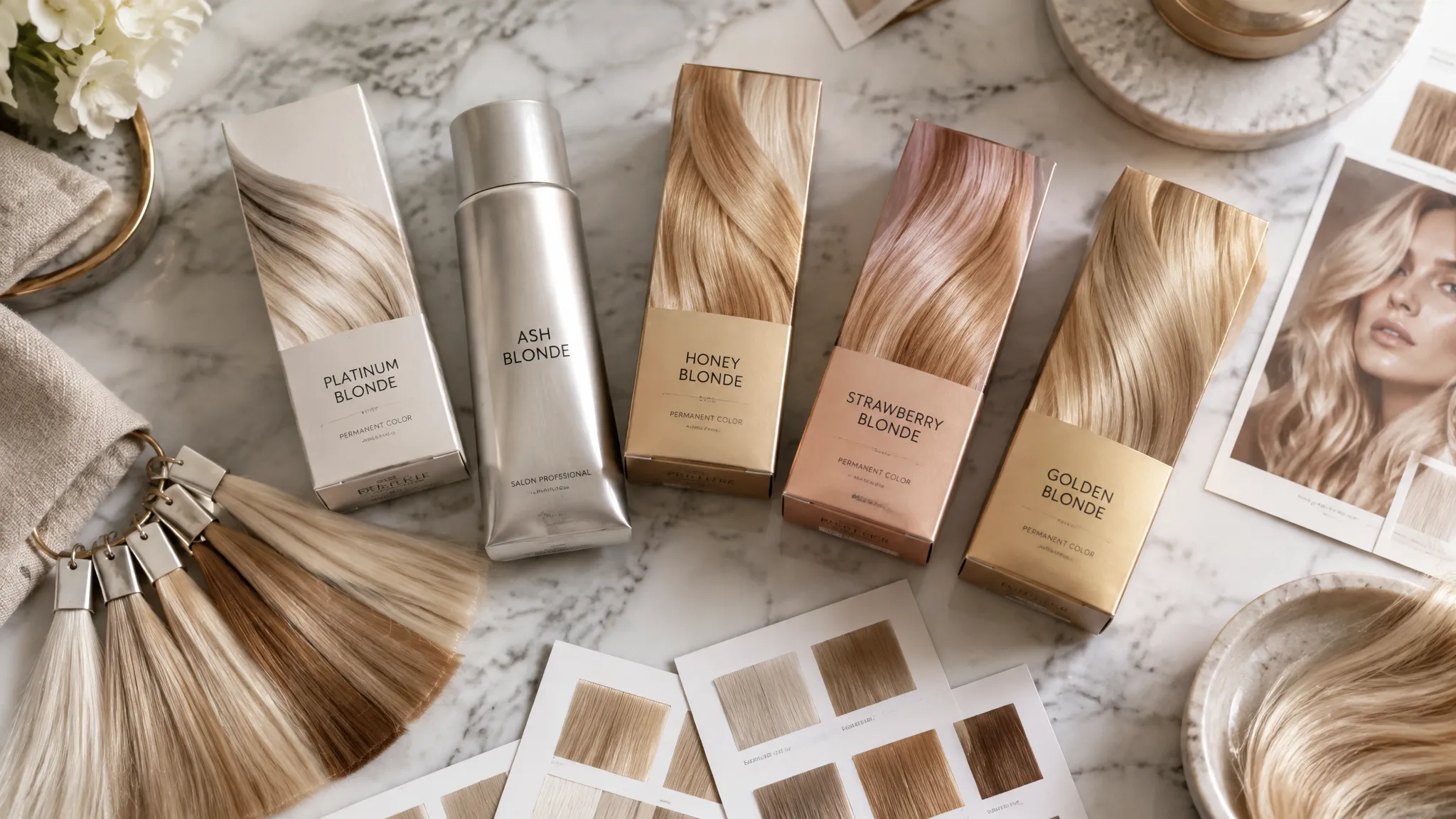
Before we match blondes to undertones, it helps to speak the same language as your colorist. These are the shades I hear requested most often — and what they actually mean:
- Platinum blonde — The lightest, coolest blonde with strong violet or blue undertones. High-maintenance and high-contrast. Best on True and Bright Winters with cool skin.
- Ash blonde — A cool, smoky blonde with grey or taupe undertones. Eliminates brassiness but can look flat on warm skin. Ideal for Summers and cool-toned Winters.
- Honey blonde — A warm, golden blonde with amber depth. Universally flattering on warm undertones but problematic on cool skin. A True Spring and Soft Autumn staple.
- Strawberry blonde — A warm blonde with visible red or copper undertones. Beautiful on warm, light complexions — especially Light and True Springs — but can clash with cool or olive undertones.
- Champagne blonde — A neutral-to-warm blonde with soft gold and beige notes. One of the most versatile shades, working across many neutral and warm seasons.
- Balayage blonde — Not a single shade but a technique. Hand-painted highlights that create dimension. The base and highlight tones still need to match your undertone — balayage doesn't solve a temperature mismatch.
Understanding these names gives you vocabulary for the salon conversation. Instead of "I want to go blonde," you can say "I'm thinking a level 8 ash balayage with a cool beige base" — and that specificity changes everything.
See your personal color palette now
Upload a photo — get your AI beauty report in 60 seconds.
Skin Undertone and Blonde: The Relationship That Changes Everything
Your skin undertone — the permanent hue beneath the surface that never changes with tanning or redness — is the single most important variable when choosing a blonde shade. Warm undertones need warm blondes. Cool undertones need cool blondes. Neutral undertones have the most flexibility but still benefit from knowing which direction to lean.
If you're unsure of your undertone, start with the basics: check your wrist veins in natural daylight (blue/purple suggests cool, green suggests warm), or hold pure gold and silver jewelry against your face and note which metal makes your skin look brighter. For a deeper dive, our guide on how to determine your skin undertone walks through seven reliable at-home methods.
Cool Blonde vs. Warm Blonde vs. Neutral Blonde
Here's the comparison table I wish someone had shown me before my first salon disaster:
| Blonde Category | Undertone Match | Example Shades | Best For | Avoid If |
|---|---|---|---|---|
| Cool Blonde | Cool (pink, red, blue-based skin) | Platinum, ice blonde, ash blonde, beige blonde, pearl blonde | Cool and neutral-cool undertones; high-contrast features | Warm or golden undertones — creates sallow, muddy appearance |
| Warm Blonde | Warm (yellow, golden, peachy skin) | Honey blonde, golden blonde, butter blonde, champagne blonde, caramel blonde | Warm and neutral-warm undertones; sun-kissed complexions | Cool undertones — reads brassy, orange, or "cheap" |
| Neutral Blonde | Neutral (balanced warm/cool) | Sandy blonde, wheat blonde, soft beige blonde, light bronde | Neutral undertones; those who suit both gold and silver jewelry | Extremes — neither icy platinum nor deep copper-gold |
Cool blondes contain blue, violet, or ash pigments that counteract yellow and warmth. On cool-toned skin, they create a polished, editorial look — think Scandinavian platinum or a sophisticated ash balayage. On warm-toned skin, those same pigments clash with your natural golden base and can make you look grey or sallow. Vogue's guide to finding your perfect blonde consistently emphasizes this temperature matching as the foundation of any successful blonde transformation.
Warm blondes carry golden, copper, or honey pigments that echo the warmth in your skin. They create that sun-kissed, healthy glow that reads as effortless rather than processed. In my experience, warm blondes are the most requested shade in salons — and the most commonly applied to the wrong undertones. When a cool-toned person gets honey blonde, the gold in the hair amplifies any pinkness in the skin, creating an unintentionally ruddy effect.
Neutral blondes sit in the middle — neither distinctly warm nor cool. They're the safest starting point if you're unsure of your undertone, but they can also read as "flat" if your features have strong contrast. Sandy and wheat blondes work beautifully on neutral undertones and on people whose personal color analysis places them in blended or soft seasons.
The Olive Undertone Exception
Olive skin — which has a greenish cast beneath the surface — breaks the simple warm/cool binary. I've found that olive undertones often look best in neutral-to-cool blondes with a beige or ash base, rather than golden or strawberry shades. Warm blondes can emphasize the green cast, while a soft ash or beige blonde tends to harmonize with olive's unique undertone mix.
Deep Skin Tones and Blonde
One of the most persistent myths in hair color is that blonde "doesn't work" on deeper skin tones. It does — but the shade selection rules still apply. Deep skin with warm undertones can look stunning in rich honey, caramel, or golden bronde. Deep skin with cool undertones can carry ash blonde, cool beige, or even platinum if the contrast level supports it.
In my experience, the mistake on deeper complexions isn't going blonde — it's choosing a shade that's too ashy (which can look grey against rich skin) or too warm (which can read brassy rather than golden). The sweet spot is usually a blonde with enough depth and warmth/coolness to complement the skin's natural richness, rather than a flat, one-dimensional light shade.
How Contrast Level Affects Your Blonde
Undertone tells you which direction to go. Contrast level tells you how far. High-contrast features — dark eyes against light skin, or deep skin with bright eyes — can carry lighter, more dramatic blondes without looking washed out. Low-contrast features — soft eyes, blended coloring, muted skin — often look best in softer, slightly deeper blondes that don't overpower the face.
I've found that contrast is the reason two people with the same cool undertone can look great in completely different blondes. A Bright Winter with striking blue eyes and porcelain skin can rock platinum. A Soft Summer with grey-green eyes and rosy beige skin will look more harmonious in a muted ash beige that's a touch deeper. Same undertone, different optimal lightness.
The Best Blonde Shades for Every Color Season
Your color season — determined by the interplay of your undertone, value (light or dark), and chroma (muted or clear) — refines blonde selection beyond the basic warm/cool split. Here's what I've seen work across all 12 seasons in the expanded personal color system.
Spring Seasons (Warm, Light, Clear)
Light Spring — Your natural coloring is delicate and sun-kissed. Think champagne blonde, light golden blonde, and soft strawberry blonde. Avoid heavy ash or platinum, which will drain the warmth from your peachy skin.
True Spring — You carry obvious golden warmth. Honey blonde, bright golden blonde, and warm butter blonde are your power shades. I've found that True Springs who go ash blonde almost always regret it within two weeks.
Bright Spring — High contrast with warm undertones. Bright golden blonde, light copper-blonde, and vivid honey work beautifully. You can handle more saturation than other Spring types, but keep the warmth.
Summer Seasons (Cool, Light, Muted)
Light Summer — Soft, cool, and airy. Your ideal blondes are light ash blonde, soft beige blonde, and pearl blonde. Avoid golden or copper tones — they will fight your cool, muted complexion.
True Summer — Balanced cool tones with medium depth. Ash blonde, cool beige blonde, and muted champagne (with a cool base) flatter you best. Warm honey shades tend to make True Summers look sallow.
Soft Summer — Muted and blended. Think soft ash blonde, dusty beige blonde, and cool wheat blonde. In my experience, Soft Summers look most natural in blondes that are slightly darker and more muted rather than bright or platinum.
Autumn Seasons (Warm, Deep, Muted)
Soft Autumn — Warm but muted and earthy. Dark honey blonde, soft caramel blonde, and bronde (brown-blonde) are your sweet spot. Icy or platinum blondes create a jarring disconnect with your muted warmth.
True Autumn — Rich, saturated warmth. Golden bronde, deep honey blonde, and warm caramel blonde complement your coloring. Avoid anything with an ash or violet base — it will look dull against your rich skin tones.
Dark Autumn — Deep warmth with intensity. Dark caramel blonde, rich honey bronde, and warm toffee blonde maintain the depth your features need. Going too light or too cool makes Dark Autumns look washed out rather than luminous.
Winter Seasons (Cool, Deep, Clear)
Dark Winter — Deep, cool, and dramatic. Cool beige blonde, ash bronde, and dark ash blonde work when you want lightness without losing depth. Platinum can work on Dark Winters with high contrast, but it needs to stay icy — never warm.
True Winter — High contrast, icy and bold. Platinum blonde, ice blonde, and blue-toned ash blonde are your signature shades. Warm golds and honeys are the fastest route to a color correction appointment.
Bright Winter — Vivid, clear, and striking. Bright platinum, cool champagne blonde, and clear ash blonde with dimension suit your crisp coloring. Muted or warm blondes will flatten your natural clarity.
Quick Reference: Blonde by Season
| Season | Top Blonde Picks | Blondes to Skip |
|---|---|---|
| Light Spring | Champagne, light golden, strawberry | Ash, platinum |
| True Spring | Honey, golden, butter | Ash, cool beige |
| Bright Spring | Bright golden, copper-blonde | Muted ash, dark bronde |
| Light Summer | Light ash, pearl, soft beige | Golden, copper |
| True Summer | Ash, cool beige, muted champagne | Honey, warm gold |
| Soft Summer | Soft ash, dusty beige, cool wheat | Bright gold, strawberry |
| Soft Autumn | Dark honey, caramel, bronde | Platinum, ice blonde |
| True Autumn | Golden bronde, deep honey | Ash, violet-toned |
| Dark Autumn | Dark caramel, toffee bronde | Light ash, platinum |
| Dark Winter | Cool beige, ash bronde | Warm honey, gold |
| True Winter | Platinum, ice, blue-ash | Honey, golden, copper |
| Bright Winter | Bright platinum, cool champagne | Muted warm, strawberry |
If you're not sure which season you fall into, a personal color analysis can identify your exact sub-season — which matters enormously when the difference between Soft Summer and True Summer is an entire category of blonde shades.
What If You're Between Seasons?
Not everyone fits neatly into one box — and that's normal. If you're between Soft Autumn and True Autumn, lean toward the warmer, deeper option (golden bronde over ash beige). Between Light Summer and True Summer? Choose the cooler, lighter option (pearl over honey). When in doubt, I always recommend going one step more muted and one step closer to your natural hair color rather than pushing into an extreme. You can always go lighter or brighter at your next appointment. Correcting an over-processed or too-light blonde is far more expensive and damaging than gradually building toward your ideal shade.
Practical Tips: How to Avoid a Blonde Disaster at the Salon (and at Home)
Knowing your ideal shade is half the battle. The other half is execution — and I've watched plenty of people with perfect color theory knowledge still end up with brassy, damaged, or uneven results because the process wasn't handled correctly.
Before You Go Blonde
Start with a strand test. Always. Whether you're in a salon or using a box kit, a strand test on hair from underneath your crown reveals how your hair lifts and what underlying pigment emerges. I've found that this single step prevents more disasters than any other.
Be honest about your starting level. Going from near-black (level 1–3) to platinum blonde is not a one-appointment process — and anyone who tells you otherwise is setting you up for breakage. Realistic timelines for significant lift are typically 2–4 sessions spaced weeks apart. Research published in the Journal of Cosmetic Dermatology consistently notes that repeated bleaching within short intervals significantly increases cuticle damage and porosity.
Bring undertone language, not just photos. Instead of showing your colorist a celebrity photo, say: "I'm a cool undertone, Light Summer season — I want a level 9 ash blonde with subtle dimension." Specificity gets you closer to your goal than any Pinterest board.
Budget for toning. Blonde is not a set-it-and-forget-it color. Even the perfect shade will shift as it oxidizes and as your natural warmth emerges at the roots. Plan for toning appointments or a purple shampoo regimen from day one.
At the Salon
Ask about the lift plan. A skilled colorist will explain how many levels they're lifting per session and what base they're targeting before toning. If they can't articulate this, consider it a red flag.
Request a gloss or toner immediately after bleaching. Raw bleached hair is yellow or orange — that's normal. The toner is what creates your actual blonde shade. Skipping or rushing this step is how people leave the salon looking brassy.
Check the result in multiple lights. Salon lighting is flattering and often warm-toned. Step outside or check your color near a window before you leave. I've made the mistake of approving a shade under salon lights only to discover it read completely differently in daylight.
At Home
Choose your developer wisely. If you're doing root touch-ups or all-over color at home, 20-volume developer is standard for most lift situations. Going higher without professional experience invites damage and uneven results.
Purple shampoo is your friend — but don't overdo it. Use it once or twice a week to neutralize brassiness, not daily. Overuse deposits too much violet pigment and turns hair grey or lavender.
Deep condition relentlessly. Bleached hair is porous and thirsty. A weekly deep conditioning mask isn't optional — it's maintenance. In my experience, the difference between blonde that looks luxurious and blonde that looks fried comes down to post-bleach care, not the bleach itself.
Know when to stop. If your hair is snapping, stretching, or feels like cotton candy, do not bleach again. See a professional for a bond-building treatment and wait before your next lift session.
The Maintenance Reality Check
Before you commit to blonde, understand what you're signing up for. Roots appear faster on blonde than on any other color — typically every 3–4 weeks for an all-over blonde, or 8–12 weeks for balayage. Toner fades within 4–6 washes, which means brassiness is a constant battle unless you're diligent with purple products.
I've found that the women who love their blonde long-term are the ones who budget realistically: salon toner appointments every 6–8 weeks, a quality purple shampoo, a weekly mask, and heat protectant every single time they style. Blonde isn't just a color — it's a maintenance lifestyle. If you're not willing to invest in upkeep, consider a lower-maintenance option like a bronde or a subtle balayage that grows out gracefully.
Red Flags at the Salon
Watch for these warning signs during your appointment:
- Your scalp burns during processing. Some tingling is normal; burning is not. Speak up immediately — over-processing damages both hair and scalp.
- Your colorist skips the toner. If you're paying for blonde and leaving with yellow hair, the job isn't finished.
- They promise platinum in one session from dark hair. Ethical colorists will set realistic expectations and a multi-session plan.
- The result looks great in the chair but terrible at home. Always verify in natural light before you pay and leave.
Trust your instincts. A good colorist welcomes questions, explains their process, and would rather adjust the formula than rush you out with a result you'll hate.
The Modern Approach: Preview Before You Process
For most of history, choosing a blonde shade meant guessing. You'd stare at a swatch book, compare it to your arm hair (which is not the same color as head hair), and hope the result matched your mental image. That era is over.
AI-powered tools can now preview different blonde shades on your actual photo — rendering dimension, undertone interaction, and realistic light reflection rather than a flat color overlay. Instead of imagining how ash blonde might look against your cool-toned skin, you can see it. Instead of wondering whether honey or champagne suits your Light Spring coloring, you can compare them side by side.
Free online tools like aicoloranalysis.io let you preview hair color changes before committing to bleach, toner, and three hours in the salon chair. The technology analyzes your skin undertone, factors in your natural hair level, and shows how specific blonde shades interact with your facial features — the same variables a skilled colorist evaluates, but visible before you spend a dollar.
In my experience, clients who arrive at the salon with a previewed reference — "I want this exact ash beige blonde, level 9, with this kind of dimension" — get better results faster. The conversation shifts from vague ("make me blonde") to precise ("this shade, this technique, this level of warmth"). That precision is the difference between a blonde you love and a blonde you tolerate until your roots grow in.
This doesn't replace a great colorist. Bleaching, toning, and maintaining blonde still requires professional skill (or serious at-home expertise). But it removes the biggest variable — whether the shade actually suits you — from the equation entirely.
Key Takeaways
- Blonde is a temperature game, not just a lightness game. Your undertone determines whether warm, cool, or neutral blondes will make you glow or wash you out.
- Your color season narrows the options further. A Soft Summer and a True Spring both might suit "blonde," but they need completely different shades — ash beige versus honey gold.
- The bleaching process matters as much as the target shade. Insufficient lift, skipped toning, and unrealistic timelines cause more bad blondes than wrong color selection.
- Maintenance is non-negotiable. Blonde requires toning, purple shampoo, and deep conditioning — budget for all three from the start.
- Preview before you process. AI hair color tools let you see how a blonde shade interacts with your actual skin tone and features before you commit to bleach.
Related Articles
- How to Find Your Best Hair Color Based on Your Color Season — A comprehensive guide to choosing hair color by season
- Balayage, Highlights, or All-Over Color? How to Choose — Comparing coloring techniques for each season
- How AI Hair Color Preview Can Save You From a Bad Dye Job — Why previewing with AI beats guessing
- Color Analysis: The Complete Guide — Everything you need to know about finding your best colors
Want to try AI color analysis yourself?
Upload one photo and get a magazine-level beauty report in 60 seconds.
Start Free Analysis