The Brunette Guide: How to Choose the Right Brown Hair Color for Your Skin Undertone
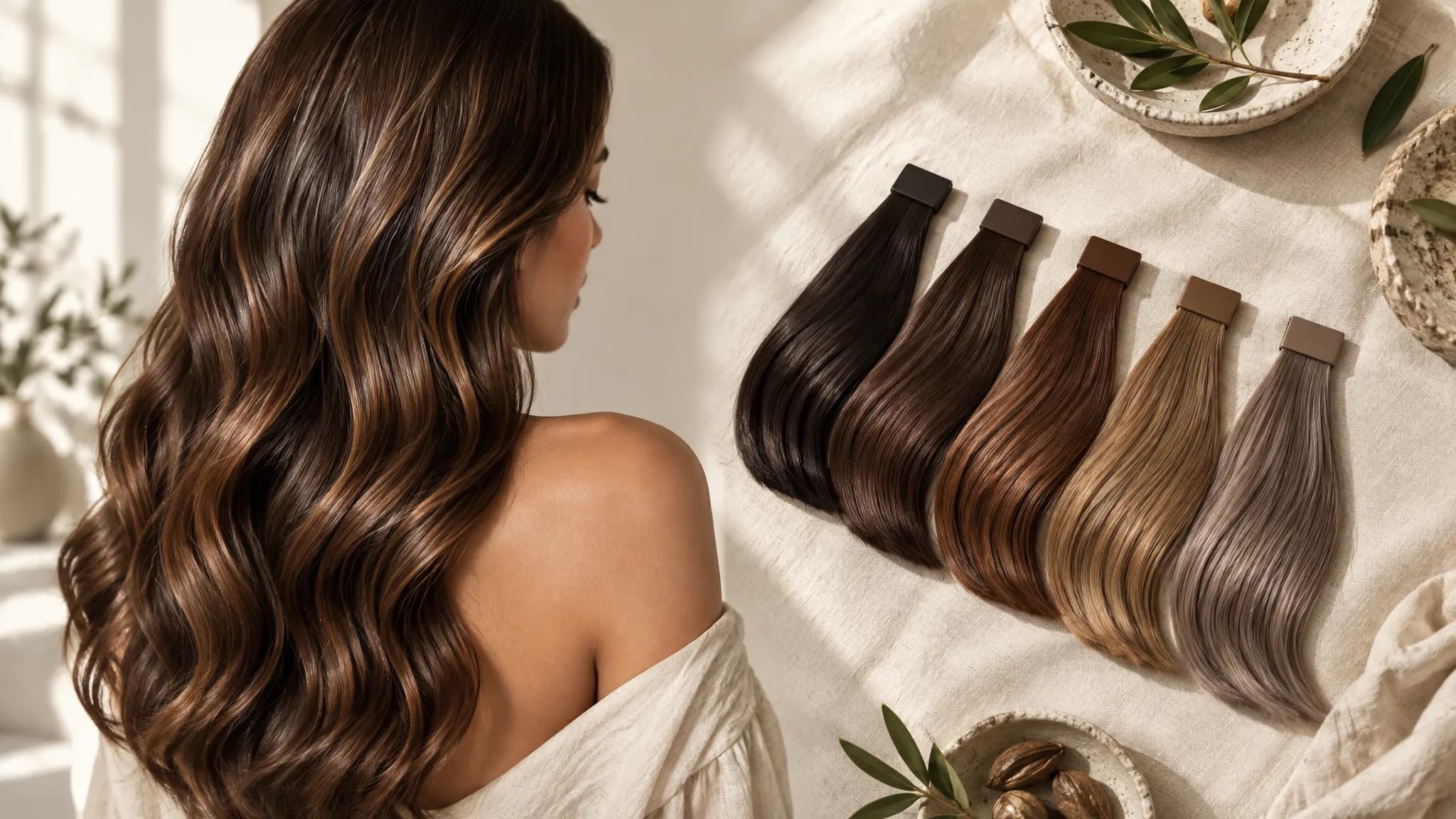
"Just Go Brown" Is the Most Misleading Advice in Hair Color
Brown is supposed to be the safe choice. No bleach, no toner schedule, no dramatic regrowth line. So when I decided to go darker a few years ago, I told my colorist, "Just a nice brown."
Three weeks later I was staring at my reflection under office lights, convinced I looked tired. The brown was ashy, and my warm skin turned flat and a little gray next to it. A friend with the exact same "nice brown" looked radiant. Same word, completely different result.
That's when I learned what colorists already know: brown is not one color. It's a spectrum with three separate dials — depth, temperature, and intensity — and "safe" only happens when all three match your coloring.
In this guide, I'll break down how to read those dials, match them to your undertone and color season, and walk into the salon with language that actually gets you the brown you picture in your head.
Here's what you'll learn:
- The three dials that define every brown shade
- How undertone decides between golden, neutral, and ash browns
- The best brown shades for all 12 color seasons
- The most common brunette mistakes — and how to avoid them
- How to preview a brown on your own face before you commit
Brown Has Three Dials: Depth, Temperature, and Intensity
When people say "brown," they usually mean one point on a much bigger map. Colorists describe hair on three axes:
- Depth (level): How light or dark the color is. Professionals use a scale from 1 (black) to 10 (lightest blonde). Most browns live between levels 3 and 6.
- Temperature (tone): Whether the brown leans golden or red (warm), balanced (neutral), or ash and violet-blue (cool).
- Intensity: How rich and saturated the color is versus how soft and muted. A glossy chocolate and a dusty mushroom brown can share the same depth but feel completely different.
Most "wrong brown" stories come from getting depth right and temperature wrong. A level-4 golden chestnut and a level-4 ash brown are equally dark, yet one makes warm skin glow and the other drains it.
The Brunette Vocabulary, Decoded
Here are the shades I hear requested most often, and what they actually mean:
| Shade | Depth | Temperature | Looks Like |
|---|---|---|---|
| Espresso | Very dark (level 2–3) | Neutral to cool | Near-black brown with a soft shine |
| Dark chocolate | Dark (level 3) | Neutral to warm | Deep, rich brown with subtle warmth |
| Mocha | Medium-dark (level 4) | Neutral | Balanced coffee brown, neither red nor ashy |
| Chestnut | Medium (level 4–5) | Warm | Brown with soft red-gold glints |
| Caramel brown | Medium-light (level 5–6) | Warm | Golden, buttery, sun-warmed brown |
| Ash brown | Medium (level 4–6) | Cool | Smoky brown with gray or blue undertones |
| Mushroom brown | Medium (level 5–6) | Cool-neutral, muted | Soft, taupe-like brown with no red or gold |
| Auburn brown | Medium-dark (level 4) | Warm, red | Brown with a copper-red wash |
Once you can name these, "just a nice brown" becomes "a level 4 neutral mocha with a soft gloss." That specificity changes everything.
See your personal color palette now
Upload a photo — get your AI beauty report in 60 seconds.
Start With Your Undertone
Your undertone is the permanent hue beneath your skin's surface. It doesn't change with tanning or blushing, which makes it the most reliable guide for choosing a hair temperature.
If you're not sure of yours, try two quick checks in natural daylight: hold gold and silver jewelry against your face and see which one makes your skin look brighter, and look at your wrist veins (blue or purple suggests cool, green suggests warm). For a more thorough walkthrough, see our guide on how to determine your skin undertone.
Warm Undertones: Go Golden, Chestnut, or Caramel
Warm skin has golden, peachy, or yellow tones. Brown shades with matching warmth make it look sun-kissed and healthy. Think golden brown, chestnut, caramel, and warm mocha.
The trap is going too cool. Ash browns on warm skin tend to look muddy because the gray pigment fights the gold in your complexion.
Cool Undertones: Go Ash, Espresso, or Cool Chocolate
Cool skin has pink, rosy, or blue-red tones. It looks best against browns with no orange or gold pushing against it: ash brown, cool chocolate, espresso, and mushroom brown.
The trap here is red-brown. Auburn and copper-leaning browns can amplify pinkness and make cool skin look flushed rather than polished.
Neutral Undertones: You Have the Most Freedom
If gold and silver both look fine on you, you're probably neutral. Mocha, chocolate brown, and soft walnut are your safest, most flattering territory. You can lean slightly warm or slightly cool depending on the mood you want.
The Olive Exception
Olive skin carries a greenish cast under the surface, so it breaks the simple warm-versus-cool rule. In my experience, olive tones usually look best in neutral-to-cool browns with a slightly muted finish, like mocha or soft mushroom brown. Strongly golden or red browns can pull out the green. If this is you, our guide to the best hair colors for olive skin goes much deeper.
How Dark Should You Go? Let Contrast Decide
Undertone tells you which direction to go. Contrast tells you how far.
Contrast is the difference between your skin, eyes, and natural hair. High-contrast people, such as fair skin with dark eyes or deep skin with bright eyes, can carry deeper, more dramatic browns like espresso without looking harsh. Low-contrast people, with softly blended coloring, usually look more harmonious in medium, slightly softer browns.
A simple rule I rely on: stay within about two levels of your natural color for a believable result, and ask for a touch of lightness around the face if you want your skin to look brighter. Going three or more levels darker than your natural shade can read heavy, and it's the fastest route to constant root maintenance.
The Best Brown Shades for Every Color Season
Your color season combines undertone, depth, and clarity, so it refines the choice beyond warm versus cool. Here is what I've seen work across the 12-season system.
| Season | Best Brown Picks | Browns to Skip |
|---|---|---|
| Light Spring | Light golden brown, honey brown | Espresso, ash brown |
| True Spring | Golden chestnut, warm caramel | Cool mushroom, ash brown |
| Bright Spring | Rich warm chestnut, glossy golden brown | Muted taupe, ash brown |
| Light Summer | Light ash brown, soft cool beige-brown | Auburn, copper |
| True Summer | Cool medium brown, ash brown | Golden caramel, red-brown |
| Soft Summer | Mushroom brown, soft cool mocha | Bright copper, jet espresso |
| Soft Autumn | Warm mocha, soft golden chestnut | Ash brown, blue-black |
| True Autumn | Copper chestnut, auburn brown | Ash brown, cool espresso |
| Dark Autumn | Dark chocolate with warm red-gold depth | Light ash, mushroom brown |
| Dark Winter | Cool espresso, deep cool chocolate | Golden caramel, copper |
| True Winter | Blue-toned espresso, deep cool brown | Chestnut, caramel, auburn |
| Bright Winter | High-shine dark brown with cool depth | Muted mushroom, warm caramel |
If you can't tell which season is yours, a personal color analysis can narrow it to a specific sub-season, which matters because Soft Summer and True Summer need very different browns.
If You're Between Seasons
Lean toward the option that's closer to your natural hair color and one step more muted. You can always add richness or dimension at your next appointment. Correcting a brown that went too dark or too ashy takes far longer than adjusting gradually.
Practical Tips: Getting the Brown You Actually Want
Before You Book
Bring tone language, not just photos. Instead of a single celebrity picture, say: "I have warm undertones. I want a level 5 golden chestnut with a soft gloss." Photos help, but words about depth and temperature prevent most misunderstandings.
Show your starting color honestly. Dye doesn't lighten hair. If you're currently blonde, going brown usually needs a "fill" step that replaces missing warm pigment first. Skipping it is how people end up with muddy, slightly green browns.
At the Salon
Ask about a gloss. A clear or tinted gloss is what gives brunette hair its mirror-like shine. It also lets your colorist fine-tune temperature without changing depth.
Check the shade in daylight. Salon lighting is warm and flattering. Step near a window before you pay. I've approved shades under salon lights that looked completely different outside.
At Home
Choose one shade lighter than your goal. Dark dye is far easier to add than remove, and box colors often come out deeper than the swatch.
Use the right shampoo. Dark browns tend to fade warm as the cool pigments wash out first, revealing orange-red underneath. A blue-toned shampoo once or twice a week helps cool and ash browns stay true. Warm browns benefit from a color-depositing conditioner instead.
Protect the shine. Heat styling and UV exposure dull brown quickly. Use heat protectant and a weekly mask.
Maintenance Reality Check
Hair grows roughly half an inch per month, so regrowth lines show up faster on a color that's far from your natural shade. If you choose a brown within two levels of your natural color, you can often stretch appointments to every 8–10 weeks. A gloss refresh between appointments keeps tone and shine looking salon-fresh.
The Four Most Common Brunette Mistakes
- Ash brown on warm skin. It looks flat, gray, or muddy. Warm skin needs warmth in the hair too.
- Red-brown on cool or flushed skin. It intensifies redness. Cool skin needs a clean, neutral-to-cool brown.
- Going too dark for your contrast level. If your coloring is soft, jet-dark hair can look severe instead of rich.
- Ignoring fade. The brown you leave the salon with is not the brown you'll have in six weeks. Plan your care routine around the color you'll actually be wearing.
For a broader look at how undertone and season steer every hair choice, read our full guide on how to find your best hair color based on your color season. And if you're thinking of going lighter instead, the complete guide to going blonde covers that side of the spectrum. Dermatology groups like the American Academy of Dermatology also publish useful guidance on keeping colored hair healthy.
The Modern Approach: Preview Your Brown Before You Commit
For years, choosing a brown meant flipping through a swatch book and hoping the tone would work on you. Swatches don't show how a shade interacts with your skin, eyes, and contrast level.
AI-powered tools can now render different brown shades on your actual photo, so you can compare chestnut with mocha, or ash with warm chocolate, side by side. I tried one before my last color appointment, and seeing a neutral mocha on my own face made the decision in about thirty seconds. Free tools like aicoloranalysis.io analyze your undertone and show best and worst hair color options for your coloring before you spend money on dye.
It doesn't replace a skilled colorist, who still handles the chemistry and technique. But it removes the biggest variable, whether the shade suits you at all, before you're in the chair.
Key Takeaways
- Brown has three dials. Depth, temperature, and intensity all matter, and temperature is where most mistakes happen.
- Undertone picks the direction. Warm skin loves golden browns, cool skin loves ash and espresso, and neutral skin can wear mocha and chocolate.
- Contrast picks the distance. Stay within about two levels of your natural color unless your features are high contrast.
- Your color season refines the shade. Soft Summer and True Autumn may both want brown, but they need very different ones.
- Use specific language. "A level 4 neutral mocha with gloss" beats "just a nice brown" every time.
Brown might be the quietest hair color, but the right one can change how your skin, eyes, and whole face come across. Once you know which dials to turn, "just brown" stops being a gamble.
Related Articles
- How to Find Your Best Hair Color Based on Your Color Season — A comprehensive guide to choosing hair color by season
- The Complete Guide to Going Blonde: Which Blonde Shade Works for Your Skin Tone — The lighter side of the hair color spectrum
- Best Hair Colors for Olive Skin: A Complete Shade Guide — Hair color picks for olive undertones
- How AI Hair Color Preview Can Save You From a Bad Dye Job — Why previewing with AI beats guessing
- Color Analysis: The Complete Guide — Everything you need to know about finding your best colors
Want to try AI color analysis yourself?
Upload one photo and get a magazine-level beauty report in 60 seconds.
Start Free AnalysisRelated Posts
The Complete Guide to Going Blonde: Which Blonde Shade Works for Your Skin Tone
Not all blondes are created equal. Learn which blonde shade — platinum, honey, strawberry, or ash — truly flatters YOUR skin tone, undertone, and color season.
Balayage, Highlights, or All-Over Color? How to Choose the Best Hair Coloring Technique for Your Color Season
Not all hair coloring techniques work equally well for every color season. Learn which method — balayage, foil highlights, or all-over color — best complements your natural features and seasonal palette.
Best Hair Colors for Olive Skin: A Complete Shade Guide
Some hair colors make olive skin glow; others turn it sallow. See the best shades for warm-olive vs cool-olive, colors to avoid, and seasonal recommendations.
Celebrity Color Transformations: What Red Carpet Before-and-Afters Teach Us About Color Season
Analyzing the most dramatic celebrity hair and style transformations through the lens of color analysis. Learn why some makeovers look stunning and others fall flat — and how to apply these lessons to your own color choices.