How to Find Your Best Hair Color Based on Your Color Season
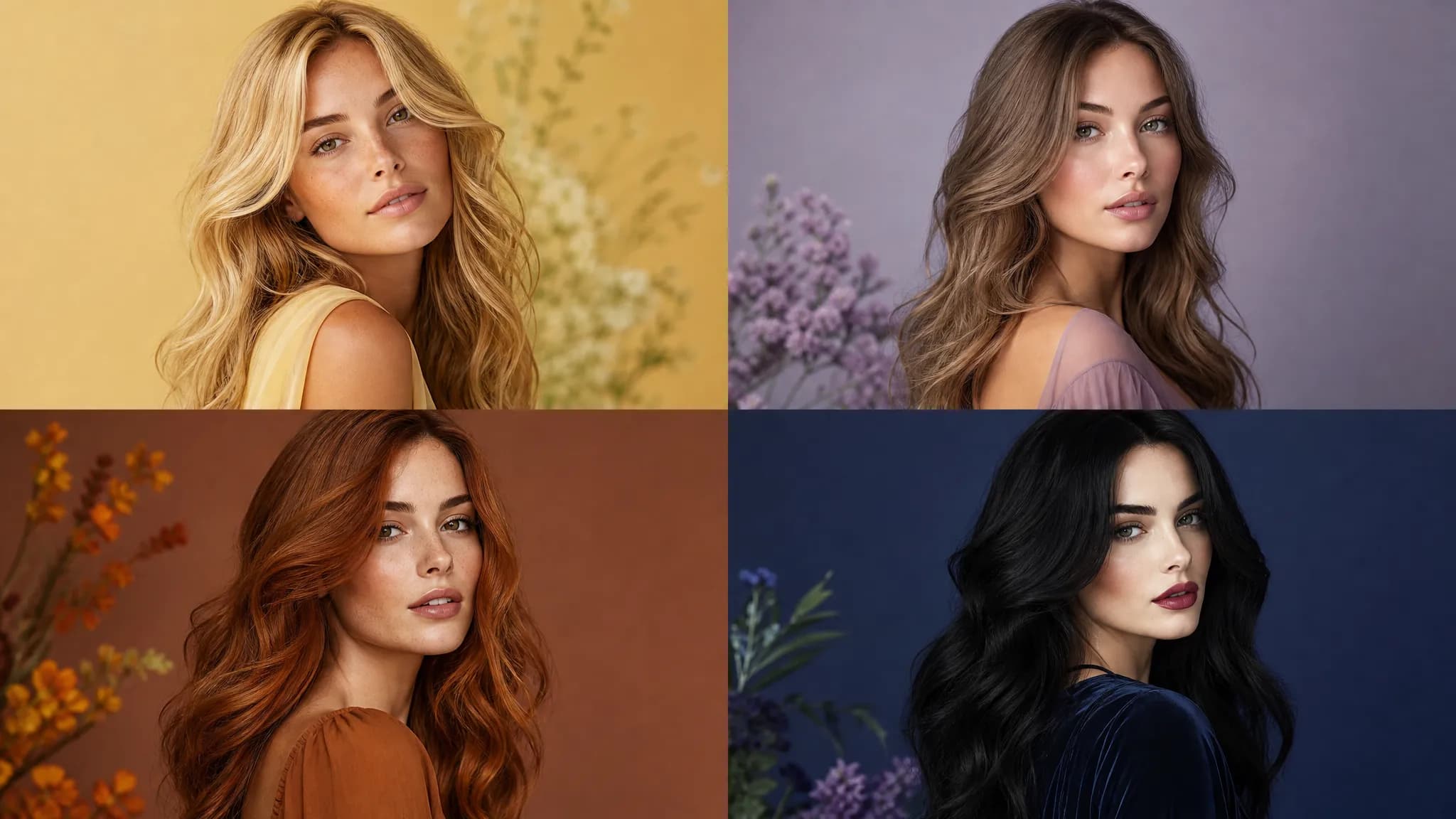
Why Your Color Season Matters for Hair Color
Here's something most people don't realize until after a bad dye job: your natural coloring — skin undertone, eye color, and the contrast between your features — determines which hair colors will make you look vibrant versus washed out.
This is exactly what personal color analysis was designed to solve. Your color season isn't just about clothing. It's a complete guide to the tones that harmonize with your natural features, and that absolutely includes hair color.
I've seen people go from looking tired and flat to absolutely glowing — not because of skincare or makeup, but because they finally chose a hair color that matched their season. The difference is real, and it's dramatic.
A Quick Refresher on the 12 Color Seasons
Before we dive into specific recommendations, here's a brief overview of the 12-season system. Each person falls into one of these categories based on their undertone (warm or cool), value (light or dark), and chroma (muted or clear):
Spring (Warm, Light, Clear):
- Light Spring — delicate, warm, and bright
- True Spring — golden, vivid, and warm
- Bright Spring — high-contrast with warm undertones
Summer (Cool, Light, Muted):
- Light Summer — soft, cool, and airy
- True Summer — balanced cool tones with medium depth
- Soft Summer — muted, blended, and gentle
Autumn (Warm, Deep, Muted):
- Soft Autumn — warm but muted, earthy
- True Autumn — rich, warm, and saturated
- Dark Autumn — deep warmth with intensity
Winter (Cool, Deep, Clear):
- Dark Winter — deep, cool, and dramatic
- True Winter — high contrast, icy and bold
- Bright Winter — vivid, clear, and striking
See your personal color palette now
Upload a photo — get your AI beauty report in 60 seconds.
The Best Hair Colors for Each Season
Spring Seasons
Light Spring
Light Springs have a delicate, sun-kissed quality. Think warm peach skin, light eyes, and naturally golden or strawberry blonde hair.
Best hair colors:
- Champagne blonde
- Light golden blonde
- Honey blonde
- Strawberry blonde
- Light copper
Avoid: Ash tones, dark browns, black, or anything too cool or heavy.
True Spring
True Springs are the embodiment of golden warmth. Their coloring is medium-depth with obvious warm undertones.
Best hair colors:
- Golden blonde
- Warm caramel
- Honey brown
- Copper
- Warm auburn
Avoid: Cool-toned browns, platinum blonde, ash shades.
Bright Spring
Bright Springs have high contrast and clarity — think clear, sparkling eyes with warm-toned skin.
Best hair colors:
- Bright copper
- Rich golden brown
- Warm chestnut
- Clear auburn
- Golden caramel with bright highlights
Avoid: Muted tones, ashy shades, anything that looks dusty or flat.
Summer Seasons
Light Summer
Light Summers have cool, delicate coloring — soft features with a light, breezy quality. Everything about them is gentle and understated.
Best hair colors:
- Ash blonde
- Light cool brown
- Champagne with ash undertones
- Platinum blonde (if it's soft, not stark)
- Rose blonde
Avoid: Golden or warm tones, red, black, or anything too intense.
True Summer
True Summers are balanced and cool. They look best in colors that have a blue or pink undertone without being too dark or too light.
Best hair colors:
- Medium ash brown
- Cool brown
- Mushroom brown
- Soft ash blonde
- Cool brunette with subtle cool highlights
Avoid: Warm reds, golden highlights, copper, or very dark shades.
Soft Summer
Soft Summers are the most muted of the cool seasons. Their features blend together harmoniously without sharp contrast.
Best hair colors:
- Mushroom blonde
- Soft cool brown
- Bronde (cool-leaning)
- Dusty rose highlights
- Medium ash tones
Avoid: Bright reds, vivid highlights, high-contrast looks, or anything warm.
Autumn Seasons
Soft Autumn
Soft Autumns sit between Summer and Autumn — warm but muted, like the soft golden light of an overcast fall afternoon.
Best hair colors:
- Soft caramel
- Warm mushroom brown
- Golden brown (muted)
- Toffee
- Warm bronde
Avoid: Very bright tones, stark cool shades, black, platinum.
True Autumn
True Autumns are rich and earthy. They have obvious warm undertones and look incredible in colors that feel like a fall harvest.
Best hair colors:
- Warm auburn
- Rich copper
- Chestnut
- Warm chocolate brown
- Ginger
Avoid: Cool-toned colors, ash, platinum, blue-black.
Dark Autumn
Dark Autumns have the depth of Winter but the warmth of Autumn. They're intense, rich, and dramatic.
Best hair colors:
- Dark chocolate brown
- Deep auburn
- Espresso with warm undertones
- Rich mahogany
- Dark copper
Avoid: Ashy blonde, cool browns, blue-toned black, pastel shades.
Winter Seasons
Dark Winter
Dark Winters are deep and dramatic with cool undertones. High contrast between skin, hair, and eyes is their hallmark.
Best hair colors:
- Blue-black
- Deep espresso
- Dark cool brown
- Rich burgundy
- Deep plum tones
Avoid: Warm browns, golden highlights, copper, any shade that adds warmth.
True Winter
True Winters are the ultimate cool-toned high-contrast season. They look striking in pure, unadulterated shades.
Best hair colors:
- Jet black
- Blue-black
- Dark cool brown
- Pure white blonde (if very light naturally)
- Deep burgundy wine
Avoid: Anything warm, golden, or muted. No caramel, honey, or copper.
Bright Winter
Bright Winters share True Winter's clarity but with even more vibrancy. They can pull off bold, eye-catching hair colors.
Best hair colors:
- Rich dark brown
- Blue-black
- Deep cherry (as a fashion color)
- Stark contrast highlights on dark base
- Cool espresso
Avoid: Muted, dusty, or warm tones. Nothing subtle or blended.
How to Determine Your Season for Hair Color Choices
If you're not sure what your color season is, here are a few quick indicators:
Check your undertone:
- Veins appear blue or purple → cool undertone (Summer or Winter)
- Veins appear green or olive → warm undertone (Spring or Autumn)
Check your contrast:
- Big difference between skin, hair, and eye color → high contrast (Winter or Bright Spring)
- Features that blend together → low contrast (Summer or Soft Autumn)
Check your depth:
- Naturally light features → Light Spring or Light Summer
- Naturally deep features → Dark Autumn or Dark Winter
- Medium features → True seasons or Soft seasons
For a more precise determination, AI color analysis tools can identify your exact season from a photo, taking into account the subtle interactions between your skin, eyes, and natural hair color that are hard to judge on your own.
Common Hair Color Mistakes by Season
Understanding your season also means understanding what to avoid. Here are the most common mistakes I see:
Cool seasons going warm: This is the number one mistake. Summer and Winter types get golden highlights or caramel balayage because it's trendy, and then wonder why they suddenly look tired. Cool undertones need cool-toned hair — period.
Warm seasons going ashy: The reverse problem. Spring and Autumn types see beautiful ash blonde on Instagram and ask for it, only to find it makes their skin look sallow and their features disappear.
Soft seasons going too bold: Soft Summers and Soft Autumns look best when their hair blends harmoniously with their features. Going too dark, too bright, or too contrasting breaks the natural softness that makes them beautiful.
Deep seasons going too light: Dark Winters and Dark Autumns have the depth to carry rich, intense shades. Going platinum or very light creates a disconnect between their skin depth and their hair that rarely looks intentional.
What About Fashion Colors?
If you love vivid, unnatural hair colors — think rose gold, lavender, emerald green, or electric blue — your season still matters.
- Cool seasons (Summer/Winter): Lean toward blue-based fashion colors — lavender, cool pink, blue, silver, violet
- Warm seasons (Spring/Autumn): Lean toward warm-based shades — rose gold, peach, warm coral, coppery tones, warm-toned green
- Bright seasons (Bright Spring/Bright Winter): Can pull off the most saturated vivid shades
- Soft seasons (Soft Summer/Soft Autumn): Look best in pastel or dusty versions — dusty rose, soft lilac, muted blue
Using Technology to Get It Right
Choosing a hair color used to be pure trial and error. You'd show a photo to your stylist, hope for the best, and live with the results for months. Now there are better ways.
AI color analysis tools like aicoloranalysis.io can determine your exact color season in under a minute, giving you a clear starting point for any hair color decision. Instead of guessing whether you're a Warm Autumn or a Soft Autumn (which would lead to very different copper shade recommendations), you can get a precise answer before ever sitting in the salon chair.
The best approach: know your season, research shades within your palette, bring specific references to your colorist, and communicate in terms of undertone (warm vs cool) rather than just showing a celebrity photo and saying "I want this."
Key Takeaways
- Your color season directly determines which hair colors will look most flattering — it's not just about clothing and makeup
- Warm seasons (Spring/Autumn) look best in golden, copper, and warm brown tones, while cool seasons (Summer/Winter) thrive in ash, cool brown, and blue-based shades
- The most common mistake is choosing a hair color based on trends rather than your actual undertone — this is why some people love their new color and others immediately want to change it
- Depth and contrast matter just as much as undertone — a Light Summer needs a very different approach than a Dark Winter, even though both are cool-toned
- AI color analysis tools can help you identify your season precisely before you commit to an expensive color service, saving you time, money, and potential regret
Related Articles
- Color Analysis: The Complete Guide — Everything you need to know about finding your best colors
Want to try AI color analysis yourself?
Upload one photo and get a magazine-level beauty report in 60 seconds.
Start Free Analysis