Soft Autumn vs Soft Summer: The Most Commonly Confused Color Seasons
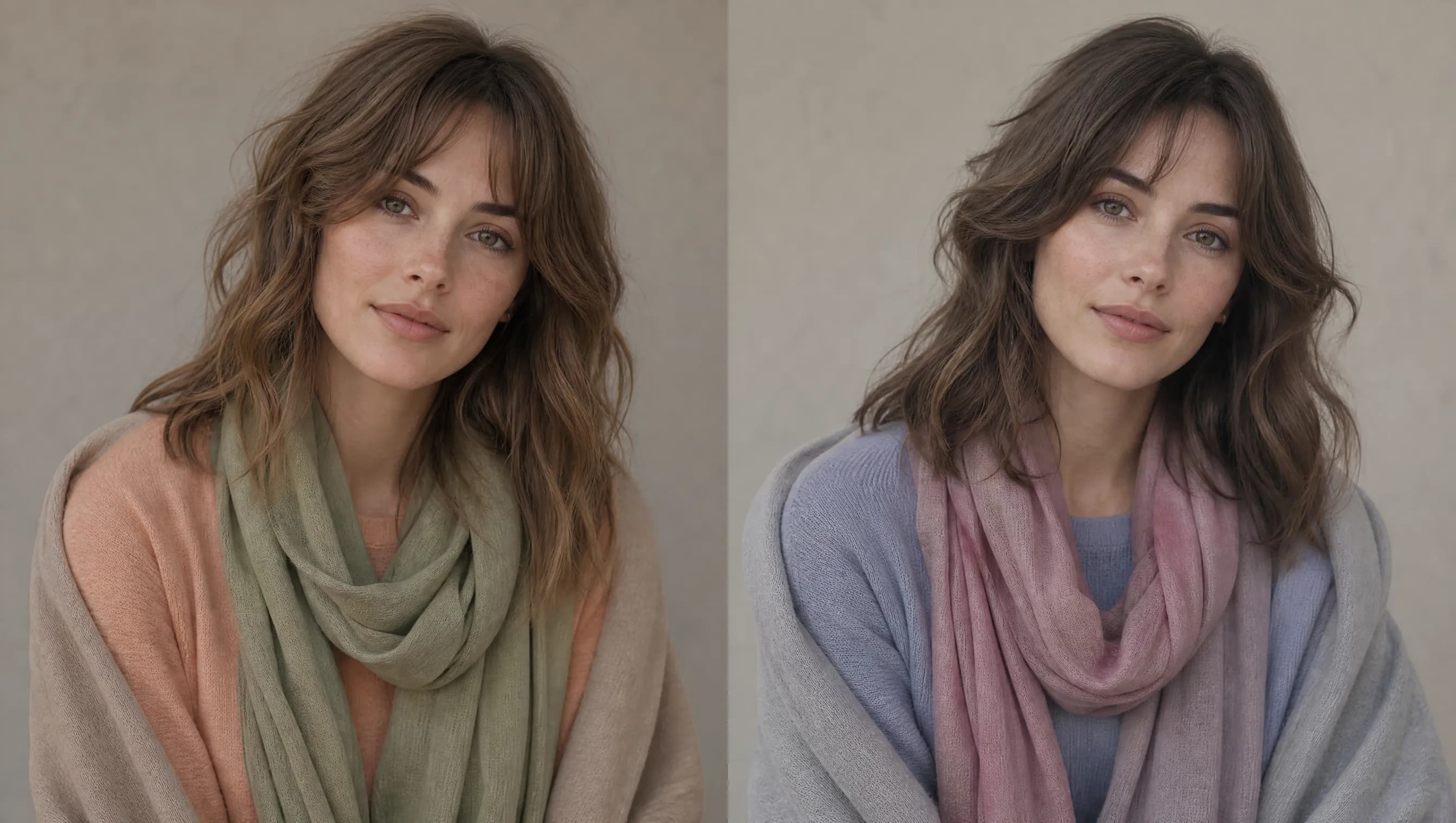
The Soft Season Identity Crisis
If you've ever taken a color analysis quiz and gotten "Soft Autumn" one day and "Soft Summer" the next, you're not alone. These two seasons are the most commonly confused pairing in the entire 12-season color system — and for good reason.
Both Soft Autumn and Soft Summer share the same dominant characteristic: mutedness. Neither season looks great in bright, saturated colors. Both thrive in dusty, gentle, blended tones. Both tend to have low contrast between their hair, skin, and eyes.
So how do you actually tell them apart?
After years of studying color analysis — and having been mistyped myself — I've found that the distinction comes down to one fundamental question: does your skin have a warm golden glow, or a cool rosy softness? Let me break it down in a way that actually makes sense.
What Makes a Season "Soft"?
Before we compare these two, let's understand what "soft" means in color analysis.
In the 12-season system, every season has three qualities ranked by dominance:
- Soft Autumn: Soft (muted) first, Warm second, Deep third
- Soft Summer: Soft (muted) first, Cool second, Light third
The word "soft" refers to chroma — how saturated or muted a color is. Both seasons sit at the low-chroma end of the spectrum. Think of it this way: if you took a vivid orange and mixed in gray, you'd get a Soft Autumn shade. If you took a vivid blue and mixed in gray, you'd get a Soft Summer shade.
This shared mutedness is exactly why people get confused. The gray quality makes both palettes look gentle and blended. The difference? The undertone hiding beneath that gray.
See your personal color palette now
Upload a photo — get your AI beauty report in 60 seconds.
Soft Autumn: Warm Muted Earthiness
Soft Autumn is a warm-neutral season. People in this category typically have:
- Skin: Warm beige, golden tan, or peachy ivory. Often tans easily. May have golden freckles.
- Eyes: Hazel, olive green, warm brown, or soft amber. Often have a starburst pattern with multiple colors blending together.
- Hair: Medium to dark blonde, mousy brown, warm chestnut, or golden brown. Rarely jet black or platinum. Hair often has natural warm highlights.
The overall impression: Earthy, sun-kissed, blended. Like a landscape in early October — golden light, muted greens, soft browns.
Best Colors for Soft Autumn
Your palette centers on warm, muted tones pulled from nature:
- Greens: Olive, sage, moss, soft khaki
- Browns: Camel, warm taupe, terracotta, burnt sienna
- Oranges: Soft peach, muted coral, pumpkin spice
- Yellows: Warm gold, soft marigold, chamomile
- Reds: Tomato red, warm brick, muted paprika
- Blues: Warm teal (sparingly), muted turquoise
- Neutrals: Warm beige, cream, soft camel, chocolate brown
Colors Soft Autumn Should Avoid
- Bright white (use cream or off-white instead)
- Neon or electric colors
- Cool pastels like icy pink or baby blue
- Stark black (use dark chocolate brown or charcoal)
- Jewel tones that are too saturated (emerald, royal blue)
Soft Summer: Cool Muted Elegance
Soft Summer is a cool-neutral season. People in this category typically have:
- Skin: Pink beige, cool ivory, or neutral with a subtle rose undertone. May burn before tanning. Often has a powdery, matte quality.
- Eyes: Soft gray-blue, muted green, cool hazel, or grayish brown. Often described as "smoky" or "hazy" — like looking through a soft filter.
- Hair: Ash blonde, ash brown, mousy brown without golden highlights, or cool medium brown. The key word is "ashy" — no warmth or gold.
The overall impression: Cool, ethereal, gentle. Like a misty morning by the coast — soft grays, muted blues, dusty pinks.
Best Colors for Soft Summer
Your palette centers on cool, muted tones with a dusty quality:
- Blues: Dusty blue, slate, soft denim, powder blue
- Pinks: Dusty rose, mauve, soft raspberry, muted fuchsia
- Purples: Lavender, soft plum, muted amethyst
- Greens: Sage, eucalyptus, muted mint, soft seafoam
- Reds: Muted raspberry, soft cranberry, rose red
- Neutrals: Cool taupe, soft charcoal, dove gray, cocoa
- Whites: Soft white, cool ivory (not bright white)
Colors Soft Summer Should Avoid
- Warm earth tones (orange, rust, golden brown)
- Bright or saturated colors (hot pink, electric blue)
- Stark black or bright white (too much contrast)
- Mustard yellow or warm olive
- Warm reds (tomato, brick, paprika)
The 5 Key Differences: Side by Side
Here's a quick comparison to cut through the confusion:
| Feature | Soft Autumn | Soft Summer |
|---|---|---|
| Undertone | Warm-neutral (golden) | Cool-neutral (rosy) |
| Best neutrals | Cream, camel, warm beige | Dove gray, cool taupe, soft white |
| Signature color | Olive green, terracotta | Dusty rose, lavender |
| Worst color | Icy pink, bright white | Orange, mustard yellow |
| Hair quality | Warm brown, golden highlights | Ash brown, no golden tones |
Still Not Sure? Try These 3 Tests
If you're caught between the two, these real-world experiments can help:
1. The Gold vs Silver Test
Hold a gold piece of jewelry and a silver piece of jewelry against your bare face in natural daylight.
- If gold makes your skin look warmer, healthier, and more radiant → Soft Autumn
- If silver makes your skin look clearer, brighter, and more even → Soft Summer
- If both look decent (common with soft seasons), focus on which one makes you look slightly more alive
2. The Olive vs Lavender Draping
Grab an olive green shirt and a lavender/dusty purple shirt. Try each one:
- Olive flatters you more → Soft Autumn (warm muted green harmonizes with warm undertone)
- Lavender flatters you more → Soft Summer (cool muted purple harmonizes with cool undertone)
3. The Warm Beige vs Cool Gray Test
Compare a warm beige/camel color against a cool dove gray near your face:
- Warm beige lights you up → Soft Autumn
- Cool gray makes you look polished → Soft Summer
The key with all these tests: look for which option makes your skin look clearer, more even, and more radiant — not just which color you prefer.
Makeup Differences: The Final Proof
Makeup is often where the difference becomes most obvious, because the colors sit directly against your skin.
Soft Autumn Makeup
- Foundation: Warm undertone with golden/peach tones
- Lips: Nude peach, warm terracotta, soft coral, muted brick
- Blush: Peach, soft apricot, warm nude
- Eyes: Warm taupe, soft khaki, copper, warm brown, muted gold
- Brows: Warm medium brown, soft taupe with golden undertone
Soft Summer Makeup
- Foundation: Cool or neutral undertone with pink/beige tones
- Lips: Dusty rose, mauve, muted berry, soft plum
- Blush: Cool pink, dusty rose, soft mauve
- Eyes: Cool taupe, soft gray, muted plum, dusty lavender, rose gold
- Brows: Ash brown, cool taupe, soft gray-brown
The litmus test: Put on an orange-coral lipstick and then a mauve-berry lipstick. One will look "off" and the other will look like your natural lip color, just enhanced. If the coral works — you're Soft Autumn. If the mauve works — you're Soft Summer.
Can You Be Between Seasons?
Here's the honest truth: the 12-season system is a framework, not a rigid science. Some people genuinely sit on the border between Soft Autumn and Soft Summer. In the professional color analysis world, these people are sometimes called "Soft Autumn leaning cool" or "Soft Summer leaning warm."
If you find that both palettes work reasonably well for you, here's my suggestion: focus on the shared neutral zone between the two seasons. Colors like soft gray-green, muted mauve-taupe, and gentle rose-beige tend to work for both. Then notice which palette's extremes flatter you more — the warmest Soft Autumn shades (terracotta, olive) or the coolest Soft Summer shades (lavender, dusty blue).
How Technology Can Help
Determining your undertone can be genuinely difficult, especially for muted seasons where the warmth or coolness is subtle. This is one area where AI-powered color analysis has become surprisingly useful.
Modern tools can analyze the exact undertone of your skin using photo data — accounting for things like lighting conditions and contrast levels that might trick the human eye. If you're stuck between Soft Autumn and Soft Summer, an AI color analysis tool can provide an objective starting point. I've found it particularly helpful for people with neutral undertones who genuinely can't tell which way they lean.
Key Takeaways
- Soft Autumn and Soft Summer share mutedness — they differ in undertone (warm vs cool)
- Look at hair for quick clues: golden/warm highlights suggest Soft Autumn; ashy/cool tones suggest Soft Summer
- The gold vs silver jewelry test is the fastest real-world indicator
- Makeup is where you'll notice the difference most — especially lip colors
- It's okay to borrow from both palettes if you're truly on the border
The beauty of understanding your color season isn't about restriction — it's about having a reliable starting point for decisions that used to feel random. Once you know whether you're Soft Autumn or Soft Summer, you'll stop buying clothes that look great on the hanger but somehow wrong on you.
And that's worth figuring out.
Still Not Sure? Let AI Settle It
If you're still torn between Soft Autumn and Soft Summer, our free AI color analysis can detect the subtle undertone differences that quizzes miss.
Take the Free AI Color Analysis →
Upload a photo, get your season in 60 seconds. No signup needed.
Related Articles
- Color Analysis: The Complete Guide — Everything you need to know about finding your best colors
- Autumn Color Palettes Decoded: Deep Autumn vs True Autumn vs Soft Autumn — Full deep-dive into all three Autumn sub-seasons
- Summer Color Palettes Decoded: Cool Summer vs True Summer vs Soft Summer — Complete guide to the three Summer sub-seasons
- The Best Makeup Colors for Every Color Season — A complete chart of makeup shades across all 12 seasons
- How to Find Your Best Hair Color Based on Your Color Season — Choosing the right hair color for any season type
Want to try AI color analysis yourself?
Upload one photo and get a magazine-level beauty report in 60 seconds.
Start Free Analysis