Olive Skin by Ethnicity: How Olive Undertones Present Across Cultures
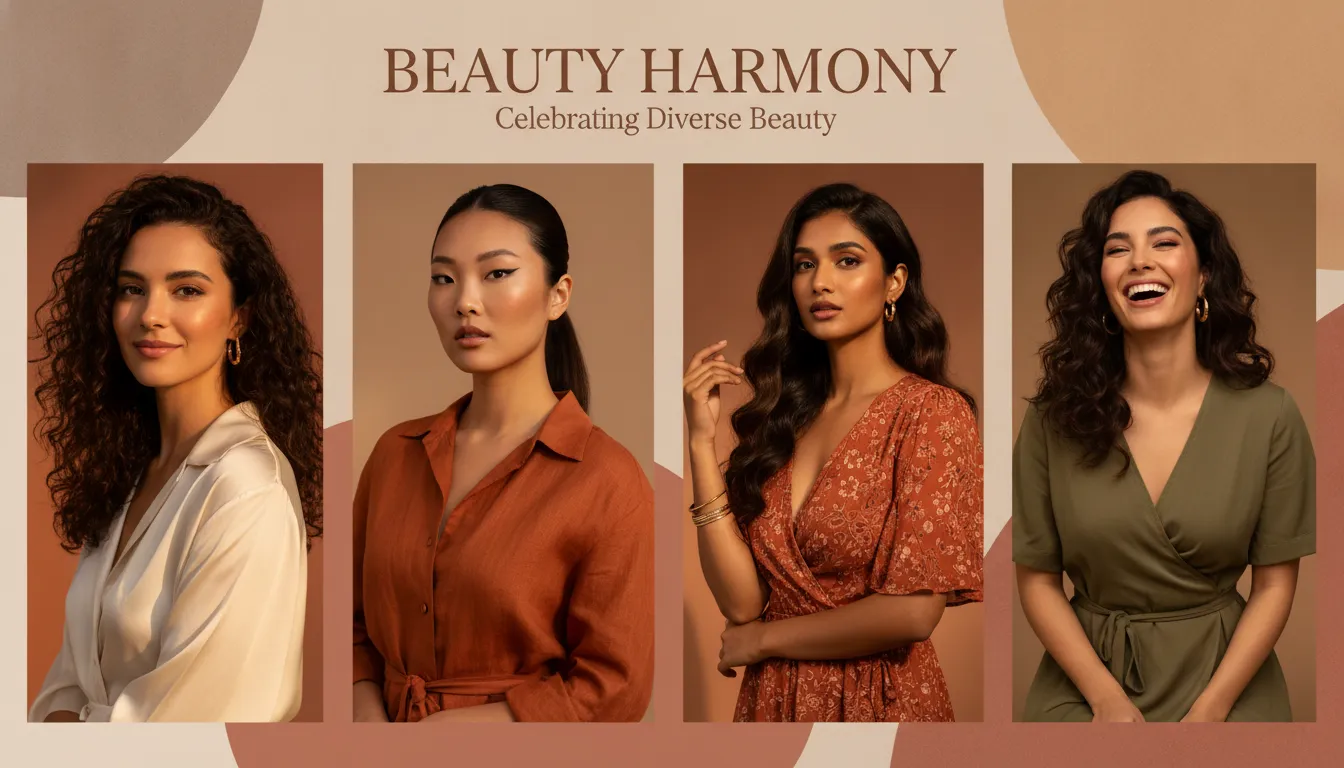
Olive Skin Is Global — But Beauty Advice Isn't
Search "olive skin" in English and you'll mostly find advice aimed at Mediterranean complexions — light-to-medium skin with a European green cast. Search in Korean and you'll find an entirely different conversation about 올리브톤 (olive tone) that focuses on East Asian skin with a grey-green cast. Neither conversation fully captures how olive undertones present across the world's diverse populations.
Olive undertone isn't tied to any single ethnicity. It's a skin characteristic caused by melanin interacting with warm and cool pigments — and it appears in Mediterranean, East Asian, South Asian, Middle Eastern, Latinx, and mixed-heritage populations. What changes across ethnicities isn't the presence of olive undertones but how melanin depth, cultural beauty standards, and available product ranges affect identification and styling.
This guide explores olive skin across ethnic backgrounds, how depth interacts with the olive modifier, and why AI analysis is especially valuable for diverse olive presentations.
What Olive Undertone Actually Is (Regardless of Ethnicity)
Before diving into ethnic variations, the core science is the same everywhere:
Olive undertone is a green-grey modifier caused by higher melanin concentration interacting with both warm (carotene) and cool (hemoglobin) pigments in the skin. This creates a cast that makes skin appear neither purely warm nor purely cool.
This modifier can sit on top of any base undertone (warm, cool, or neutral) at any depth (fair to deep). Ethnicity influences how visible the olive cast is and how it's culturally perceived — but the underlying mechanism is identical.
See your personal color palette now
Upload a photo — get your AI beauty report in 60 seconds.
Olive Skin in Mediterranean Populations
How It Presents
Mediterranean olive is the "classic" presentation most Western beauty advice references:
- Light to medium depth (Fitzpatrick III-IV)
- Visible green or golden-green cast, especially in natural daylight
- Often warm olive base with golden undertones
- Tans deeply and quickly to a golden-brown
- Green cast most visible on inner arms, neck, and jawline
Common Misidentification
Mediterranean olives are frequently typed as "warm" because of golden surface tones and greenish veins. The green modifier gets overlooked, leading to orange foundation and brassy hair color recommendations.
Typical Color Seasons
Soft Autumn and Warm Autumn are most common. Deep Autumn for darker Mediterranean complexions. Cool Mediterranean olives (common in Southern Europe) may type as Soft Summer.
Styling Context
Mediterranean beauty traditions often naturally favor olive-friendly colors — terracotta, olive green, warm earth tones — even without formal color analysis. The challenge is more often in makeup matching than wardrobe.
Olive Skin in East Asian Populations
How It Presents
East Asian olive is one of the most discussed undertone types in Korean and Japanese beauty communities (올리브톤 / オリーブ肌):
- Fair to medium depth (Fitzpatrick II-III)
- Grey-green or yellow-green cast (often more grey than green)
- Frequently misidentified as "neutral" or "cool yellow"
- The olive cast can be subtle, especially at fair depths
- May appear more green in winter, more yellow in summer
Common Misidentification
East Asian olive is routinely mistyped as:
- "Warm yellow" — because of visible yellow melanin, but the grey-green cast is missed
- "Neutral" — because warm and cool tests give contradictory results
- "Cool" — because of pink surface flushing (common in East Asian skin) overlaying the olive base
Korean personal color analysis (퍼스널컬러) has become increasingly sophisticated about olive tones, but many standard quizzes still miss it.
Typical Color Seasons
Soft Autumn and Soft Summer are most common. Cool olives may type as Cool Summer. Fair East Asian olives rarely type into Spring because of the muting effect.
Styling Context
K-beauty and J-beauty brands are increasingly labeling products for olive undertones. Foundation ranges from brands like Etude House, Laneige, and SUQQU now include olive-coded shades. The Korean beauty community has been ahead of Western brands in recognizing olive as distinct from warm or cool.
Olive Skin in South Asian Populations
How It Presents
South Asian olive often appears at deeper depths with rich, warm coloring:
- Medium to deep depth (Fitzpatrick IV-V)
- Green cast may be less visible at deeper depths but still affects color matching
- Warm olive base is common, with golden-brown skin tones
- The olive modifier interacts with higher melanin to create complex, rich coloring
- May appear more warm on surface but react to colors like olive (neither pure warm nor pure cool)
Common Misidentification
South Asian olive is frequently typed as:
- "Warm" — because of golden-brown surface color and warm appearance
- "Deep Autumn" or "Deep Winter" — correct season family but missing the olive modifier nuance
- "Neutral" — when neither warm nor cool products work correctly
Foundation matching is a major challenge — many South Asian skin tones fall between shade ranges designed for either "medium warm" or "deep warm" without an olive option.
Typical Color Seasons
Deep Autumn is most common for warm olive South Asian skin. Deep Winter for cool olive with high contrast. Soft Autumn for medium-depth olives.
Styling Context
South Asian fashion traditions include many olive-friendly colors — rich jewel tones, deep burgundy, emerald, gold. The challenge is often in finding makeup (especially foundation and lipstick) that accounts for the olive modifier beneath the warm surface.
Olive Skin in Middle Eastern Populations
How It Presents
Middle Eastern olive spans a wide range of depths and base undertones:
- Light to deep depth (Fitzpatrick III-V)
- Often a warm olive base with visible golden-green cast
- May have high contrast features (dark hair, dark eyes, olive skin)
- Tanning response is typically strong and deep
- Green cast visible at lighter depths, less visible but still present at deeper depths
Common Misidentification
Often typed as "warm" due to golden surface tones. The olive modifier affects makeup matching more than wardrobe — warm foundations turn orange, but warm clothing colors often work because Middle Eastern fashion palettes naturally include muted warm tones.
Typical Color Seasons
Soft Autumn, Deep Autumn, and Deep Winter are most common depending on depth and contrast.
Olive Skin in Latinx Populations
How It Presents
Latinx olive reflects diverse indigenous, European, and African heritage combinations:
- Light to deep depth (Fitzpatrick II-V)
- Olive cast varies from subtle grey-green to visible golden-green
- Mixed heritage can produce unique olive presentations that don't fit standard categories
- May present differently across body areas (face vs arms vs chest)
Common Misidentification
Latinx olive is often typed based on surface appearance rather than undertone — "medium warm" is the default category, missing the olive modifier. This leads to the familiar foundation mismatch cycle.
Typical Color Seasons
Varies widely by individual heritage and depth. Soft Autumn, Deep Autumn, and Deep Winter are most common.
How Melanin Depth Interacts With Olive Undertone
The olive modifier behaves differently at different depths:
Fair Olive (Fitzpatrick I-III)
- Green-grey cast is most visible — this is where olive is easiest to identify
- Often misidentified as neutral or cool because the cast is prominent
- Foundation matching is difficult because most fair shades lack olive options
- Color seasons tend toward Soft Autumn or Soft Summer
Medium Olive (Fitzpatrick III-IV)
- Green cast is moderately visible — the "classic" olive presentation
- Warm surface tones can mask the olive modifier
- Widest range of color seasons depending on base undertone and contrast
- Most product discussions about olive skin focus on this depth
Deep Olive (Fitzpatrick IV-VI)
- Green cast is least visible but still affects color matching
- Surface appears warm/golden, making olive the most commonly missed diagnosis
- Foundation ranges often skip olive undertones at deeper depths entirely
- Color seasons tend toward Deep Autumn or Deep Winter
- The foundation struggle is real but often attributed to "wrong depth" rather than "wrong undertone"
Critical insight: Just because you can't see the green cast doesn't mean it's not there. Deep olive skin's color matching challenges (warm turns orange, cool turns ashy) are the same mechanism as fair olive — just harder to diagnose visually.
Cultural Beauty Standards and Olive
The "Warm Default"
Many cultures default to "warm" as the assumed undertone for anyone who isn't clearly pale and pink. This affects:
- Product formulation: Brands create warm shades and label them "universal" or "medium"
- Beauty consultations: Consultants match to warm because it's the safe choice
- Cultural language: Some languages don't have a word for olive undertone separate from warm or yellow
The Korean/Japanese Exception
Korean and Japanese beauty communities have developed specific vocabulary and testing methods for olive tones (올리브톤, オリーブ undertone). This cultural awareness means:
- More product options labeled for olive skin
- Professional color analysts trained to identify olive
- Online communities sharing olive-specific advice
- Higher diagnosis accuracy in East Asian markets
The Western Gap
Western beauty education is catching up but still lags. "Olive" in Western contexts often means "Mediterranean" specifically, excluding the millions of olive-toned people in Asian, South Asian, Middle Eastern, and Latinx communities.
AI Analysis for Diverse Olive Presentations
Traditional undertone tests — vein checks, jewelry tests, white paper tests — were developed primarily on lighter skin and often fail across ethnicities. AI color analysis offers advantages for diverse olive skin:
Why AI Works Better
- Measures actual color values rather than relying on subjective visual tests
- Detects green-grey cast regardless of melanin depth
- Not biased toward lighter skin — algorithms trained on diverse datasets
- Accounts for the olive modifier that standard quizzes ignore
- Works across ethnicities because it analyzes your specific skin, not population averages
What to Expect
Upload a photo in natural daylight (no filters, no makeup if possible). The AI measures undertone, depth, and contrast — then maps you to a seasonal palette that accounts for olive undertones. Results include specific color recommendations for makeup, wardrobe, and hair.
For people who've been misidentified by every quiz and consultant, AI analysis often provides the first accurate reading they've received.
Key Takeaways
- Olive undertone appears across all ethnicities — Mediterranean, East Asian, South Asian, Middle Eastern, Latinx, and mixed heritage
- Melanin depth affects visibility — green cast is most visible on fair olive, least visible on deep olive, but present at all depths
- Cultural beauty standards often miss olive — defaulting to "warm" or "neutral" instead
- East Asian beauty communities lead in olive recognition — with specific terminology and product options
- AI analysis is the most reliable tool across ethnicities — because it measures your individual skin rather than applying population assumptions
Your ethnicity influences how olive presents, but it doesn't determine whether you have olive undertones. If warm and cool products both fail you, if your skin has a greenish cast in daylight, if muted earthy colors make you glow — you're olive, regardless of your background.
Find Your Olive Undertone
Our AI color analysis works across all skin tones and ethnicities — detecting olive undertones that standard tests miss.
60 seconds, free, no signup. Accurate undertone analysis for diverse skin.
Related Articles
- Color Analysis: The Complete Guide — Everything you need to know about finding your best colors
- Olive Undertone Guide — The complete guide to identifying and styling olive skin
- Olive Skin Color Season Guide — Which seasonal type olive skin typically falls into
- Olive vs Warm Undertone — Why olive skin isn't simply warm or cool
Want to try AI color analysis yourself?
Upload one photo and get a magazine-level beauty report in 60 seconds.
Start Free Analysis