Olive Undertone: The Most Misunderstood Skin Tone Explained
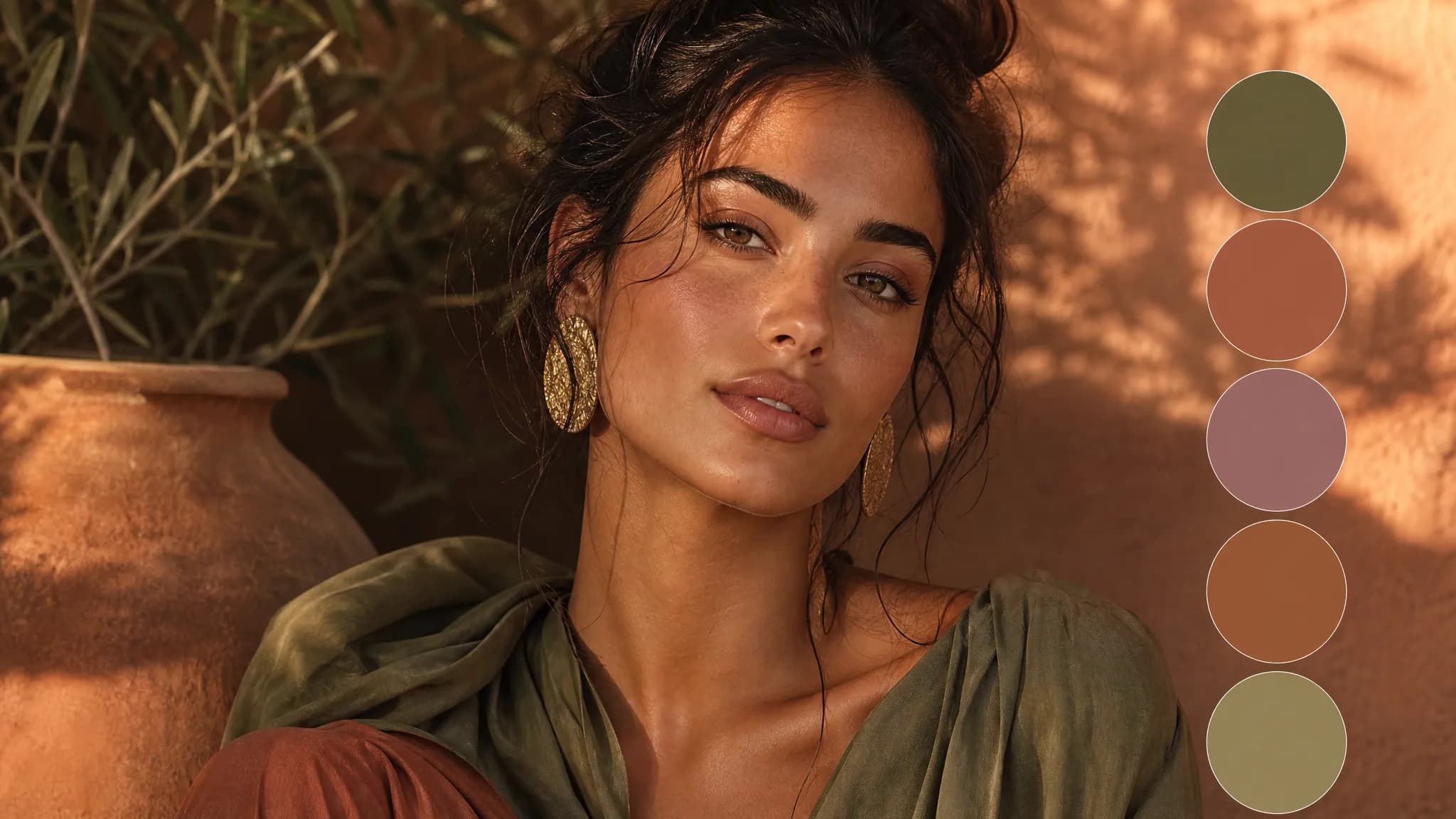
Why Nobody Talks About Olive Undertones
Every beauty article on the internet breaks skin undertones into three neat categories: warm, cool, or neutral. You take the vein test, check if gold or silver jewelry looks better, and you're done.
Except — what if neither gold nor silver looks quite right? What if your veins seem to be both blue and green? What if warm-toned foundations look orange on you, but cool-toned ones look pink?
If this sounds familiar, there's a good chance you have olive undertones. And you're not alone — olive is one of the most common undertones globally, yet it's barely mentioned in standard beauty advice.
I've spent years researching undertone theory, and olive undertones are hands-down the most misidentified skin characteristic in the beauty world. Let me explain why.
What Exactly Is an Olive Undertone?
Here's the part that confuses people: olive isn't a fourth undertone category alongside warm, cool, and neutral. It's a modifier that sits on top of your base undertone.
Think of it this way:
- Base undertone: warm or cool (determined by the balance of hemoglobin and carotene in your skin)
- Olive modifier: an extra layer of green or grey-green pigmentation, caused by a higher concentration of melanin interacting with both warm and cool pigments
This means you can be:
- Warm olive — your base leans yellow/golden, with a greenish cast on top
- Cool olive — your base leans pink/blue, but the green modifier mutes and neutralizes it
- Neutral olive — your base is fairly balanced, with an obvious green/grey-green tint
The green cast is what makes olive undertones so tricky to identify. It masks your true warm or cool base, which is why you might test as "neutral" on every online quiz — the warm and cool signals are canceling each other out, filtered through that green layer.
See your personal color palette now
Upload a photo — get your AI beauty report in 60 seconds.
How to Tell If You Have Olive Undertones
Standard undertone tests often fail for olive-toned people. Here are more reliable methods:
1. The Vein Check (Modified)
Look at your inner wrist veins in natural light. If you have olive undertones, your veins typically appear:
- Greenish-blue (not clearly blue or clearly green)
- Sometimes a muted teal color
- The area around the veins may have a subtle grey-green or yellowish-green tint
If someone asks "are your veins blue or green?" and your honest answer is "both?" — olive is likely.
2. The White T-Shirt Test
Put on a plain white crew-neck shirt and look in a mirror under natural light. Olive undertones make your skin look slightly:
- Grey or ashy against pure white
- Greenish around the neck, jawline, or inner arm
- "Muddy" compared to someone with a clear warm or cool undertone
People with non-olive undertones will look clearly pink (cool) or yellow (warm) against white fabric. Olive skin just looks... different. Neither clearly pink nor yellow.
3. The Foundation Frustration Test
This is honestly the most reliable indicator. If you have olive undertones, you've probably experienced:
- Warm foundations turning orange or too yellow on your skin
- Cool foundations looking too pink or ashy
- Spending 30+ minutes at the makeup counter trying shades and none looking quite right
- Your "best match" foundation still looking slightly off in natural light
The beauty industry has been slow to formulate for olive undertones, which is why finding foundation has historically been a nightmare.
4. The Color Draping Observation
When you drape different colored fabrics near your face:
- Pure warm colors (orange, golden yellow, warm coral) make you look sallow or washed out
- Pure cool colors (icy blue, bright fuchsia, cool pink) make you look grey or tired
- Muted, earthy tones (olive green, warm taupe, terracotta, dusty rose) make your skin look clearer and more alive
If highly saturated versions of both warm and cool colors look "off" but muted, mid-tone versions of either work well — olive undertones are very likely at play.
5. The Skin Appearance in Different Lighting
Olive skin changes appearance more dramatically under different lighting than other undertones:
- Natural daylight: the green/grey-green tint is most visible
- Warm indoor lighting: you may look more golden or yellowish
- Cool fluorescent lighting: you may look more grey or ashen
- Direct sunlight: olive skin tends to tan easily and deeply, often going golden-brown rather than pink/red
The Olive Undertone Color Palette
Once you know you're olive, everything changes. The colors that have always "just worked" on you finally make sense — and the ones that never worked have a clear explanation.
Colors That Flatter Olive Undertones
Earth tones are your kingdom:
- Olive green (yes, really) — this is essentially your skin's complementary harmony
- Warm taupe and mushroom — these muted warm-neutrals work beautifully
- Terracotta and rust — warm but muted enough to harmonize
- Burnt sienna and cognac — rich warmth without being too bright
- Khaki and sage — soft greens that echo your natural tones
Jewel tones that work:
- Teal — the perfect blend of blue and green complements olive skin perfectly
- Deep burgundy and wine — rich enough to avoid washing you out
- Forest green — deep and slightly muted, never too bright
- Plum — the blue-red purple that adds depth
- Mustard — one of the few "bright" warm colors that actually works on most olives
Neutrals that won't betray you:
- Warm grey (greige) — not too cool, not too warm
- Chocolate brown — deep and warm, flattering on almost every olive tone
- Off-white and cream — better than bright white, which can make olive skin look grey
- Camel and tan — warm enough to add color, muted enough to harmonize
Colors to Approach with Caution
- Neon anything — highly saturated colors tend to clash with olive's muted quality
- Pastel pink and baby blue — too light, too cool, will make you look ashy
- Bright orange — overwhelming on most olive tones
- Pure white — can drain olive skin and emphasize any grey-green cast
- Cool silver grey — risks making you look ill
The exception rule: If you're a cool olive, you may pull off some deeper cool shades (navy, deep emerald) that warm olives cannot, and vice versa. Knowing your base undertone within olive matters.
Olive Undertone Makeup Guide
Foundation
The good news: major brands are finally catching up to olive undertones. Look for:
- Foundations with "olive" in the shade name (brands like NYX, Rare Beauty, and NARS now offer these)
- Shades described as having a "yellow-green" or "golden-green" base
- Mix a tiny drop of green color corrector into your closest-match foundation to olive-ify it
Pro tip: When testing foundation, check it on your jawline in natural daylight after 10 minutes. Olive foundations oxidize differently than standard warm/cool formulas, and what looks right in-store under fluorescent lights may shift outdoors.
Concealer
Under-eye concealer is especially tricky for olive skin:
- Avoid concealers with strong pink or peach tones — they can look chalky
- Look for yellow-green based concealers
- A slightly warm, muted concealer often works better than a brightening one
- Some olive-toned people find that a thin layer of light peach underneath a green-based concealer gives the best results
Lip Colors
- Best nudes: Warm beige, mauve-brown, terracotta nude, dusty rose
- Best reds: Brick red, tomato red, warm berry — avoid blue-reds unless you're a cool olive
- Best darks: Chocolate brown, deep berry, warm plum
- Skip: Bright bubblegum pink, neon coral, cool fuchsia
Eye Makeup
- Bronze, copper, and gold eyeshadows are universally flattering on olive skin
- Warm-toned brown smoky eyes outperform cool grey ones
- Forest green eyeliner or eyeshadow picks up the green in your skin beautifully
- Terracotta and burnt orange shades add warmth without clashing
Blush
This is where olive-toned people often go wrong. The fix:
- Choose muted, warm-toned blushes: soft peach, dusty rose, terracotta, warm mauve
- Avoid bright pink or cool berry blushes (they'll look like a random stripe of color on your cheek)
- Cream blush often looks more natural on olive skin than powder blush
Olive Undertones and Seasonal Color Analysis
In the 12-season color analysis system, olive undertones show up most frequently in:
- Soft Autumn — the most classic olive placement; muted, warm, medium depth
- Warm Autumn — warmer olives with golden base tones
- Deep Autumn — darker olive complexions with rich, deep coloring
- Soft Summer — cool olives with muted, ash-toned coloring
It's rare for olive-toned people to type into Spring or Winter seasons because those palettes are built around clarity and high saturation — qualities that typically clash with olive's inherent mutedness.
If you've taken a color analysis quiz and the results didn't feel right, your olive undertone might be the reason. Standard quizzes don't account for the green modifier, so they may type you into a season that technically matches your warm/cool base but ignores the muted quality that olive adds.
For more accurate results, AI-based color analysis can detect olive undertones by measuring the actual color values in your skin — including that green-grey cast that's invisible to most basic tests but clearly visible to computer vision algorithms.
Key Takeaways
- Olive is a modifier, not a separate undertone — you can be warm olive, cool olive, or neutral olive
- Standard undertone tests often fail for olive skin because the green pigment masks your warm/cool base
- The foundation struggle is real — look for brands that specifically formulate for olive tones
- Your best colors are muted and earthy — saturated brights and icy pastels are generally not your friends
- Seasonal color analysis placement is usually Autumn or Soft Summer for olive-toned individuals
Understanding your olive undertone is genuinely liberating. Once you stop trying to force yourself into a "warm or cool" box and embrace the complexity of your coloring, choosing flattering colors becomes intuitive instead of frustrating.
Related Articles
- Color Analysis: The Complete Guide — Everything you need to know about finding your best colors
- How to Determine Your Skin Undertone — The full undertone guide with 7 testing methods
- Cool Tone vs Warm Tone: 5 Easy Tests — Compare cool and warm basics
- Best Colors for Cool Undertones — Specifically for cool-toned skin
Want to try AI color analysis yourself?
Upload one photo and get a magazine-level beauty report in 60 seconds.
Start Free Analysis