Celebrity Color Transformations: What Red Carpet Before-and-Afters Teach Us About Color Season
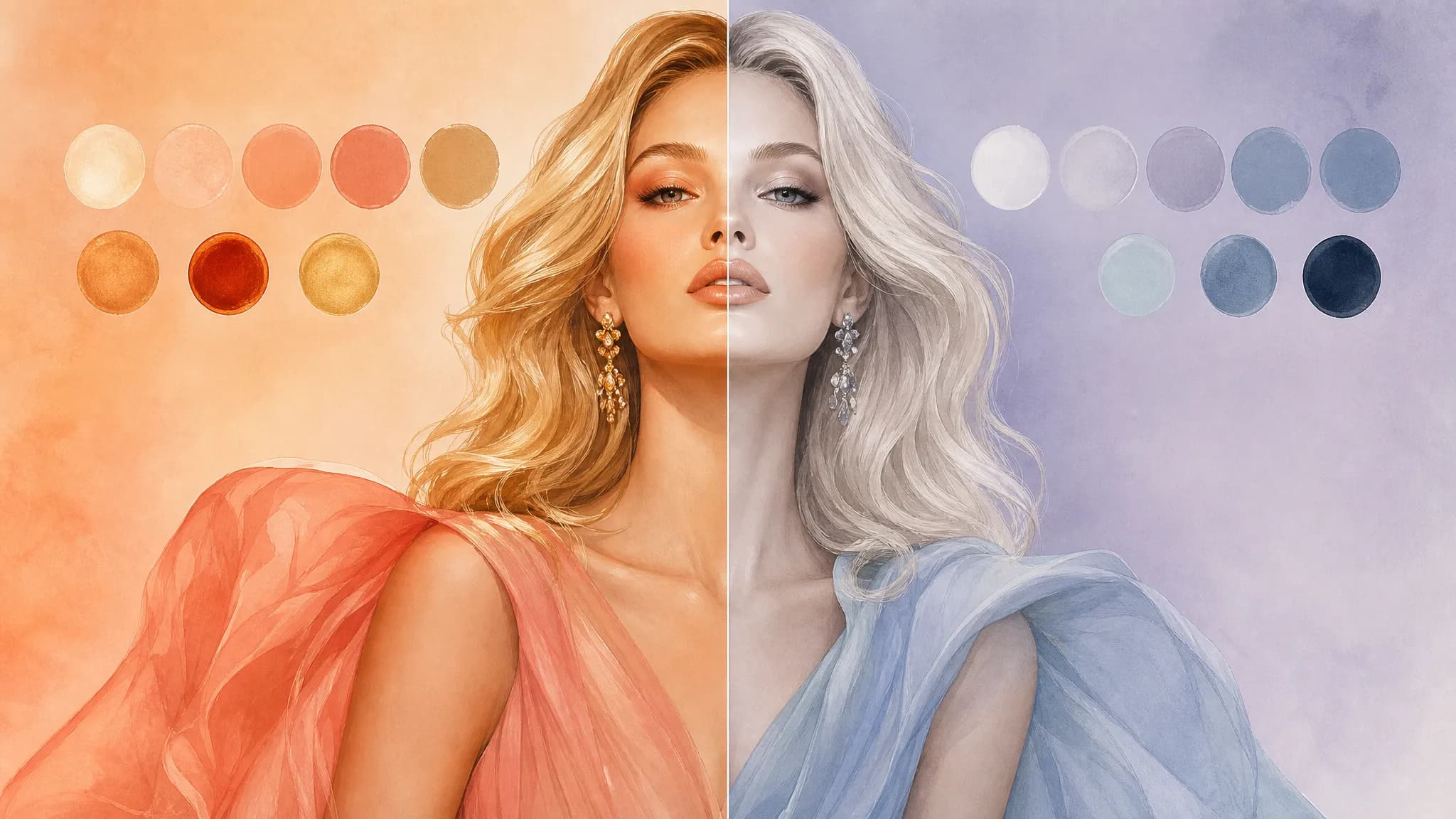
Why Some Celebrity Makeovers Look Stunning — and Others Don't
I've been fascinated by celebrity transformations for years, but not for the usual reasons. While most people debate whether they prefer someone blonde or brunette, I'm looking at something deeper: whether the new look harmonizes with their natural coloring.
Here's what I've learned after analyzing hundreds of celebrity hair and style changes: the transformations that make everyone gasp ("she looks ten years younger!") almost always move the celebrity closer to their ideal color season palette. The ones that look "off" — even when technically well-executed — push them further away.
This isn't just an interesting observation. It's a practical lesson you can apply to every color decision you make, from your next salon appointment to tomorrow morning's outfit.
The Science Behind Why Color Changes Work (or Don't)
Before we dive into specific examples, here's what's happening optically when someone changes their hair color or style palette.
Your natural coloring — skin undertone, eye color, and original hair shade — creates what colorists call a "harmony field." When the colors touching your face (hair, clothing, makeup) share the same temperature and depth as your natural coloring, your skin looks clear, your eyes pop, and imperfections fade.
When those colors clash with your natural harmony, the opposite happens. Skin looks sallow or flushed. Under-eye circles become more visible. Features flatten. Research from the International Colour Association confirms that color adjacency dramatically affects how we perceive skin quality — it's not subjective opinion, it's optics.
This is why a celebrity can look completely different with a simple hair color change. They haven't lost weight, had surgery, or aged backward. They've simply shifted their personal color environment closer to (or further from) their natural harmony.
See your personal color palette now
Upload a photo — get your AI beauty report in 60 seconds.
Case Study 1: Warm-to-Cool Transitions
When It Works: Zendaya's Versatile Palette
Zendaya is fascinating from a color analysis perspective because she has a Deep Autumn palette with high versatility. Her rich, warm undertone and high contrast mean she can pull off both warm auburn hair and deep cool-toned brunette — as long as the depth stays consistent.
Notice what happens when she goes too light or too ashy: the warmth drains from her complexion. But when she wears that signature rich copper-red? Her skin glows, her eyes intensify, and she looks effortlessly radiant.
The lesson: If you're a deep warm season (Deep Autumn or Deep Winter), depth matters more than temperature. You have some flexibility with warm vs. cool, but going too light will always wash you out.
When It Doesn't Work: Warm Seasons Going Ice-Blonde
We've all seen it: a naturally warm-toned celebrity goes platinum blonde, and something looks... wrong. Their skin suddenly looks ruddy or yellow. Their eyes seem smaller. The overall effect is aging rather than fresh.
This happens because ice-blonde has blue and violet pigments — extremely cool tones that clash with warm skin undertones. The contrast between cool hair and warm skin creates a dissonance that our eyes read as "unhealthy."
The lesson: Warm undertones (Spring and Autumn seasons) should approach blonde through golden, honey, or strawberry shades — never ashy platinum. If you want to go lighter, keep the warmth in the formula.
Case Study 2: The Red Hair Experiment
The "Instant Glow" Effect: True Autumn Types
Some celebrities discover red hair and suddenly look like they've found the fountain of youth. This usually happens with True Autumn or Warm Spring types — people whose natural coloring already has warm, golden-red undertones that simply weren't being expressed.
Think of celebrities who went auburn and suddenly got "best hair ever" comments from every magazine. What happened? Their natural warmth was amplified rather than contradicted. The copper tones in their hair echoed the golden undertones in their skin, creating a seamless harmony that made everything else (eyes, skin clarity, lip color) pop.
The lesson: If you have warm undertones and are considering red, you're likely to love the result. The warmth in red pigments will harmonize with your natural coloring rather than fight against it.
The "Interesting but Aging" Effect: Cool Season Types
When cool-toned celebrities try red, the result is often described as "edgy" or "bold" — which is polite industry language for "it doesn't harmonize." The warmth of red clashes with their naturally cool undertones, creating a slight discord that reads as intentional (fashion-forward) rather than natural (effortlessly beautiful).
This doesn't mean cool types can never wear red hair. But they need to choose the right type of red — think wine-red, berry-toned burgundy, or blue-violet rather than copper or auburn. Cool reds exist, and they're stunning on Winter types.
The lesson: Red isn't one color — it spans from warm copper to cool burgundy. Choose the temperature of your red based on your undertone, not based on what looked good on someone with different coloring.
Case Study 3: Going Darker
The Power Move: High-Contrast Types
When high-contrast celebrities (typically Winter seasons) go darker, the result is almost always dramatic in the best way. Deep brunette or black hair amplifies their natural contrast between skin, eyes, and hair — making their features look more defined and striking.
This is why certain celebrities look most powerful and iconic with dark hair, even if they occasionally experiment with lighter shades. Their features are designed for high contrast, and dark hair delivers exactly that.
The lesson: If you have high contrast naturally (light skin with dark eyes, or dark skin with bright eyes), don't be afraid of going darker. It's likely your most powerful look.
The Disappearing Act: Low-Contrast Types
When low-contrast types (typically Light Spring or Light Summer) go very dark, their features can seem to disappear. The heavy, deep hair color creates too much contrast for their delicate coloring, overwhelming their light eyes and subtle skin tones.
The result looks heavy and aging — not because dark hair is inherently wrong, but because it's wrong for their specific contrast level.
The lesson: If you're a low-contrast type (light eyes, light skin, naturally blonde or light brown hair), approach darker shades gradually. A rich medium brown might be your sweet spot — dark enough to feel different, but not so dark that it overwhelms your features.
Case Study 4: The Blonde Spectrum
The blonde spectrum perfectly illustrates why knowing your specific sub-season matters. "Going blonde" can mean a dozen different things, and each variation suits a completely different type of coloring.
- Platinum/ice blonde: Best on Light or Cool Summers — people with pink undertones and cool, ashy natural coloring
- Golden blonde: Best on Light Springs and True Springs — warm, golden skin with light, warm eyes
- Honey/caramel blonde: Best on Soft Autumns — muted, warm undertones with medium contrast
- Strawberry blonde: Best on Warm Springs and Light Autumns — peachy or golden skin with freckles
- Dark ash blonde/bronde: Best on Soft Summers — cool but muted, medium depth
When celebrities get blonde "wrong," it's almost always a temperature or depth mismatch. A cool-toned person in golden blonde looks brassy. A warm-toned person in ash blonde looks grey and washed out. The chemistry of their skin creates an entirely different result than what they saw on the inspiration photo.
The lesson: Before going blonde, identify whether your coloring is warm or cool, and high or low contrast. This determines which type of blonde will look natural and flattering on you — which is far more important than the specific shade.
How to Apply Celebrity Color Lessons to Your Own Choices
After studying hundreds of transformations, here's a framework you can use:
Step 1: Identify your color temperature
Look at the veins on your inner wrist in natural daylight. Green/olive = warm. Blue/purple = cool. Mix of both = neutral. This single factor eliminates half the possible hair colors and clothing palettes immediately.
Step 2: Determine your contrast level
Hold a piece of white paper next to your face. How much difference is there between your lightest feature (usually skin) and darkest feature (usually hair or eyes)? High contrast means you can handle bold color differences. Low contrast means you want everything in a similar depth range.
Step 3: Study celebrities with your coloring
Find 3-5 celebrities who share your approximate skin tone, eye color, and natural hair shade. Look at their best and worst looks. The patterns will emerge quickly — and they apply directly to you.
Step 4: Use AI for precision
Manual comparison has limits — you might misjudge your own undertone or pick a celebrity who isn't actually the match you think. Modern AI color analysis tools can identify your exact sub-season objectively, removing the guesswork. A tool like aicoloranalysis.io can analyze your photo and tell you exactly which of the 12 seasons you belong to — giving you a precise celebrity reference list and a palette to work from.
The Transformation Decision Matrix
Before making any major color change, ask yourself:
| Question | Good Sign | Warning Sign |
|---|---|---|
| Does the target shade match my undertone temperature? | Same warmth/coolness as my skin | Opposite temperature from my natural coloring |
| Is the contrast level appropriate? | Similar gap between features as I have naturally | Much higher/lower contrast than my natural state |
| Would a celebrity with my coloring look good in this? | Multiple examples of my season type rocking this shade | All examples are from a different season type |
| Am I drawn to this because it suits me, or because it looks good on someone else? | I've seen similar tones look great near my face | I'm copying a specific person with different coloring |
Key Takeaways
- Celebrity transformations that look "stunning" almost always move toward their natural color season — the change harmonizes with their undertone and contrast level
- The same hair color can look completely different on warm vs. cool undertones — temperature matching matters more than the specific shade
- Your contrast level determines how dramatic you can go — high-contrast types handle bold changes better than low-contrast types
- "Going lighter" for warm types means golden/honey tones, not ash or platinum — and vice versa for cool types
- AI color analysis can objectively identify your season, giving you a clear roadmap before any major color change
The most valuable thing celebrity transformations teach us isn't which shade to choose — it's that color works as a system. When all the elements align with your natural harmony, you look effortlessly stunning. When they don't, no amount of expensive color correction will create that "wow" effect. Know your season, study your celebrity color twins, and every transformation you make will be one that makes people say "you look amazing" instead of "that's... different."
Related Articles
- Which Celebrity Has Your Color Season? Find Your Style Twin — Discover celebrities who share your exact color season
- How to Find Your Best Hair Color Based on Your Color Season — The complete guide to choosing hair colors by season
- Color Analysis: The Complete Guide — Everything you need to know about finding your best colors
- AI vs Professional Color Analysis: I Tried Both — An honest comparison of both approaches
Want to try AI color analysis yourself?
Upload one photo and get a magazine-level beauty report in 60 seconds.
Start Free Analysis