Winter Color Palettes Decoded: Deep Winter vs True Winter vs Bright Winter
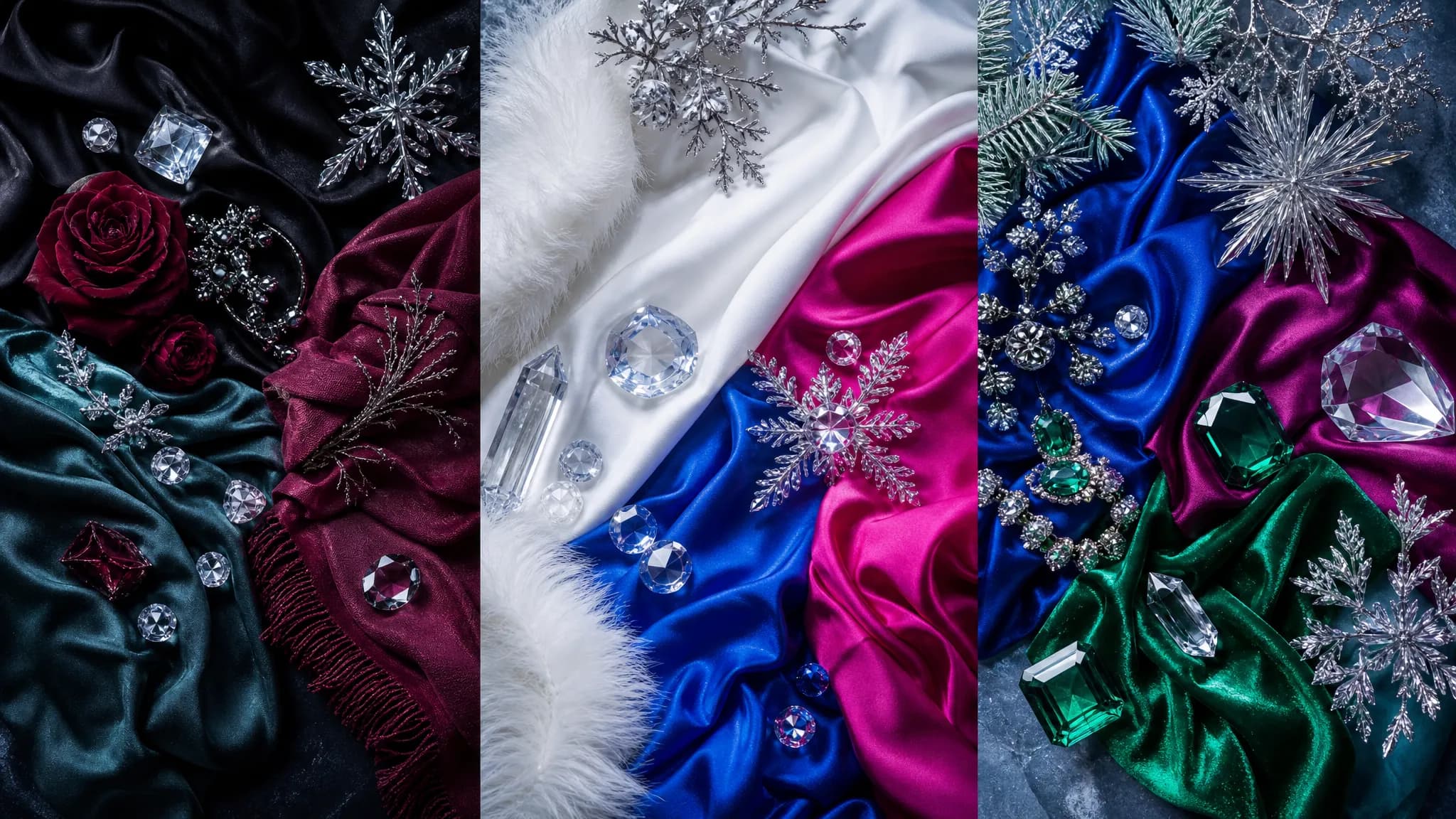
You're a Winter — But Which One?
Getting typed as a Winter is exciting. You're in the most dramatic, high-contrast family of the 12-season color system. Bold jewel tones, crisp whites, and saturated colors that would overwhelm other seasons? Those are your colors.
But here's the thing — there are three distinct Winter sub-seasons, and lumping them together is like saying "all ice cream is the same." A Deep Winter in icy pastels will look washed out. A Bright Winter in dark muted shades will look heavy. And a True Winter in warm-leaning jewel tones will just look... off.
I've watched countless people make this exact mistake. They hear "Winter" and immediately reach for black, navy, and nothing else. Or they buy every jewel tone they can find without considering whether their specific Winter type can carry the depth, coolness, or brightness of each shade.
In this guide, I'll break down Deep Winter, True Winter, and Bright Winter — their defining traits, their best and worst colors, and exactly how to figure out which one matches your natural coloring.
What All Winters Have in Common
Before diving into the sub-seasons, let's establish the Winter family's shared DNA.
Every Winter shares these characteristics:
- Cool or neutral-cool undertone — your skin has a blue, pink, or cool-olive quality
- High contrast — there's a noticeable difference between your hair, skin, and eye colors
- Clear, saturated coloring — nothing about your natural features looks muted or dusty
- Cool-toned or dark eyes — deep brown, black-brown, cool hazel, icy blue, or steel gray
- Dark or dramatically contrasting hair — jet black, dark brown, cool espresso, or occasionally very light (platinum) with dark features
Think of the color energy of a winter landscape: crisp white snow against dark evergreens, a clear blue sky above stark black branches, jewel-toned berries against frost. Winter palettes capture that sharpness — they're cool, saturated, and dramatic.
The three sub-seasons differ based on their secondary characteristic:
| Sub-Season | Primary Quality | Secondary Quality | Think Of It As... |
|---|---|---|---|
| Deep Winter | Cool | High depth/richness | Winter meets Autumn |
| True Winter | Cool | High contrast & clarity | The most "typical" Winter |
| Bright Winter | Cool | High brightness/vibrancy | Winter meets Spring |
Let's break each one down.
See your personal color palette now
Upload a photo — get your AI beauty report in 60 seconds.
Deep Winter: The Luxurious Cool
Who They Are
Deep Winters live at the border between Winter and Autumn. They carry the cool drama of Winter but with a depth and richness that other Winters can't match. These are the people who look powerful in dark, saturated colors — like they were born to wear midnight blue and wine red.
Physical characteristics:
- Skin: Porcelain, cool olive, deep espresso, or cool beige — always with a cool undertone, often with high contrast against dark hair
- Eyes: Deep brown, black-brown, dark cool hazel, or deep emerald
- Hair: Jet black, blue-black, dark espresso, or very dark brown with cool undertones — rarely any warmth visible in the hair
- Overall impression: Deep, cool, and intense — there's a gravity and richness to their coloring that draws attention
Best Colors
Deep Winter's palette is built around cool, saturated colors with significant depth:
- Blues: Navy, midnight blue, sapphire, deep royal blue, dark teal
- Reds: Burgundy, wine red, dark cherry, cool cranberry, oxblood
- Greens: Emerald, deep forest green, dark pine, cool dark teal
- Purples: Aubergine, deep plum, dark violet, blackberry
- Others: Charcoal, jet black, cool dark chocolate, pure white, icy gray
- Neutrals: Black, dark navy, cool charcoal, pure white, deep espresso
Colors to Avoid
- Warm, earthy tones: camel, rust, warm tan, mustard
- Light pastels without enough depth: baby pink, light lavender
- Warm-based yellows: golden, honey, warm cream
- Muted or dusty colors: dusty rose, sage, mauve
- Warm oranges and terracotta
Deep Winter vs Deep Autumn
This is one of the most commonly confused pairs. Both are dark and dramatic. The tell: hold a cool burgundy versus a warm rust near your face. If the cool shade makes your skin look clear and luminous while the warm shade makes you look sallow or yellowish, you're Deep Winter. Deep Autumns have undeniable warmth; Deep Winters have undeniable coolness even in their depth.
True Winter: The Cool Classic
Who They Are
True Winter (sometimes called Cool Winter or Pure Winter) is the most balanced, quintessential Winter type. They embody everything people picture when they think "Winter colors" — icy, sharp, saturated, and strikingly cool. These are the people who look incredible in snow white, jet black, and the brightest jewel tones.
Physical characteristics:
- Skin: Very fair porcelain, cool beige, pink-toned, or cool olive — the skin always reads cool and clear
- Eyes: Icy blue, cool gray, clear cool green, deep cool brown, or dark eyes with a bright white sclera creating high contrast
- Hair: Jet black, dark brown (cool-cast), salt-and-pepper (the natural high contrast), or occasionally platinum blonde with dark brows
- Overall impression: Crisp, cool, and high-contrast — there's a sharpness and clarity to their features like a high-definition photograph
Best Colors
True Winter's palette is the definitive cool jewel tone collection:
- Blues: Royal blue, cobalt, sapphire, electric blue, true navy
- Reds: True red (blue-based), cherry red, cool crimson, magenta
- Pinks: Hot pink, fuchsia, cool berry, shocking pink
- Greens: Emerald, cool pine, bright teal, cool mint (saturated)
- Purples: Royal purple, violet, amethyst, deep orchid
- Neutrals: Pure white, jet black, cool gray, icy silver, navy
Colors to Avoid
- Any warm-toned color: orange, rust, golden yellow, warm coral
- Muted or dusty shades: dusty pink, sage, taupe, mushroom
- Earth tones of any kind: brown, khaki, olive, beige
- Warm creams and ivory (pure white or nothing)
- Pastels that are too soft or warm-leaning
True Winter's Signature Power
True Winters have a superpower that no other season can match: they own pure contrast. Black and white together, which would look stark or costume-like on other seasons, looks absolutely natural and powerful on True Winters. They can wear a pure white shirt, jet black trousers, and a single statement jewel-toned accessory and look like they walked off an editorial set. Simplicity is their luxury.
Bright Winter: The Vivid Statement
Who They Are
Bright Winters sit at the border between Winter and Spring. They have the coolness and contrast of Winter but with an added vibrancy and luminosity that makes them look alive in the most saturated, bright colors imaginable. They're the people who can wear electric blue or hot pink and look energized rather than overdone.
Physical characteristics:
- Skin: Clear and bright with cool or neutral-cool undertones — porcelain with pink, light olive with clarity, or medium skin that looks "lit from within"
- Eyes: Bright blue, vivid green, clear light hazel, sparkling dark brown, or any eye color that appears particularly clear and luminous
- Hair: Dark brown or black with a natural shine, occasionally medium brown with cool-ash tones — the key is the contrast against clear, bright eyes or skin
- Overall impression: Vibrant, clear, and energetic — their coloring has a "sparkle" quality, like winter sunlight on fresh snow
Best Colors
Bright Winter's palette is built on vivid, clear, cool-leaning colors at maximum saturation:
- Blues: Electric blue, cobalt, bright turquoise, vivid royal blue, cyan
- Pinks: Hot pink, bright magenta, vivid fuchsia, cool neon pink
- Greens: Bright emerald, vivid teal, clear jade, electric green
- Reds: True red, bright cherry, vivid cool red, clear berry
- Purples: Bright violet, vivid amethyst, electric purple, clear orchid
- Neutrals: Pure white, black, bright navy, clear icy gray, chrome silver
Colors to Avoid
- Muted or dusty anything — this is the number one rule for Bright Winters
- Earth tones: brown, tan, khaki, olive, rust
- Warm colors: orange, golden yellow, peach, warm coral
- Soft pastels: powder blue, light pink, pale lavender
- Dark, heavy colors without brightness: dark olive, dark brown, charcoal without contrast
Bright Winter vs Bright Spring
Another tricky distinction. Both are vivid and high-energy. The key difference is temperature: hold a cool fuchsia next to a warm coral near your face. If the cool fuchsia makes your eyes pop and skin glow while the warm coral makes you look slightly orange or washed out, you're Bright Winter. Bright Springs lean warm in their brightness; Bright Winters lean cool.
How to Tell Which Winter You Are
Still uncertain? Here are three practical tests:
Test 1: The Depth Test
Try these three colors next to your face in natural light:
- A dark navy or aubergine (Deep Winter)
- A true royal blue or cherry red (True Winter)
- An electric blue or hot pink (Bright Winter)
Which depth and intensity level makes your features come alive without overpowering them? Deep Winters need weight. True Winters need purity. Bright Winters need vibrancy.
Test 2: The Muted vs Clear Test
This is the most important test for Winters:
- Hold a muted dusty blue next to a vivid cobalt blue
- Hold a mauve pink next to a hot pink
If the muted shade makes you look tired or dull and the vivid shade makes you look alive, you're likely a Winter. The degree of clarity needed tells you your sub-season — extreme clarity suggests Bright Winter.
Test 3: The Warmth Tolerance Test
Try adding warmth gradually:
- Deep Winter can handle the slightest warm lean (dark warm tones like warm chocolate or burgundy with a hint of red) — they border Autumn
- True Winter tolerates zero warmth — everything must be purely cool
- Bright Winter can handle slight brightness overlap with warm-bright tones (vivid colors that could be warm or cool) — they border Spring
Practical Styling Tips by Sub-Season
Deep Winter Wardrobe Strategy
Build your wardrobe on a base of black, dark navy, and charcoal. Your accent colors are burgundy, emerald, and sapphire. Silver and platinum jewelry in bold, architectural designs suit your drama. For makeup, lean into wine and berry lips, cool smoky eyeshadows, and a porcelain or cool-toned base. You can wear more darkness than any other Winter without looking heavy.
True Winter Wardrobe Strategy
Your base should be black, pure white, and cool gray. Embrace maximum contrast — a white blouse with black trousers, a gray coat with a red scarf. Your accent colors are royal blue, true red, and emerald. Silver jewelry in clean, geometric designs is your signature. For makeup, true red lips are your power move, with cool berry or plum as alternatives, and cool-toned eyeshadows in charcoal, navy, or violet.
Bright Winter Wardrobe Strategy
Build on black, pure white, and bright navy. But here's your edge: you can add vivid pops of color that would look costume-like on other Winters. Your accent colors are electric blue, hot pink, and vivid emerald. Silver and white gold jewelry with clear gemstones (diamond, sapphire, emerald) amplify your natural sparkle. For makeup, bright berry lips, vivid pink blush, and clear cool-toned eyeshadows with shimmer bring out your luminosity.
Winter Metals and Jewelry Guide
Winters are silver people — but the specific approach varies:
| Sub-Season | Best Metal | Also Works |
|---|---|---|
| Deep Winter | Platinum, white gold, dark silver | Gunmetal, dark rhodium |
| True Winter | Bright silver, platinum, white gold | Chrome, steel |
| Bright Winter | Bright silver, white gold, crystal | Rhodium, clear gemstones |
Gold is generally a struggle for all Winter types. If you love gold jewelry, opt for white gold or platinum with a cool sheen rather than warm yellow gold. Rose gold can work for Bright Winters in small doses due to their slight warmth tolerance.
The Technology Shortcut
Identifying your Winter sub-season traditionally required a professional color draping session — which meant sitting in controlled lighting while an analyst systematically holds cool-toned fabrics of varying depth and brightness against your face. It's effective but typically costs $150-400 depending on your city.
AI-powered color analysis tools have made this much more accessible. Platforms like AI color analysis analyze your skin undertone, contrast level, eye color, and hair shade to pinpoint your exact sub-season in under a minute — using the same visual cues that professional analysts assess, but through computer vision trained on thousands of color-typed faces.
Key Takeaways
- Deep Winter: The richest, deepest Winter. Luxurious cool saturated colors with weight. Borders Autumn.
- True Winter: The purest, most balanced Winter. Maximum contrast, zero warmth tolerance. The quintessential Winter.
- Bright Winter: The most vivid, energetic Winter. Maximum brightness and clarity. Borders Spring.
- All Winters share cool undertones, high contrast, and clear coloring — the difference is depth vs purity vs brightness.
- When in doubt, try the muted vs clear test: if muted colors always make you look dull, you're confirmed Winter. Your brightness preference reveals your sub-season.
Knowing your specific Winter sub-season changes everything about how you shop, do your makeup, and put outfits together. You're not just "a Winter wearing dark colors" — you're a specific flavor of cool drama, and dressing for your exact type is the difference between looking good and looking magnetic.
Related Articles
- Color Analysis: The Complete Guide — Everything you need to know about finding your best colors
- Deep Winter Color Palette — Full palette, makeup & wardrobe guide
- Cool Winter Color Palette — Full palette, makeup & wardrobe guide
- Bright Winter Color Palette — Full palette, makeup & wardrobe guide
- Autumn Color Palettes Decoded: Deep Autumn vs True Autumn vs Soft Autumn — The warm counterpart to this guide
- Summer Color Palettes Decoded: Cool Summer vs True Summer vs Soft Summer — The other cool-season family decoded
- Spring Color Palettes Decoded: Bright Spring vs True Spring vs Light Spring — Bright Winter's warm neighbor
- Deep Winter Color Palette: Your Complete Style Guide — An even deeper dive into Deep Winter specifically
Want to try AI color analysis yourself?
Upload one photo and get a magazine-level beauty report in 60 seconds.
Start Free Analysis