Olive Skin Lip Color Guide: Best Lipsticks for Olive Undertones
See your own result in 60 seconds
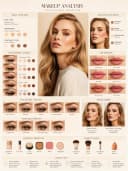
Personalized makeup guide: foundation, lips, eyes, blush recommendations
In this article · 11
- 1.Why Lipstick Is the Hardest Makeup Category for Olive Skin
- 2.Why Standard Reds Go Wrong on Olive Skin
- 3.Best Lip Color Families for Olive Skin
- 4.The Coral Controversy: When It Works, When It Doesn’t
- 5.Lip Colors to Avoid
- 6.Building a Five-Lip Wardrobe for Olive Skin
- 7.Lip Color by Olive Subtype
- 8.Application Tips for Olive Lips
- 9.Key Takeaways
- 10.Find Your Best Lip Colors
- 11.Related Articles
Why Lipstick Is the Hardest Makeup Category for Olive Skin
Foundation steals the spotlight in most olive-skin threads. Lipstick is where the real heartbreak happens.
I have lost count of how many times an olive client swatched a red that looked electric on a warm-toned friend — and on their own mouth it turned orange, muddy, or made their teeth look yellow. They tried a cool pink and the color went flat and grey next to their skin. They bought a “universal nude” and it either disappeared or looked like concealer painted on the lips.
Olive undertones read lip pigment through a green-grey modifier. Shades balanced for plain warm or cool skin hit that cast and shift in ways the swatch card never promised. This guide walks through the families that actually harmonize, the shades I tell clients to skip, and how to build a five-lip wardrobe that works year-round.
Why Standard Reds Go Wrong on Olive Skin
The classic red — blue-red, fire-engine, true crimson — is usually built on a cool pink base for porcelain-cool undertones. On olive skin, that blue-red fights your green cast. Instead of a clean scarlet, you often get a muddy or purple-grey lip that looks separate from your face.
Warm reds are not a reliable backup. Orange-red and tomato lipsticks can look gorgeous in the tube but turn sallow or aggressively orange on olive skin, especially warm olive. The lipstick’s warmth stacks on your skin’s yellow base while the green modifier creates that uncanny “almost right but wrong” effect.
The olive-friendly red lane is brick red — muted, brown-leaning red with enough warmth to glow and enough depth to sit with green undertones. Think terracotta red, rust, and warm berry-red rather than true crimson or orange-red.
| Red type | What you expect | What often happens on olive skin |
|---|---|---|
| Blue-red / true crimson | Classic Hollywood red | Muddy, purple-grey, or ashy |
| Orange-red / tomato | Warm, sunny red | Sallow, too orange, teeth look yellow |
| Brick / terracotta | Subtle statement | Harmonizes — reads as a true red on you |
Best Lip Color Families for Olive Skin
These four families cover most of what you will wear daily. When I build looks for olive undertones, I reach for them constantly.
Berry
Berry lip colors — raspberry, cranberry, deep cherry, mulberry — are among the most flattering shades for olive skin. They carry blue-violet depth so the lip looks rich without the stark coolness that creates a grey cast.
Berry shades worth swatching:
- Deep raspberry
- Cranberry
- Mulberry
- Dark cherry
- Boysenberry
Berry works on warm and cool olive. Cool olives can often handle a touch more purple in berry; warm olives usually shine in red-berry rather than purple-berry.
Mauve
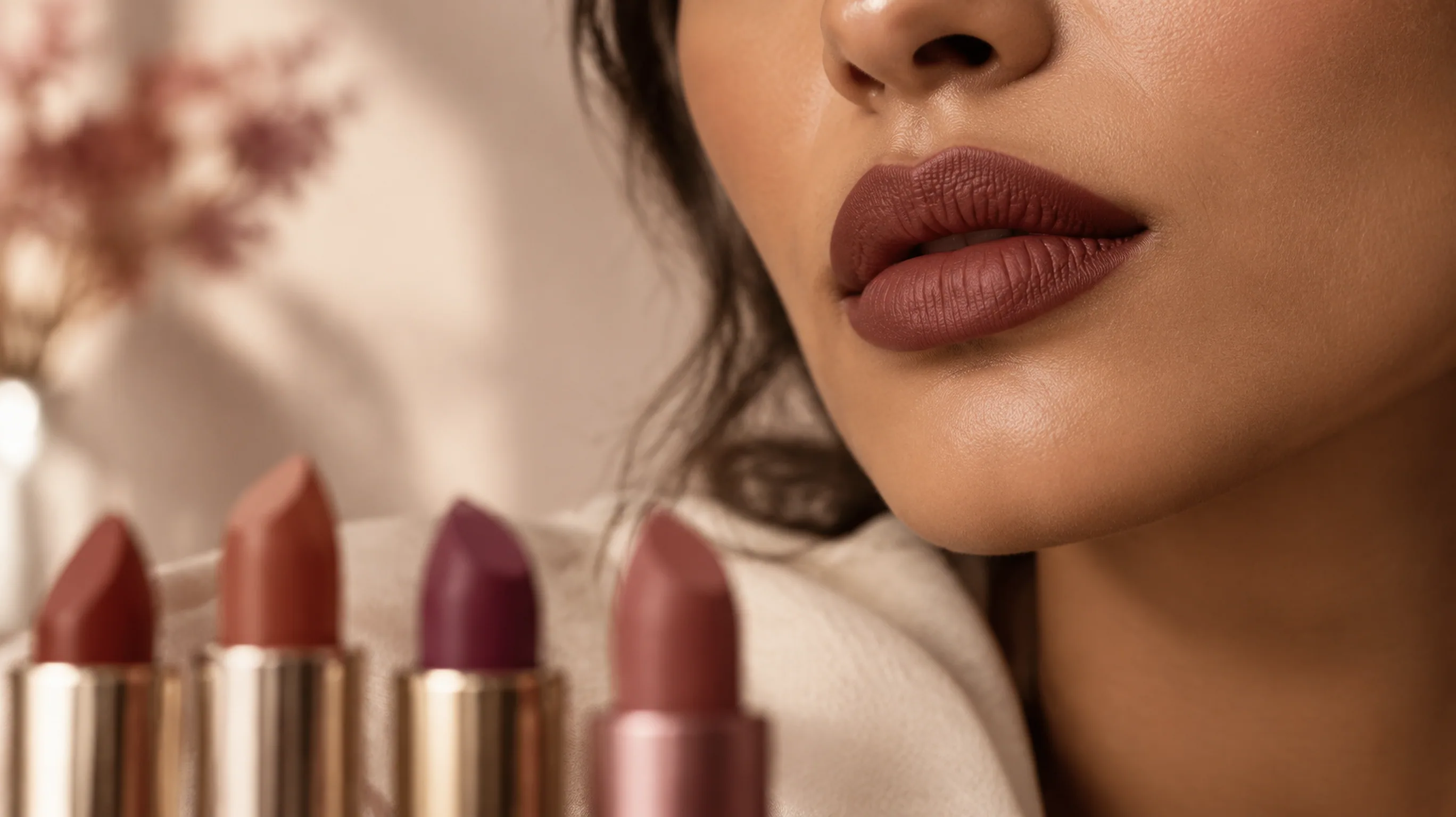
Mauve is the olive-skin “nude” that actually works. Peachy nudes run too warm; baby pink nudes run too cool. Mauve sits in the middle with a grey-pink quality that meets olive’s green cast instead of fighting it.
Mauve shades worth swatching:
- Dusty rose mauve
- Mauve-brown
- Soft plum mauve
- Taupe-mauve
- Rosewood
Mauve is my go-to for everyday definition — color on the lip without shouting “lipstick” if you prefer a natural finish.
Brick
Brick reds and terracotta lip colors feel almost custom for olive skin. Brown-red warmth complements the green undertone rather than clashing with it.
Brick shades worth swatching:
- Terracotta
- Rust red
- Burnt sienna
- Warm brick
- Cinnamon red
Brick is your power red for events, dates, and anywhere you want a red lip that actually looks red on you — not orange, not pink, not muddy.
Warm Nude
Nude lips on olive skin need depth and warmth to stay visible. Pale peachy nudes vanish; brown-based nudes glow.
Warm nude shades worth swatching:
- Caramel nude
- Toasted almond
- Warm beige with a brown undertone
- Terracotta nude
- Cinnamon nude
Your ideal nude is often one to two shades deeper than you assume. A color that looks slightly too dark in the tube frequently looks perfect once it meets your natural lip pigment.
| Lip family | Undertone vibe | Best for olive because… |
|---|---|---|
| Berry | Blue-violet depth | Adds richness without grey cast |
| Mauve | Grey-pink neutral | Matches green modifier in skin |
| Brick | Brown-red warmth | Red that harmonizes, not clashes |
| Warm nude | Brown-beige depth | Visible on olive, not “concealer lips” |
The Coral Controversy: When It Works, When It Doesn’t
Coral divides olive clients more than any other lip family. Some olives look sun-kissed in coral; others look sallow and tired. After years of testing shades across subtypes, here is how I sort who belongs in which camp.
When Coral Works
- Warm olive with a golden base: Soft, muted coral with a peachy-pink balance can look fresh and summery.
- Soft Autumn olives: Muted coral-terracotta shades sit well with warm, muted coloring.
- Medium to tan depth: Coral tends to need enough contrast between lip and skin to read intentional, not loud.
Safer coral directions for olive: Muted coral, terracotta-coral, salmon pink — not bright orange-coral.
When Coral Doesn’t Work
- Cool olive: Bright coral often reads orange and sallow against cool olive skin.
- Fair olive: Saturated coral can overwhelm lighter olive complexions.
- Neon or hot coral: Almost never works — saturation clashes with olive’s naturally muted quality.
The quick test: Hold a muted terracotta-coral swatch near your face in natural light. If your skin looks clearer and warmer, coral is likely a yes. If you look yellow or grey, stay with berry and mauve.
| Signal | Coral likely works | Skip coral |
|---|---|---|
| Olive subtype | Warm or neutral-warm | Cool olive |
| Depth | Medium to deep | Very fair olive |
| Shade style | Muted, terracotta-leaning | Neon, orange-heavy |
| Face check in daylight | Skin looks fresh | Skin looks yellow or grey |
Lip Colors to Avoid
Save your money and skip these common traps:
- Blue-red or true crimson — often turns muddy or purple-grey on olive skin
- Bright bubblegum pink — can look ashy and stripey against olive
- Neon coral and hot orange — overwhelming and sallow-making
- Cool fuchsia — fights the green cast and looks disconnected from your skin
- Pale peachy nude — disappears or reads as concealer on the lips
- Brown that is too grey — makes lips look dull and lifeless
Building a Five-Lip Wardrobe for Olive Skin
You do not need twenty lipsticks. You need five thoughtful shades that cover everyday life, work, events, and seasons.
1. Your Perfect Nude (Mauve-Brown)
A mauve-brown or warm beige that enhances your natural lip color. This is your everyday, no-makeup makeup shade.
Look for: dusty rose mauve, rosewood, caramel nude
2. Your Berry (Medium Depth)
A berry shade for work, casual outings, and anytime you want color without drama.
Look for: raspberry, cranberry, mulberry
3. Your Red (Brick or Terracotta)
Your event red — the one that actually looks like a red lip on you.
Look for: brick red, terracotta, rust red
4. Your Deep (Plum or Chocolate)
A dark shade for evening, fall and winter, or when you want intensity.
Look for: deep plum, chocolate brown, dark berry
5. Your Wild Card (Seasonal)
One shade that pushes slightly outside your comfort zone — maybe a muted coral if you are warm olive, or a soft burgundy if you are cool olive.
Look for: terracotta-coral (warm olive) or muted wine (cool olive)
Lip Color by Olive Subtype
Your olive subtype — warm, cool, or neutral — narrows which shades within each family look most harmonious.
Warm Olive Lips
Lean toward warmth with muted saturation:
- Terracotta, brick red, warm berry, caramel nude, soft coral-terracotta
Cool Olive Lips
Lean toward depth with subtle coolness:
- Mauve, plum, muted wine, raspberry, mushroom nude
Neutral Olive Lips
You usually have the most flexibility — test both warm-leaning and cool-leaning families:
- Dusty rose, rosewood, medium berry, soft brick, mauve-brown
| Olive subtype | Everyday nude | Statement lip | Wild card |
|---|---|---|---|
| Warm olive | Caramel / terracotta nude | Brick red | Muted coral-terracotta |
| Cool olive | Mauve / mushroom nude | Plum or muted wine | Soft burgundy |
| Neutral olive | Rosewood / dusty rose | Medium berry or soft brick | Whichever side tests better in daylight |
Application Tips for Olive Lips
Small technique changes matter once you have the right family:
- Skip heavy lip liner in high contrast — it can emphasize the mismatch between lip color and skin.
- Blot and reapply — olive skin can cause lip colors to shift as they settle; blotting helps stabilize the shade.
- Match your blush family — berry lips pair with dusty rose blush rather than bright bubblegum pink.
- Test on lips, not hands — lip skin interacts with pigment differently than the back of your hand.
- Try lip stains for berry shades — they often look more natural on olive skin than heavy matte formulas.
Key Takeaways
- Standard blue-reds and orange-reds often fail on olive skin — brick, terracotta, and warm berry are safer “red” directions.
- Berry, mauve, brick, and warm nude are your core lip families.
- Coral works mainly for warm olive at muted saturation — always test in natural light before you buy.
- A five-lip wardrobe (nude, berry, red, deep, wild card) covers most of life without clutter.
- Your olive subtype determines which shades within each family flatter you most.
Once you know your lip color family, shopping gets dramatically easier — and you will finally understand why that “universal red” never looked universal on you.
Find Your Best Lip Colors
If you are still guessing between warm berry and cool plum, a quick AI color analysis can pinpoint your olive undertone subtype and suggest lip colors that harmonize with your skin — not generic one-size-fits-all shades.
60 seconds, free to preview, no signup. Get personalized makeup color recommendations.
Related Articles
- Color Analysis: The Complete Guide — Everything you need to know about finding your best colors
- Olive Undertone Guide — The complete guide to identifying and styling olive skin
- Olive Skin Foundation Guide — How to find the perfect foundation for olive undertones
- Olive vs Warm Undertone — Why olive skin isn't simply warm or cool
Want to try AI color analysis yourself?
Upload one photo and get a magazine-level beauty report in 60 seconds.
Start Free AnalysisRelated Posts
Olive Skin Foundation Guide: How to Find Your Perfect Match
Warm foundation turns orange, cool turns pink? Olive undertones need yellow-green bases. See which brands carry olive shades and how to match.
Olive Undertone: The Most Misunderstood Skin Tone Explained
Neither gold nor silver looks right? Foundation turns orange or pink? You may have olive undertones. See 5 clear signs and take a free AI test.
Best Hair Colors for Olive Skin: A Complete Shade Guide
Some hair colors make olive skin glow; others turn it sallow. See the best shades for warm-olive vs cool-olive, colors to avoid, and seasonal recommendations.
Olive Skin by Ethnicity: How Olive Undertones Appear Across Cultures
Is olive skin only Mediterranean? No. See how olive undertones look on Asian, South Asian, Latina and Mediterranean skin, and why undertone tests miss it.