Olive Skin Foundation Guide: How to Find Your Perfect Match
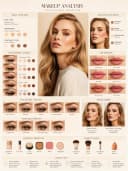
See your own result in 60 seconds
Personalized makeup guide: foundation, lips, eyes, blush recommendations
In this article · 12
- 1.Why Foundation Shopping Breaks Down on Olive Skin
- 2.Why Standard Warm and Cool Foundations Fail
- 3.The Green-Grey Pigment Factor (Simple Science)
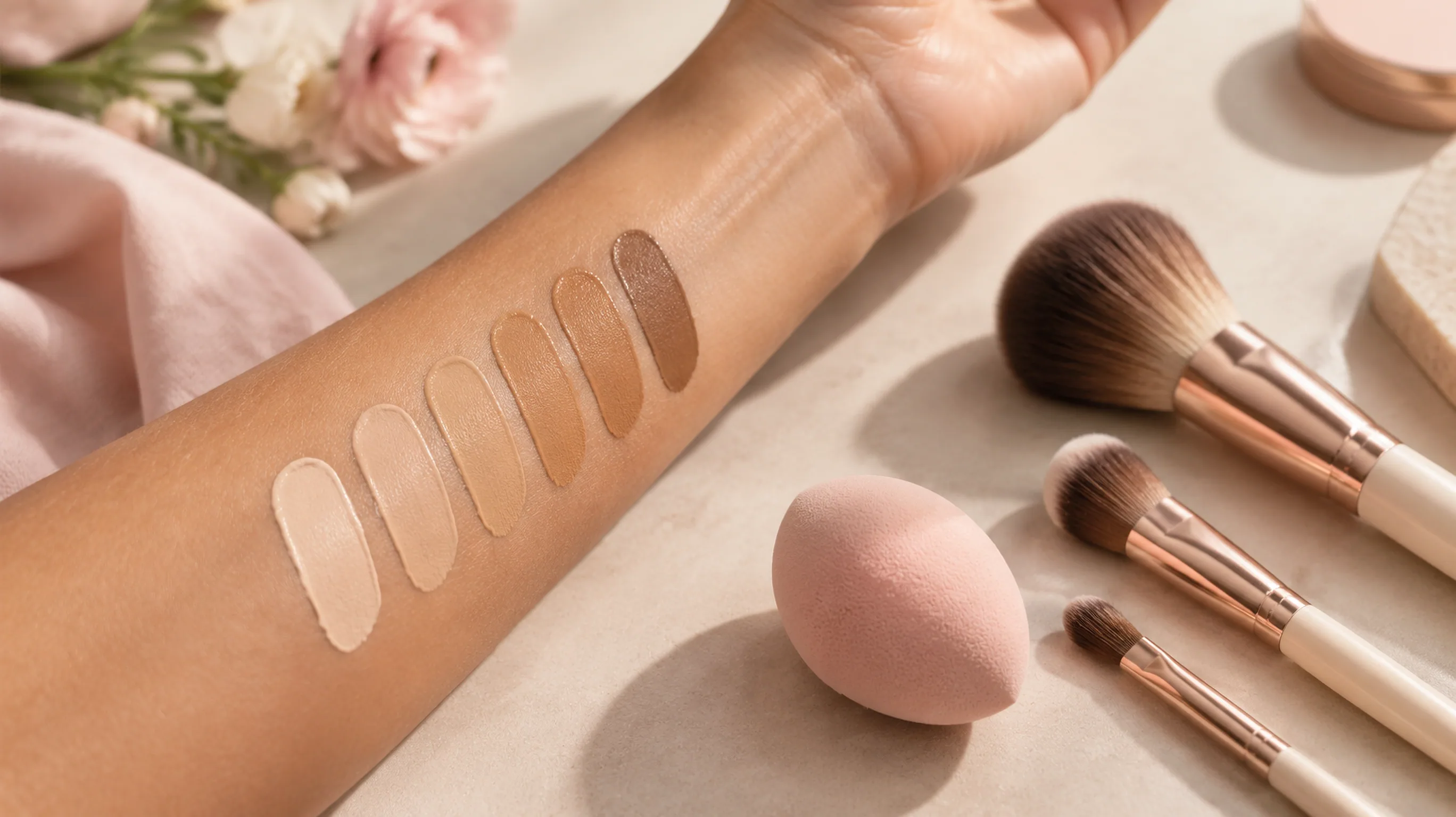
- 4.How I Swatch (Before You Buy Another Wrong Bottle)
- 5.Brands Worth Trying (Olive-Friendly Lines)
- 6.Match by Depth: Fair, Medium, and Deep Olive
- 7.Seasonal Changes and the Two-Foundation Strategy
- 8.Application Tips That Actually Show Your Undertone
- 9.Quick Troubleshooting
- 10.Key Takeaways
- 11.Find Your Foundation Undertone Faster
- 12.Related Articles
Why Foundation Shopping Breaks Down on Olive Skin
If you have olive undertones, I already know how your last counter visit probably went. You swatched ten shades. Warm options looked orange on your jaw. Cool options looked pink or grey. Neutral somehow did both. Under store lights you picked a “close enough” bottle — and by the time you got home, your face and neck were telling two different stories.
That is not a skill problem. Most foundation lines still assume skin is either warm (yellow-gold) or cool (pink-blue). Olive skin adds a green-grey modifier on top of your base undertone. Formulas without that green channel rarely melt in, no matter how carefully you shade-match for depth.
In this guide I walk through why the usual warm/cool advice fails, what is happening in your skin at a pigment level, which brands actually label or formulate for olive tones, and how I think about matching fair, medium, and deep olive across seasons.
Why Standard Warm and Cool Foundations Fail
Warm foundations turn sallow or orange
Warm bases lean on yellow and golden pigments. On clear golden undertones, that reads as healthy glow. On olive skin, those same pigments sit on top of your green cast instead of blending with it.
What I see most often:
- A golden “perfect match” that looks fine in the bottle but orange at the hairline
- Jawlines that look more yellow than the rest of the face after a few hours
- Summer tans that make warm shades look straight-up carrot
Even “neutral warm” lines can fail here because they add warmth without the muted, slightly grey-green undertone olive needs.
Cool foundations look ashy or sickly
Cool bases use pink, rose, or blue-red pigments. On olive skin, pink fights your natural green-grey layer. The result is flat, ashy skin — especially in daylight.
Many olive-toned people only try cool shades after warm shades fail. When cool fails too, that double miss is one of the strongest clues you are dealing with olive, not standard warm or cool.
“Neutral” is often still the wrong axis
Neutral foundations sound safe. In practice, many are a blend of warm yellow and cool pink — still no green. They can look almost right in swatches and never settle on the face.
| Foundation family | What it is built for | What often happens on olive skin |
|---|---|---|
| Warm / golden | Yellow-gold undertones | Orange, too yellow, sallow |
| Cool / pink | Pink-blue undertones | Ashy, grey, “tired” in daylight |
| Typical “neutral” | Yellow + pink balance | Close in store, wrong outdoors |
| Olive-friendly | Yellow-green or golden-green base | Blends at jaw and neck |
The Green-Grey Pigment Factor (Simple Science)
Olive is not a fourth slot beside warm, cool, and neutral. It is a modifier: extra pigmentation where melanin interacts with both warm carotenoids and cool hemoglobin tones. That interaction creates a greenish or grey-green cast sitting over your base undertone.
Think of your skin as stacked layers. Your depth (how light or deep you read) comes from melanin concentration. Your base undertone (warm vs cool) comes from the balance of yellow-red pigments in the skin. The olive modifier adds a subtle green-grey filter on top — like looking through lightly tinted glass.
What that means when you shop:
- You usually need yellow-green or golden-green undertones — not pure yellow, not pure pink.
- Green in the formula helps neutralize orange from overly warm bases.
- Yellow in the formula stops cool pink from turning you grey.
- Depth (fair vs deep) is separate from undertone. You can be light olive, medium olive, or deep olive — each needs its own shade family.
When I swatch, shades that look slightly muddy, taupe, or grey-green in the bottle often outperform “clean” golden shades. Counterintuitive, but reliable.
How I Swatch (Before You Buy Another Wrong Bottle)
Counter lighting lies. I use a simple routine:
- Strip swatch three undertones at the same depth on the jaw — one golden-warm, one pink-cool, one muted or olive-leaning.
- Wait fifteen minutes — oxidation and dry-down change olive matches more than people expect.
- Step outside or stand by a window — if only one shade disappears at the hairline, that is your axis.
- Check the neck — olive mismatches show at the jaw first, then the neck.
If every shade at your depth fails, you are probably shopping the wrong undertone family, not the wrong depth.
Brands Worth Trying (Olive-Friendly Lines)
Major brands have gotten better, but olive still requires reading undertone notes — not just picking “medium warm.” Here is where I send people first.
NARS
NARS has been an olive-skin staple for years. Names like Syracuse, Stromboli, and Barcelona show up constantly in shade-match threads. In Natural Radiant and Light Reflecting, look for undertones that read golden-green rather than straight peach-gold. NARS runs slightly deeper than many lines — if you are between two shades, swatch both on the jaw and wait before you decide.
MAC
MAC’s range is huge; undertone naming is confusing. NC (neutral-cool) shades often carry enough muted warmth plus green to work on olive skin even when the label says otherwise. Studio Fix and Face and Body are common starting points. For medium depth, NC35–NC40 come up a lot in community matches; deeper olives often land in NC42+. Trust swatches on your face, not the letter on the box.
Fenty Beauty
Fenty helped normalize undertones beyond warm/cool. In Pro Filt’r, the 200–300 range suits many light-to-medium olives; 340–420 often works for tan and deep olive. Look for swatches that look slightly grey-green, not bright gold. Pro Filt’r tends to oxidize less than many formulas — helpful when olive matches shift subtly after drying.
NYX
NYX is one of the few drugstore lines that names olive in shade descriptions. Can’t Stop Won’t Stop and Bare With Me are practical entry points if you want to experiment without a luxury price tag. Start with shades explicitly tagged olive or neutral-olive at your depth, then adjust with mixer if needed.
Rare Beauty
Rare Beauty’s Liquid Touch foundation band in the 230–370 range includes several olive-compatible neutrals. Undertones skew soft and muted — a good fit if bright warm shades always pull orange on you.
Estée Lauder Double Wear
Double Wear is a workhorse for long wear. Warm olives often do well in 3W1 Tawny and 4W1 Honey Bronze — “W” here still means review the swatch: you want warm with restraint, not red-orange. Mix with a drop of green corrector if the depth is right but the undertone is half a step too golden.
Practical tip: When a brand does not say “olive,” search your depth plus “olive undertone” in reviews. The olive-skin community documents matches obsessively — use that before you buy a third wrong bottle.
Match by Depth: Fair, Medium, and Deep Olive
Undertone rules stay the same; depth changes which bottle you reach for. Use this as a starting map, then adjust for your season.
| Depth | What to look for | Community starting points (verify on your skin) |
|---|---|---|
| Fair–light olive | Light bases with grey-green or taupe undertone; avoid peach-pink | Lighter NARS “O” family shades, Fenty ~200s, NYX olive-labeled lights |
| Medium olive | Widest selection; watch oxidation (often warms slightly) | NARS Stromboli, MAC NC35–NC40, Fenty 240–280, Rare Beauty mid-range |
| Tan–deep olive | Muted warmth — not bright gold; avoid too red-brown | Fenty 340–420, MAC NC44+, NARS New Caledonia, EL 4W1+ |
Fair to light olive
Light olive is often misread as “neutral” or “cool” because the green cast is subtle. I look for light-medium shades with a grey-green or taupe base — not peach, not pink. Hands tan differently than the face; always match jaw and neck, not the back of your hand.
If the depth is perfect but undertone is slightly off, one drop of green color corrector per pump can olive-ize a close match without changing the whole base.
Medium olive
This is the most common depth I hear about — and the richest brand coverage. Descriptions like “warm neutral” or “golden olive” are worth trying. Medium olives often oxidize half a shade warmer; wait ten to fifteen minutes before you commit.
Tan to deep olive
Deep olive skin is frequently typed as “warm” because green reads less obvious at depth. You still need muted, olive-leaning warmth, not neon gold. Too red-brown pulls ruddy against your green base. Deep Autumn and Deep Winter olives may land in different families — same undertone logic, different depth and contrast needs.
Seasonal Changes and the Two-Foundation Strategy
Olive skin rarely stays one flat color all year. Your foundation plan should move with it.
Summer: Many olives tan quickly to golden-brown or khaki, not pink-red. You may need one to two shades deeper. Sun often makes the green cast more visible — last year’s “perfect” shade can suddenly look too peachy.
Winter: Skin may lighten slightly; grey-green reads stronger. Summer depth can look orange or muddy on the neck.
Transition months: I keep two foundations — summer depth and winter depth — and mix them as needed. That is normal, not “too much makeup.”
Corrector as a seasonal tool: Green corrector mixed into your base (sparingly) can bridge weeks when you are between shades or when only “almost” matches are in stock.
Application Tips That Actually Show Your Undertone
The right shade still fails if application fights your undertone.
- Prep with a neutral primer — peach and pink primers add warmth you do not need.
- Blend down the neck — olive mismatches scream at the jaw first.
- Wait before judging — let the formula set; olive-friendly shades can shift as they dry.
- Check in daylight — window light or outside beats every counter bulb.
- Set with translucent powder — skip heavy banana or peach powders that change undertone.
- Concealer undertone matters — match concealer to foundation family, not “brightening pink” by default.
Thin layers beat heavy coverage for olive skin. When you pile on product to hide a wrong undertone, the mismatch only gets louder.
Quick Troubleshooting
| Problem | Likely cause | Fix to try |
|---|---|---|
| Orange by noon | Base too warm / golden | Switch to golden-green or add tiny green corrector |
| Grey or “dirty” face | Base too pink-cool | Move toward neutral-olive or yellow-green |
| Right in store, wrong outside | Wrong undertone axis, not depth | Re-swatch undertone; depth may already be fine |
| Neck darker than face | Season / tan line | Deeper shade on neck or mixed summer shade |
Key Takeaways
- Warm-only and cool-only foundations miss the green-grey layer that defines olive skin.
- Shop yellow-green and golden-green undertones — “muddy” in the bottle is often correct on the face.
- NARS, MAC, Fenty Beauty, NYX, Rare Beauty, and Estée Lauder are practical places to start across budgets.
- Match depth and undertone separately — fair, medium, and deep olive each have different shade maps.
- Plan for seasons — two bases or a corrector beats fighting one wrong shade all year.
Once you lock a foundation family that respects your olive undertone, blush, bronzer, and lip choices get easier too — everything stops fighting that green-grey base.
Find Your Foundation Undertone Faster
If you are tired of guessing, AI color analysis can flag olive undertones and point you toward harmony-friendly makeup directions before you buy another bottle. It is one snapshot — you still swatch — but it shortens the search.
Free to preview, about a minute, no signup. See your undertone and makeup-friendly color direction.
Related Articles
- Color Analysis: The Complete Guide — Everything you need to know about finding your best colors
- Olive Undertone Guide — The complete guide to identifying and styling olive skin
- Olive Skin Lip Color Guide — Best lipsticks and lip colors for olive undertones
- Olive vs Neutral Undertone — How to tell olive apart from neutral skin
Want to try AI color analysis yourself?
Upload one photo and get a magazine-level beauty report in 60 seconds.
Start Free AnalysisRelated Posts
Olive Skin Lip Color Guide: Best Lipsticks for Olive Undertones
Classic reds wash you out, nudes look gray, and corals are hit-or-miss on olive skin. Discover berry, mauve, brick, and warm nude shades that actually flatter olive undertones.
Olive Undertone: The Most Misunderstood Skin Tone Explained
Neither gold nor silver looks right? Foundation turns orange or pink? You may have olive undertones. See 5 clear signs and take a free AI test.
Why Your Foundation Never Matches: An Undertone Deep Dive
Tired of foundation that looks off? The problem isn't the shade — it's the undertone. Learn how warm, cool, neutral, and olive undertones affect foundation matching, plus 5 in-store tests that actually work.
Olive vs Neutral Undertone: How to Tell the Difference
Neutral undertone but foundation still looks off? You may be olive. Learn 3 key differences: green cast, foundation behavior and draping.