Mixed Metals: How to Wear Gold and Silver Together Without Looking Mismatched
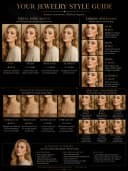
See your own result in 60 seconds
Best metals, earring styles, necklace lengths & gemstone recommendations
In this article · 11
- 1.The Rule I Followed for Years (and Why I Finally Broke It)
- 2.Where the "Don't Mix Metals" Rule Came From
- 3.Why Undertone Still Matters When You Mix
- 4.The 3 Rules That Make Mixed Metals Look Intentional
- 5.Can Every Color Season Mix Metals?
- 6.Finish Matters as Much as Metal
- 7.Style Guide: How to Build a Mixed-Metal Look Step by Step
- 8.When You Should Stick to One Metal
- 9.The Modern Approach: Test Metals on Your Own Photo
- 10.Key Takeaways
- 11.Related Articles
The Rule I Followed for Years (and Why I Finally Broke It)
For most of my twenties, I believed in one unbreakable jewelry rule: pick a metal and stay loyal to it. Gold watch? Gold earrings, gold necklace, gold rings. A single silver bracelet in the mix felt like wearing one navy sock and one black sock.
Then I inherited my grandmother's silver locket, and I was not about to leave it in a drawer because it "clashed" with my gold hoops. I wore them together to a dinner, braced for a fashion crime, and got three compliments before the appetizers arrived.
That small moment sent me down a rabbit hole. Was the one-metal rule ever real, or just a tidy piece of advice that stuck? And if mixing is allowed, is it allowed for everyone, or do some complexions look better with it than others?
The honest answer is: mixed metals work beautifully, but there's a method. Done carelessly, they can look random. Done with a few simple principles, they look deliberate and expensive.
Here's what you'll learn:
- Where the "don't mix metals" rule came from
- Why your undertone still matters, even when you mix
- The three rules that make mixed metals look intentional
- Which color seasons can mix freely and which should lean on one metal
- How to build a mixed-metal look step by step
Where the "Don't Mix Metals" Rule Came From
The old rule has a practical origin. When jewelry was sold in matching sets, a necklace, earrings, and bracelet all came in the same metal because they were designed together. Wearing a set was a signal of polish, and breaking it up looked careless.
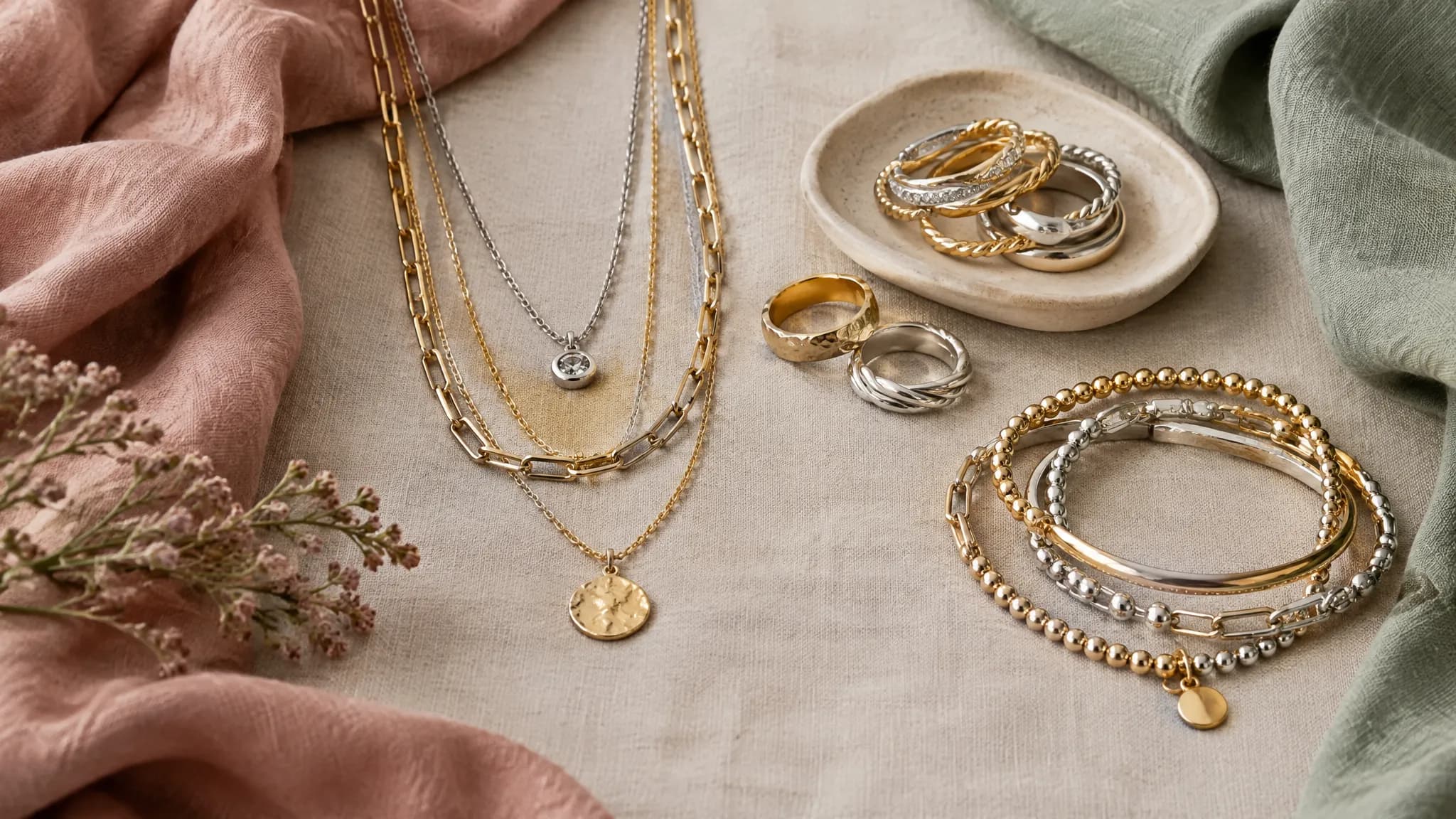
Fashion editors have been loosening that rule for years. Today, high-end designers routinely show collections that pair yellow gold, white gold, and rose gold in a single piece. Stackable rings and layered necklaces are now often built to combine metals on purpose.
What hasn't changed is the underlying logic: jewelry should look like a decision, not an accident. Mixed metals fail when the combination looks random, not because the metals themselves can't coexist. That's an important difference, and it's the basis for everything below.
Why Undertone Still Matters When You Mix
Before the mixing rules, a quick refresher on why metals look different on different people.
Your skin has an undertone, the subtle hue under the surface color. It's generally described as warm (golden, peachy), cool (pink, blue-ish), or neutral (a balance of both). Yellow gold tends to echo warm undertones, so it makes warm skin look glowing and even. Silver and platinum echo cool undertones, so they brighten cool skin and make it look clear. Rose gold sits in between, with warm and pink notes together.
If you want a full breakdown, I covered this in detail in our guide to choosing jewelry metals for your skin tone.
Here's the key insight for mixing: the metal closest to your face does most of the work. Earrings, necklaces, and anything near your neckline interact with your complexion directly. A bracelet or a ring on your hand has far less influence on how your face looks. That means you can often keep your "face metal" matched to your undertone and bring in a second metal elsewhere.
The 3 Rules That Make Mixed Metals Look Intentional
After testing many combinations (and getting more than a few wrong), these are the rules that consistently work.
Rule 1: Pick a Dominant Metal
Choose one metal to be roughly 70 percent of your look and the other to be around 30 percent. This keeps the outfit from looking like two competing styles. The dominant metal should usually be the one that flatters your undertone, and it should sit closest to your face.
For example, if you're warm-toned, you might wear gold earrings and a gold necklace, then add a silver watch and a thin silver ring.
Rule 2: Create a Bridge Piece
A bridge piece is a single item that contains both metals. This might be a two-tone ring, a bracelet with gold and silver links, or a pendant with mixed accents. When you wear one bridge piece, the eye reads your whole look as a coordinated collection, even if the other pieces are single-metal.
Bridge pieces are the single most effective trick I know. If you're nervous about mixing, start with one.
Rule 3: Repeat Each Metal at Least Twice
Don't wear one lone silver ring surrounded by gold. A single piece in a different metal looks like a mistake or a leftover. Instead, repeat each metal in at least two places: say, silver on one wrist and in your earrings, or gold on both hands.
Repetition tells the viewer that the combination was chosen. It also creates visual balance, so your jewelry looks spread out and harmonious instead of lopsided.
Can Every Color Season Mix Metals?
Mixing works for everyone, but how easy it is depends on your coloring. Seasons with lower contrast between warm and cool in their palettes have more freedom. Seasons with a strong, clear temperature lean should anchor on one metal near the face.
| Season | Dominant face metal | Best second metal | How freely can you mix? |
|---|---|---|---|
| Light Spring | Light yellow gold | Rose gold | Very free |
| True Spring | Bright yellow gold | Rose gold | Moderate |
| Bright Spring | Polished gold | Bright silver | Free |
| Light Summer | Silver or rose gold | Soft white gold | Very free |
| True Summer | Silver | Rose gold | Moderate |
| Soft Summer | Brushed silver | Soft rose gold | Very free |
| Soft Autumn | Antique gold | Brushed silver | Very free |
| True Autumn | Warm yellow gold | Copper or bronze | Moderate |
| Deep Autumn | Rich yellow gold | Oxidized silver | Free |
| Deep Winter | Silver or white gold | Gold | Free |
| True Winter | Bright silver | White gold | Moderate |
| Bright Winter | Silver | Polished gold | Free |
The "Very Free" Group: Soft and Light Seasons
If your coloring is soft or light, such as Soft Summer, Soft Autumn, Light Spring, or Light Summer, you're sitting on the most forgiving palettes. Your colors have a gentle, blended quality, and that carries over to metals. Brushed silver, antique gold, and rose gold all sit nicely together because none of them is harshly bright.
The "Moderate" Group: True Seasons
True Spring, True Summer, True Autumn, and True Winter sit firmly on one side of the temperature line. That makes them easier to read, but it also means a metal from the opposite temperature can look more noticeable on them. You can still mix: keep the temperature-matched metal near your face and use the second one on your hands, watch, or belt buckle.
The "Free" Group: High-Contrast and Deep Seasons
Bright and Deep seasons wear strong, clear shades well, and that includes metal. Polished, high-shine pieces in two metals tend to look striking rather than messy. The key for these seasons is quality and finish: a polished gold paired with a polished silver looks confident, while a tarnished mix can look tired.
Finish Matters as Much as Metal
Most mixed-metal advice focuses on color, but finish is the underrated secret. Two metals that share a finish look related, even when their colors differ.
- Polished with polished: High-shine gold and high-shine silver look sleek and modern.
- Brushed with brushed: A matte or satin finish softens the contrast between metals.
- Antiqued with antiqued: Vintage-looking pieces blend easily because the patina unifies them.
Mixing finishes and metals at the same time is where outfits start to look chaotic. If you're experimenting, keep one of those variables steady.
Style Guide: How to Build a Mixed-Metal Look Step by Step
Here's the process I use whenever I'm getting dressed.
- Start with your face metal. Pick the earrings and necklace that suit your undertone. This is your dominant metal.
- Add a bridge piece. A two-tone ring or a mixed-metal bracelet joins your two metals together.
- Place your second metal on your hands or wrists. This keeps your complexion flattered while still showing the mix.
- Repeat the second metal. Add a second piece in the same metal, such as a ring on the other hand or a thin chain.
- Check the finish. Make sure both metals share a finish, or at least that the contrast is deliberate.
- Take a mirror test. Look at your face and neckline in natural light. If your skin looks bright and even, you're done.
A few extra tips that have saved me from mistakes:
- Match your watch and hardware to one metal. A watch is a large visual element, so letting it be your second metal can anchor the look.
- Layer necklaces with a clear logic. If you stack chains, vary length and thickness rather than mixing four different metals.
- Let gemstones help. Stones with warm and cool tones, such as pearls, diamonds, and opals, act as natural peacemakers between metals.
- Don't forget your accessories. Belt buckles, glasses frames, and handbag hardware count. If you're wearing gold-toned glasses, treat them as part of your metal count. Our guide on how to accessorize for your color season covers this in more depth.
When You Should Stick to One Metal
Mixed metals aren't always the answer. I still choose a single metal in a few situations:
- When your outfit is already busy. Bold prints, strong colors, or heavy textures already give the eye plenty to do, so simple jewelry in one metal lets them breathe.
- For very formal events. A matched set can look elegant and ceremonial, especially at weddings or black-tie dinners.
- When one metal clearly drains you. If one metal makes your skin look dull or sallow, don't use it near your face. Use it only as a small, distant accent, or skip it.
- When you wear a statement piece. A large necklace or cuff deserves to be the focus, with supporting pieces in the same metal.
Mixing is a tool, not a requirement. The goal is to feel like the best version of yourself, not to follow a trend.
The Modern Approach: Test Metals on Your Own Photo
Figuring out which metal flatters you, and how far you can push the second one, used to mean trying on a lot of jewelry under shop lighting. These days there's an easier way. I recently ran my photo through an AI jewelry analysis tool and was surprised by how clearly it explained my best metals, gemstones, and earring styles, and which combinations to avoid near my face.
If you'd like to try it, a free tool like aicoloranalysis.io can show you which metals suit your undertone before you buy anything. It won't replace the mirror test, but it gives you a strong starting point. For a broader look at how metals and undertone interact, Wikipedia's overview of jewellery materials and alloys explains why gold, silver, and platinum look the way they do.
Key Takeaways
- The "never mix metals" rule is outdated. Mixed metals look polished when they're intentional.
- Your face metal matters most. Keep the metal closest to your face matched to your undertone, and mix on your hands.
- Use the 3 rules. Choose a dominant metal, wear a bridge piece, and repeat each metal at least twice.
- Match your finishes. Polished with polished, brushed with brushed, antiqued with antiqued.
- Your season sets the difficulty. Soft and light seasons mix easily; True seasons should anchor on one metal near the face.
That silver locket? It lives next to my gold hoops now, and I stopped feeling guilty about it. Jewelry is one of the easiest ways to express personality, and once you know the logic behind combining metals, you're free to play. Start with one bridge piece, trust the mirror, and enjoy the mix.
Related Articles
- Gold, Silver, or Rose Gold? How to Choose Jewelry for Your Skin Tone — Start here to find your best metal
- How to Accessorize Based on Your Color Season: Jewelry, Scarves & More — Hardware, glasses, scarves, and more
- Best Earring Styles for Every Face Shape — A Visual Guide — Choose earrings that frame your face
- Olive Skin Jewelry Guide: Gold, Silver, or Rose Gold? — A special guide for olive undertones
- Color Analysis: The Complete Guide — Everything you need to know about finding your best colors
Want to try AI color analysis yourself?
Upload one photo and get a magazine-level beauty report in 60 seconds.
Start Free AnalysisRelated Posts
Gold, Silver, or Rose Gold? How to Choose Jewelry for Your Skin Tone
Not sure which jewelry metal suits your skin? Learn how your undertone determines whether gold, silver, rose gold, or platinum flatters you most — plus gemstone and earring recommendations.
How to Accessorize Based on Your Color Season: Jewelry, Scarves & More
Your color season doesn't just dictate clothing — it transforms how you choose jewelry metals, scarf colors, handbags, and belts. Learn the accessory rules for all 12 seasons and build a collection that elevates every outfit.
Olive Skin Jewelry Guide: Gold, Silver, or Rose Gold?
Neither gold nor silver looks right on your olive skin? There's a reason. Learn which metals flatter olive undertones and why rose gold may be your best bet.
Best Earring Styles for Every Face Shape — A Visual Guide
Not all earrings flatter every face. Learn which earring styles — studs, hoops, drops, chandeliers — work best for oval, round, square, heart, and oblong face shapes, with practical shopping tips and styling tricks.