What to Wear to a Job Interview Based on Your Color Season
See your own result in 60 seconds
8-10 best clothing colors, neutrals, and colors to avoid with visual previews
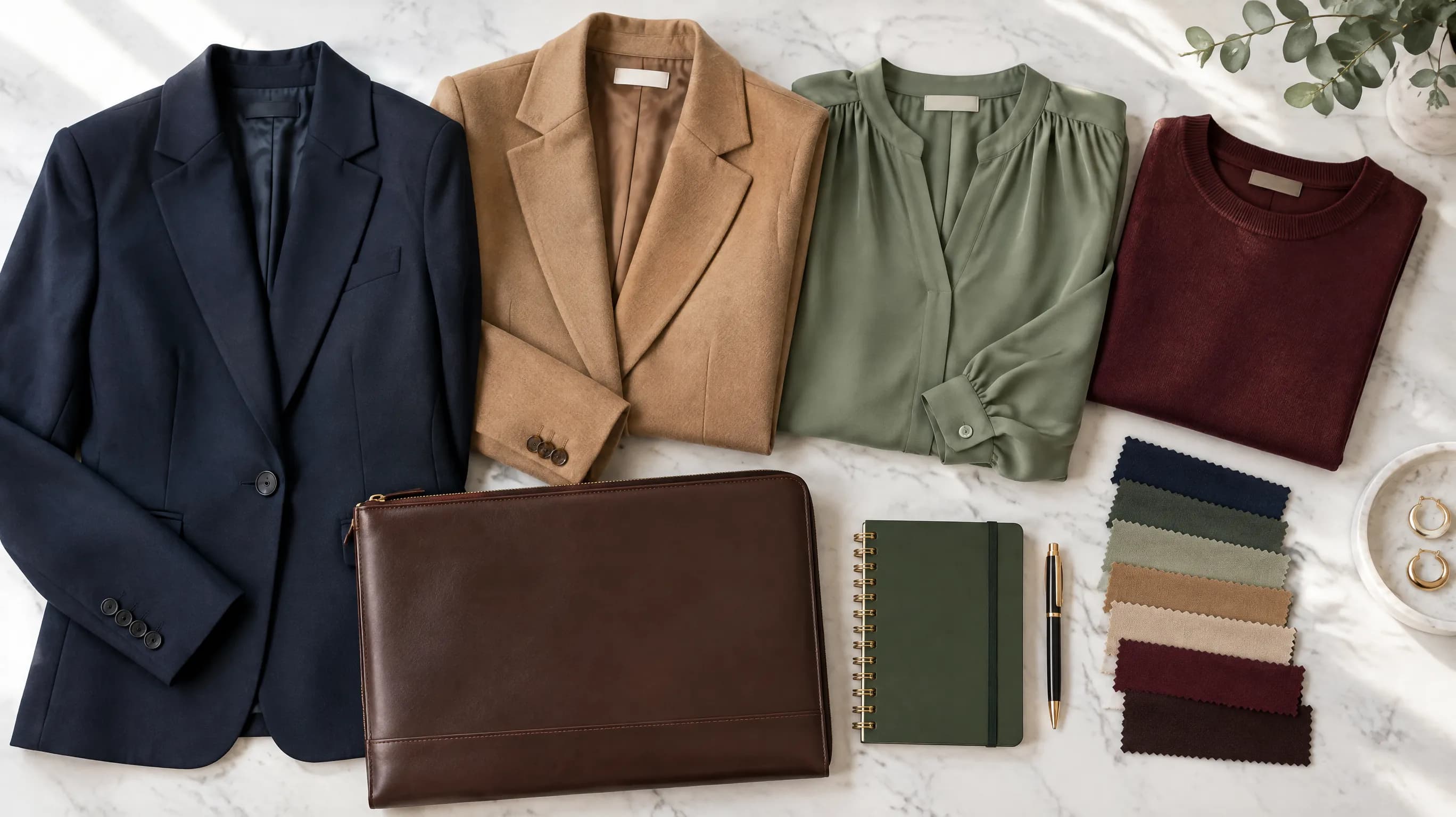
The Navy Suit That Made Me Look Exhausted
Before my first big interview, I did what every career article told me to do: I bought a navy suit. Navy means trust, navy means competence, navy is the "safe" color. I wore it with a white shirt, practiced my answers in the mirror, and felt completely prepared.
Then I saw a photo from the video call my recruiter had recorded. My skin looked sallow, the dark circles under my eyes were suddenly the main feature of my face, and the crisp white shirt made everything around it look dingy. I wasn't underdressed. I was wearing the "right" colors in the wrong way.
Months later, when I learned my color season, the explanation was simple. Navy isn't wrong for everyone, but a cool, dark, high-contrast navy isn't what a warm, soft-colored person needs near her face. The same suit that makes one candidate look sharp can make another look tired.
In an interview, you have a few minutes to look credible, alert, and prepared. Color is one of the fastest signals you can control. In this guide, I'll show you how to use it.
Here's what you'll learn:
- Why color matters in the first 30 seconds of an interview
- The three-color formula that works for every season
- The best interview colors for all 12 color seasons
- The "professional" colors that quietly backfire
- How to adapt your outfit for video interviews
Why Color Matters More Than You Think in an Interview
Interviewers form impressions quickly, and clothing is part of that first read. Researchers describe a related effect called enclothed cognition: the clothes we wear influence how we think and feel, not just how others see us. A 2012 study by Hajo Adam and Adam Galinsky found that people performed better on attention tasks when wearing a garment they associated with carefulness and focus. Dressing the part isn't superficial. It changes your own state of mind.
Color adds another layer. Basic color psychology associates blues with trust, deep greens with stability, and burgundy with confidence. These associations are loose and vary by culture, so I treat them as a nudge, not a rule. What matters more is something far more measurable: how the color affects your face.
Interviewers don't look at your blazer. They look at your face, and the color next to it either supports your complexion or competes with it. A shade that matches your coloring makes your skin look even and your eyes look bright, which reads as healthy, alert, and energetic. A shade that fights your coloring does the opposite, no matter how professional it is on paper.
That's why the standard advice, "wear navy, grey, or black," is incomplete. Those are categories. Within each one, there are dozens of undertones and depths, and only some of them belong to you.
A Quick Color Season Refresher
Personal color analysis sorts coloring into 12 seasons, based on three traits:
- Temperature: warm (golden undertone) or cool (pink or blue undertone)
- Depth: light or deep
- Intensity: bright and clear, or soft and muted
Those traits group into four families:
- Spring: warm, light, and clear
- Summer: cool, light, and soft
- Autumn: warm, deep, and soft
- Winter: cool, deep, and clear
If you're not sure of your season yet, start with our guide on how to find your color season. The rest of this article assumes you have at least a rough idea.
The Three-Color Interview Formula
Before the season-by-season breakdown, here's the structure I use for every interview outfit. It works whatever your season:
- The base (60%): your blazer, jacket, or dress. This is your largest block of color and should be a flattering neutral from your palette.
- The face color (30%): the top, shirt, or scarf that sits closest to your face. This is the most important piece, because it frames your skin. Choose a shade from your palette that lifts your complexion.
- The accent (10%): a small pop in jewelry, a pocket square, a watch strap, or shoes. This is where personality shows up.
When people say they "look off" in an interview outfit, the problem is almost always piece number two. A great suit with a wrong-colored top still fails, and a plain base with the right face color almost always works.
The Best Interview Colors for All 12 Seasons
Here's the full chart. For each season I've listed a base neutral, a face color, an accent, and the shade to avoid near your face.
| Season | Base neutral | Face color | Accent | Avoid near the face |
|---|---|---|---|---|
| Light Spring | Soft camel, warm light grey | Peach, light aqua | Soft gold | Stark black |
| True Spring | Golden tan, warm navy | Coral, turquoise | Yellow gold | Ashy grey |
| Bright Spring | Clear navy, warm charcoal | Warm white, bright teal | Polished gold | Dusty taupe |
| Light Summer | Soft blue-grey, light slate | Powder blue, soft rose | Silver or rose gold | Black, orange |
| True Summer | Slate, medium grey-blue | Dusty blue, raspberry | Silver | Golden camel |
| Soft Summer | Greyed navy, soft charcoal | Mauve, sage-teal | Brushed silver | High-contrast black and white |
| Soft Autumn | Warm taupe, soft olive | Cream, muted teal | Antique gold | Stark black |
| True Autumn | Chocolate brown, olive | Ivory, deep teal | Warm gold | Cool grey, icy pink |
| Deep Autumn | Espresso, dark forest green | Cream, deep teal | Rich gold | Pastels |
| Deep Winter | Black, deep navy | Crisp white, emerald | Silver or white gold | Muted beige |
| True Winter | Navy, charcoal | Pure white, royal blue | Silver | Orange, golden tan |
| Bright Winter | Black, deep navy | Optic white, bright teal | Silver | Muted earth tones |
Let me walk through what these look like in practice, family by family.
Spring: Warm, Fresh, and Approachable
Spring coloring looks best in clear, warm shades. The classic trap is black: it's heavy near a Spring face and tends to cast shadows. A softly warm navy or golden tan blazer with a coral or turquoise top looks polished without feeling stiff. If the office is very conservative, choose the navy and let the face color do the work.
Summer: Calm, Cool, and Credible
Summer coloring is gentle, so it loses to aggressive contrast. A slate or soft blue-grey blazer with a dusty blue or soft rose top looks composed and trustworthy. Skip bright orange and golden camel; they overpower a Summer's softness and can make skin look pink or patchy.
Autumn: Warm, Rich, and Grounded
Autumn palettes are made for earthy depth. Chocolate brown, olive, and espresso read as established and confident, and they're underrated for interviews. A chocolate blazer with an ivory or deep teal top looks expensive. Cool grey and icy pink are the two shades most likely to drain an Autumn face.
Winter: Sharp, Clear, and Authoritative
Winter coloring is high contrast, which makes it the natural home of the classic power suit: black or deep navy with pure white. That sharpness is your advantage, so don't soften it with beige or muted camel. Add one jewel tone, such as emerald or royal blue, for a polished finish.
Five "Professional" Colors That Quietly Backfire
Some colors carry a professional reputation they haven't earned for every complexion. Watch for these:
- Black near a soft or warm face. Black is strong, and it can swallow Light Spring, Light Summer, and Soft seasons. If you love black, wear it as trousers or a skirt, away from your face.
- Stark white shirts. Pure white suits Winter and Bright seasons. On warm or soft coloring it can look harsh; cream, ivory, or soft white is gentler and often looks more expensive.
- Beige and "nude" tones. These are the colors most likely to blend into your skin, which makes you look washed out. Make sure the beige has the right undertone and depth.
- Grey in the wrong temperature. A warm grey on a cool face, or a cool grey on a warm face, can make your skin look dull. Match the grey to your temperature.
- Safe navy in the wrong depth. Deep navy can overpower a light complexion, and soft greyed navy can look faded on a high-contrast one.
None of these are banned. They just need the right placement, the right shade, or a better partner near your face.
Practical Tips: Adapting Your Outfit for the Interview
Video interviews. Cameras flatten color and exaggerate shadows, so it's even more important that your face color works. Sit facing a window or soft lamp, and avoid very dark tops in low light. A mid-tone shade from your palette usually looks best on camera.
Conservative industries. Law, finance, and government often call for traditional neutrals. Stay in your season's base neutrals and use your face color for the shirt or blouse underneath. You'll satisfy the dress code and still look like yourself.
Creative industries. You have more room. Use your accent color confidently, or put a stronger shade from your palette in the face position.
Makeup and hair. Keep makeup in your season's tones as well. A lipstick that clashes with your outfit draws more attention than the outfit does. If you want more guidance here, our occasion makeup guide walks through looks for events from interviews to date nights.
Test before the day. Try on your outfit in natural light a few days ahead, and take a photo. If your face looks bright and rested, you're set. If you look tired, change the piece closest to your face.
The Modern Approach: Test Colors Before You Buy
Finding your season used to mean a professional draping session. Today, AI can analyze a photo and tell you which shades flatter your undertone and which wash you out. When I was preparing for a career change, I ran a photo through an AI color analysis tool and had a list of base, face, and accent colors in under a minute. Free tools like aicoloranalysis.io can show which clothing colors brighten your complexion before you spend money on a new blazer.
It doesn't replace trying clothes on, but it narrows the field so you're not guessing in a fitting room. And if you want a deeper look at how professional advice compares, The Muse's guide to interview attire covers fit, fabric, and dress codes that complement everything above.
Key Takeaways
- Color is part of your first impression. It affects how awake, healthy, and prepared you look.
- Use the 60-30-10 formula. A flattering neutral base, a face color that lifts your skin, and one small accent.
- The piece next to your face matters most. If a top is wrong, a perfect blazer won't rescue it.
- "Safe" colors aren't safe for everyone. Navy, black, white, grey, and beige all come in shades that flatter or fight your coloring.
- Test on camera. Check how your outfit looks in natural light and on video before the interview.
You can't control every part of an interview, but you can control how you look walking into it. When your clothes work with your coloring instead of against it, you spend less energy worrying about your appearance and more on the conversation that matters. Good luck.
Related Articles
- The Best Wedding Guest Outfit Colors for Every Color Season — Another occasion, dressed by color season
- How to Build a Capsule Wardrobe for Your Color Season (Step-by-Step) — Build a work wardrobe that always flatters
- Occasion Makeup Guide: The Right Look for Every Event — Makeup that matches the occasion
- The Psychology of Color: Why Wearing Your Best Colors Boosts Confidence — The confidence side of color
- Color Analysis: The Complete Guide — Everything you need to know about finding your best colors
Want to try AI color analysis yourself?
Upload one photo and get a magazine-level beauty report in 60 seconds.
Start Free AnalysisRelated Posts
The Best Wedding Guest Outfit Colors for Every Color Season
Not sure what to wear to a wedding? Your color season holds the answer. Here's a complete guide to the most flattering wedding guest outfit colors for all 12 seasonal types — from Spring to Winter.
Olive Skin Color Season: Which Season Are You?
Olive skin rarely fits one season on a quiz. Learn why, compare Soft Autumn, Soft Summer, Deep Autumn, and Deep Winter, and follow a step-by-step test to find your palette.
How to Shop Online for Your Color Season (Without Getting It Wrong)
Online shopping is tricky when you can't see colors in person. Learn practical strategies for buying clothes in your color season palette — from screen calibration to return-proof color matching.
Which Celebrity Has Your Color Season? Find Your Style Twin
Discover which celebrities share your color season — from Taylor Swift's Light Summer to Lupita Nyong'o's Deep Winter. Learn how to study your style twin's fashion choices and apply their looks to your own wardrobe.