What Is Color Analysis? The Complete Beginner's Guide (2026)
What Is Color Analysis?
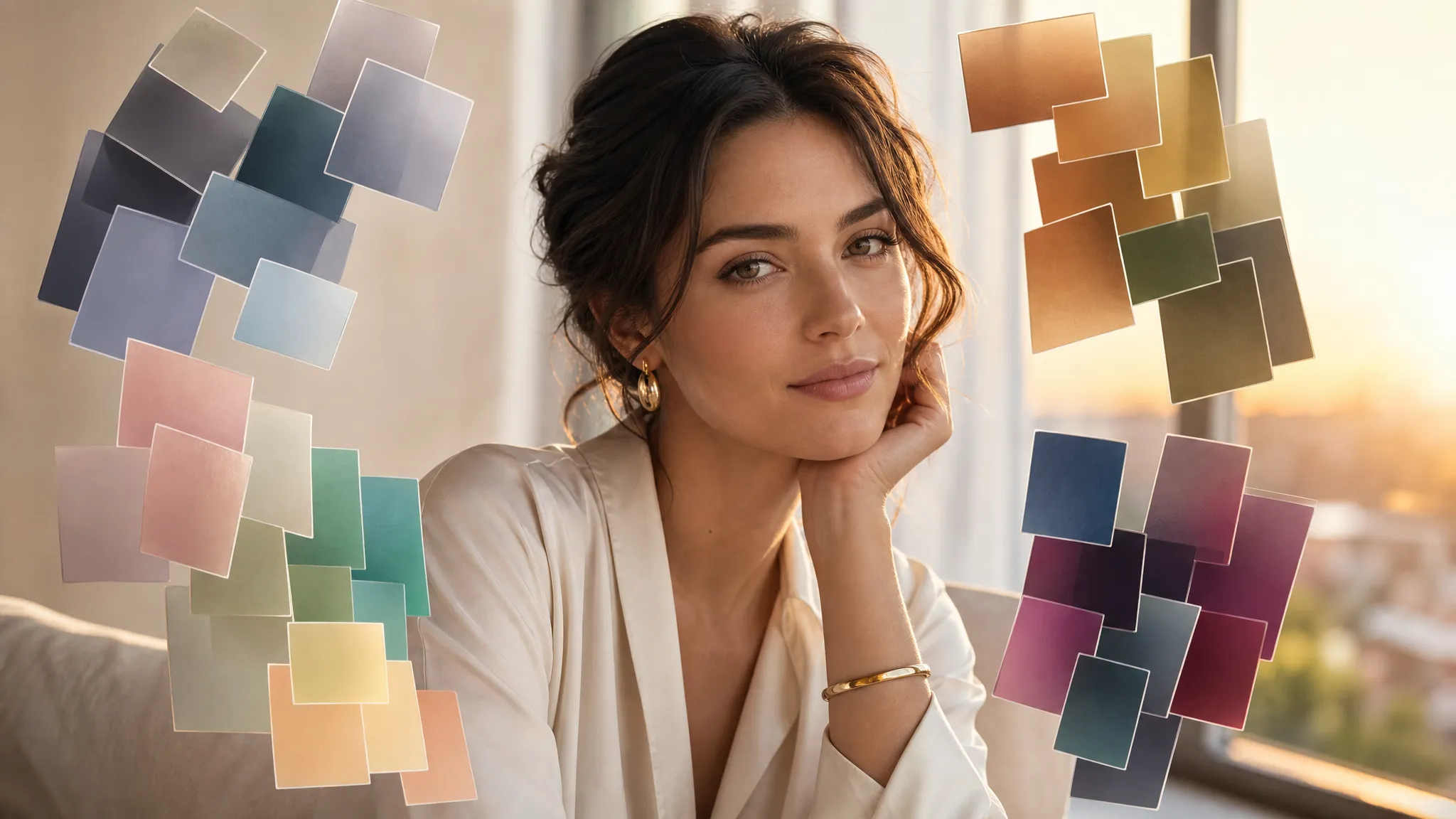
Color analysis is a system for determining which colors look most flattering on you based on your natural coloring. It considers three key factors: your skin undertone, the depth of your hair, and the color of your eyes. When you wear colors that harmonize with your natural pigmentation, your skin appears clearer, your eyes brighter, and your overall appearance more vibrant.
The practice originated with artist Johannes Itten in the 1920s, who noticed his students gravitated toward palettes that matched their natural coloring. It was popularized in the 1980s by Carole Jackson's Color Me Beautiful and has since evolved into a sophisticated system used by professional stylists, makeup artists, and fashion consultants worldwide.
Today, color analysis is experiencing a massive resurgence thanks to social media (especially TikTok and Korean beauty culture) and AI technology that makes professional-level analysis accessible to everyone.
How Color Analysis Works
Color analysis evaluates four dimensions of your natural coloring:
1. Undertone (Warm vs. Cool vs. Neutral)
Your undertone is the underlying hue beneath your skin's surface. It never changes regardless of tanning or aging.
- Warm undertone: Yellow, golden, or peachy cast. Veins appear green. Gold jewelry flatters more.
- Cool undertone: Pink, red, or bluish cast. Veins appear blue/purple. Silver jewelry flatters more.
- Neutral undertone: A mix of both warm and cool. Both gold and silver work.
2. Value/Depth (Light vs. Deep)
This measures how light or dark your overall coloring is — considering skin, hair, and eyes together.
- Light: Fair skin, light hair (blonde/light brown), light eyes
- Deep: Dark skin, dark hair, dark eyes
- Medium: Falls between the extremes
3. Chroma (Bright/Clear vs. Muted/Soft)
Chroma measures the saturation or intensity of your coloring.
- Bright/Clear: High contrast between features, vivid eye color, clear skin
- Muted/Soft: Low contrast, blended features, gentle coloring
4. Contrast Level
The difference between your lightest and darkest features. Someone with very dark hair and very fair skin has high contrast; someone whose hair, skin, and eyes are similar in depth has low contrast.
See your personal color palette now
Upload a photo — get your AI beauty report in 60 seconds.
The 4-Season System
The simplest version of color analysis divides people into four categories based on the seasons:
Spring (Warm + Light + Clear)
- Characteristics: Warm undertone, light to medium depth, clear and bright coloring
- Best colors: Coral, peach, warm green, golden yellow, turquoise
- Avoid: Black, dark navy, gray, burgundy
Summer (Cool + Light + Soft)
- Characteristics: Cool undertone, light to medium depth, soft and muted coloring
- Best colors: Lavender, dusty rose, powder blue, soft teal, sage green
- Avoid: Orange, bright yellow, black, warm browns
Autumn (Warm + Deep + Soft)
- Characteristics: Warm undertone, medium to deep depth, muted and earthy coloring
- Best colors: Olive, rust, burnt orange, mustard, chocolate brown, teal
- Avoid: Neon colors, icy pastels, cool pink, black
Winter (Cool + Deep + Clear)
- Characteristics: Cool undertone, medium to deep depth, high contrast and vivid coloring
- Best colors: True red, black, white, royal blue, emerald, magenta
- Avoid: Muted tones, earthy colors, warm pastels
The 12-Season System
The 12-season system provides much greater precision by creating three sub-types within each season. Each sub-type emphasizes one dominant characteristic:
| Season | Sub-types | Dominant Trait |
|---|---|---|
| Spring | Light Spring, Warm Spring, Bright Spring | Light, Warm, or Bright |
| Summer | Light Summer, Cool Summer, Soft Summer | Light, Cool, or Soft |
| Autumn | Soft Autumn, Warm Autumn, Deep Autumn | Soft, Warm, or Deep |
| Winter | Deep Winter, Cool Winter, Bright Winter | Deep, Cool, or Bright |
This system is what most professional colorists use today, and it's the system our AI analysis is built on.
How to Find Your Color Season
There are several ways to determine your color season:
Method 1: Professional In-Person Draping
A trained colorist holds fabric swatches against your face and observes how each color interacts with your skin. This is the gold standard but costs $200–$500 and requires an appointment.
Method 2: AI Photo Analysis
Upload a clear selfie in natural light, and AI technology analyzes your skin undertone, contrast, and depth to determine your season. This is fast (60 seconds), free or low-cost, and increasingly accurate. Try our free AI color analysis →
Method 3: Self-Assessment Quiz
Answer questions about your features (vein color, how you tan, which metals suit you) to narrow down your season. Less accurate than AI or professional analysis but requires no photo. Take our free color quiz →
Why Color Analysis Matters
For Your Wardrobe
Knowing your color season eliminates the "does this look good on me?" uncertainty. You can build a cohesive wardrobe where everything coordinates because all pieces come from the same harmonious palette.
For Makeup
Your color season determines your ideal:
- Foundation undertone
- Lip colors (warm reds vs. cool berries)
- Eyeshadow palettes
- Blush shades
- Bronzer tone
For Hair Color
Color analysis prevents expensive hair color mistakes. It tells you whether to go warm (golden blonde, copper) or cool (ash blonde, blue-black) and how light or dark to go.
For Jewelry & Accessories
Gold vs. silver, rose gold vs. platinum — your season makes this decision simple.
AI Color Analysis: The Modern Approach
Traditional color analysis required booking an expensive in-person appointment. Today, AI technology trained on thousands of professional color analyses can deliver accurate results from a single photo.
How AI Color Analysis Works
- Upload a selfie taken in natural daylight with no makeup or filters
- Computer vision extracts color data from your skin, hair, and eyes at the pixel level
- Machine learning compares your color profile against the 12-season framework
- Instant results — your season, palette, and styling recommendations in under 60 seconds
Is AI Accurate?
AI color analysis achieves comparable results to in-person consultations for the majority of people. It's particularly strong at:
- Identifying undertone (warm vs. cool)
- Measuring contrast levels
- Determining depth/value
Where it may be less precise:
- People whose coloring falls exactly between two seasons
- Photos with poor lighting or heavy filters
- Very unusual color combinations
For best results, use a clear photo in natural daylight, no makeup, and face the camera directly.
Get Your Free Color Analysis
Ready to discover your seasonal color type? Our AI-powered tool analyzes your photo and delivers your complete color profile in 60 seconds — completely free, no signup required.
Start Free AI Color Analysis →
Or prefer no photo? Take the Free Color Quiz →
Related Articles
- Color Analysis: The Complete Guide — Everything you need to know about finding your best colors
Want to try AI color analysis yourself?
Upload one photo and get a magazine-level beauty report in 60 seconds.
Start Free Analysis