Deep Winter Color Palette: Your Complete Style Guide for 2026
What Makes Someone a Deep Winter?
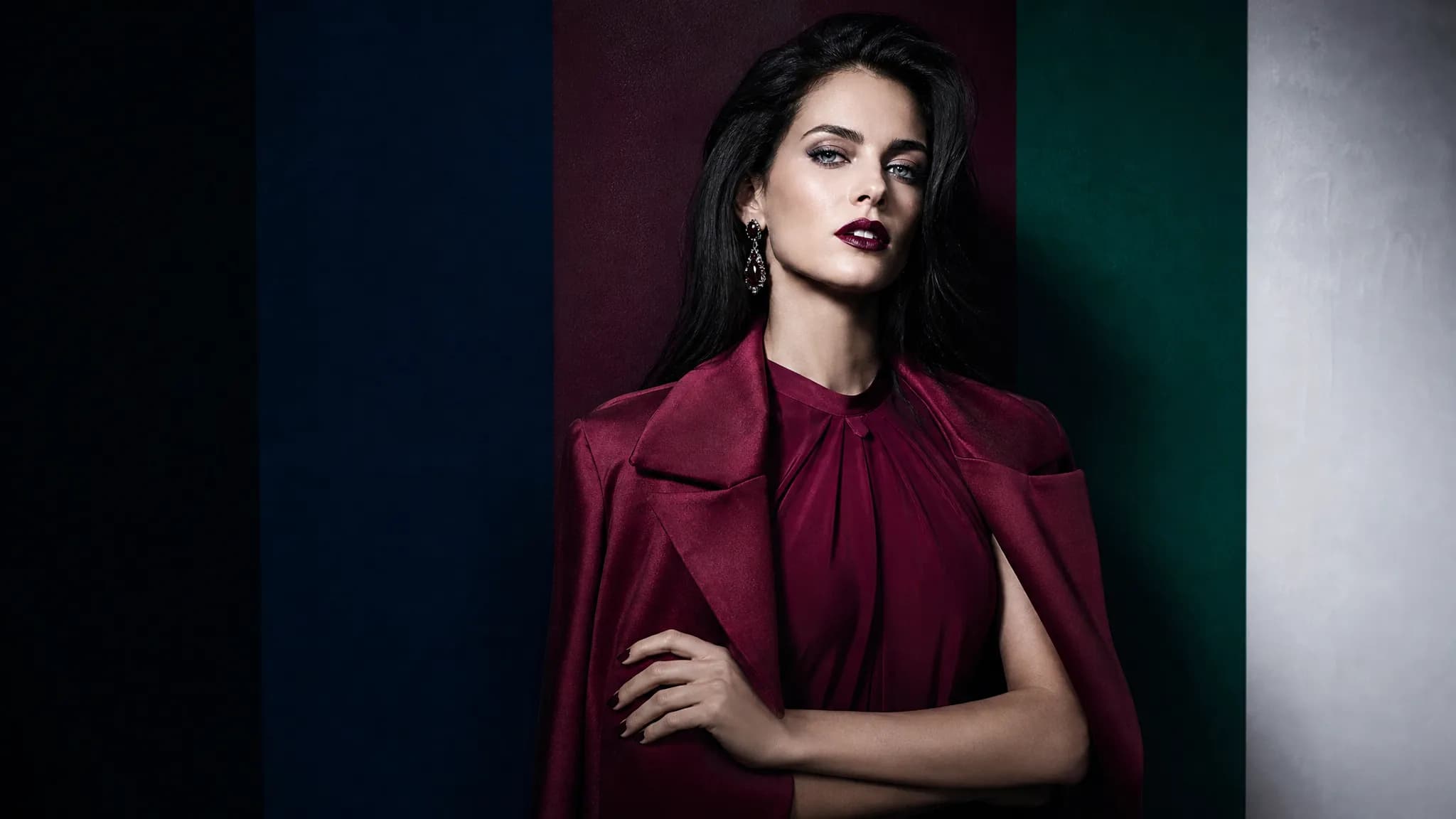
Deep Winter sits between True Winter and Dark Autumn on the color wheel. It's the darkest of the three Winter sub-seasons, with the defining characteristic being depth — deep hair, deep eyes, and medium-to-deep skin with cool or neutral-cool undertones.
Typical Deep Winter characteristics:
- Skin: Medium to deep with cool (pink/blue) or neutral-cool undertones. Can range from porcelain with blue undertones to deep brown with cool undertones.
- Eyes: Dark and intense — deep brown, black-brown, dark hazel, or deep cool green. The key is the depth and intensity, not necessarily the specific color.
- Hair: Dark — usually dark brown to black. Can have cool (ash) tones running through it.
- Overall contrast: High. There's a noticeable difference between your darkest feature (usually hair/eyes) and your lightest (skin or the whites of your eyes).
The key distinguisher: What separates Deep Winter from other winters is that depth comes first, cool comes second. Your coloring reads as "deep and rich" before it reads as "cool and icy."
The Deep Winter Color Palette
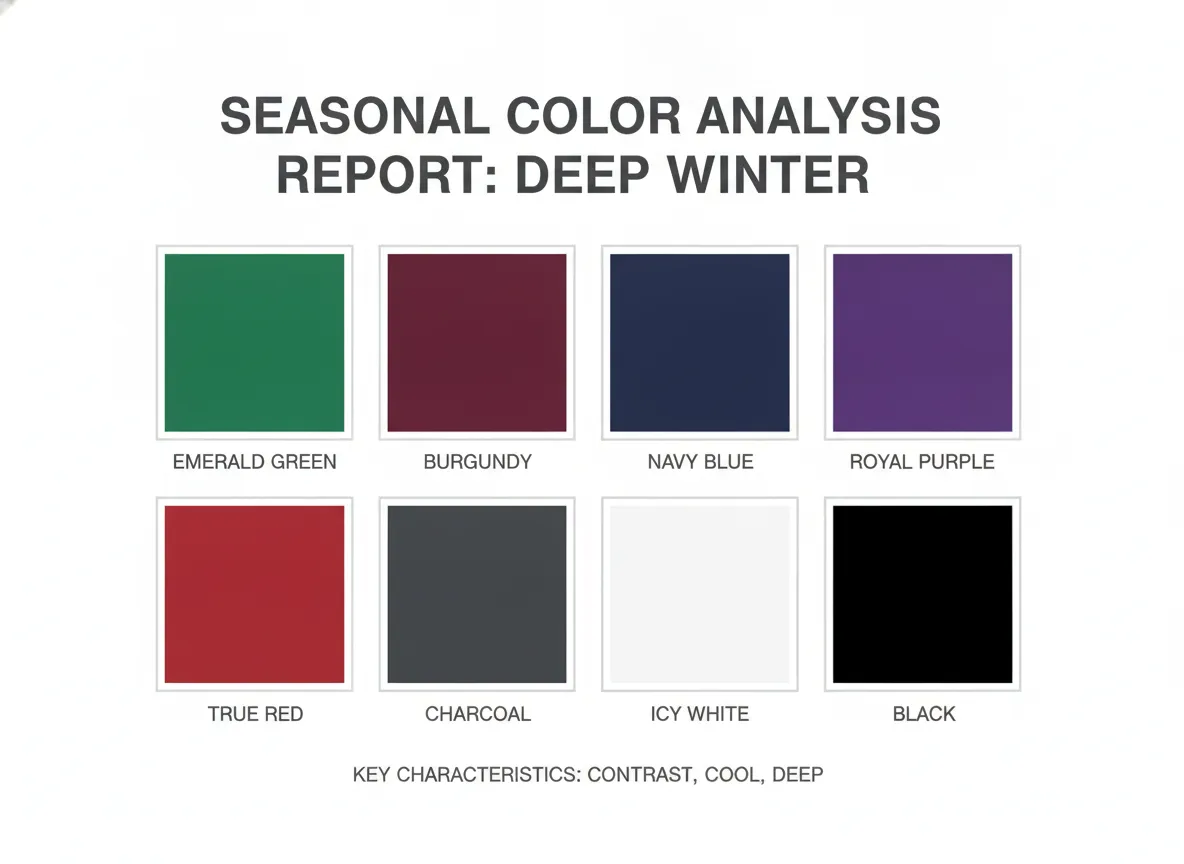
Your palette is built around three principles: depth, coolness, and clarity. Colors that combine all three will make you look vibrant and alive.
Power Colors
These are the shades that make people do a double-take:
- Black — Your ultimate neutral. Unlike most seasons, pure black genuinely flatters you rather than draining you.
- Burgundy / Oxblood — Deep, cool reds that mirror the richness of your coloring.
- Emerald green — The deep, blue-based green that picks up any cool green in your eyes.
- Royal purple — Rich and saturated, not lavender or lilac.
- Navy — Deep and commanding, especially near your face.
- True red — Bold, blue-based red (think classic red lip territory).
Everyday Colors
Versatile shades that are always flattering:
- Charcoal and dark cool grey
- Deep teal
- Plum and deep berry
- Icy white (blue-white, not cream)
- Dark chocolate brown (only if it's cool-leaning)
- Deep olive (the cool version, not golden-olive)
- Pine green
Accent Colors
For pops of interest in accessories or smaller pieces:
- Magenta and hot pink
- Bright cool blue
- Icy lavender (in small amounts — scarves, jewelry)
- Silver and chrome
See your personal color palette now
Upload a photo — get your AI beauty report in 60 seconds.
Colors Deep Winters Should Avoid
These shades will make you look tired, sallow, or "off" — even if you love them aesthetically:
- Warm oranges, peach, and coral — They clash with your cool undertone and make skin look muddy.
- Mustard and golden yellow — Warm, muted, and the opposite of what your coloring needs.
- Camel and warm tan — These work beautifully on Autumns but flatten Deep Winters.
- Pastels (especially warm ones like peach or butter yellow) — Too light and too warm. They overwhelm your natural depth.
- Warm browns (think coffee with too much cream) — Swap for cool dark chocolate or espresso instead.
- Muted, dusty tones — You need clarity. Anything too greyed-out or "soft" makes you look faded.
The exception: If you're on the border between Deep Winter and Dark Autumn (which is common), you may be able to pull off some warmer tones — but they'll still need to be deep and rich rather than light and warm.
Deep Winter Makeup Guide
Foundation & Complexion
Your foundation should match your cool or neutral-cool undertone. Look for foundations described as "neutral-cool" or with pink/red undertones. Avoid anything labeled "warm" or "golden."
Lips
This is where Deep Winters get to have the most fun. You can carry bold lip colors that would look costume-y on other seasons:
- Best reds: Blue-red, classic crimson, wine red
- Best berries: Deep raspberry, black cherry, cool plum
- Best nudes: Mauve-based nudes, cool rosewood (avoid anything peachy)
- Bold options: Deep oxblood, dark berry, even black-cherry for evening
Eyes
- Eyeshadow: Deep smoky looks in charcoal, navy, deep plum, or forest green. You can do a dramatic smoky eye without it looking "too much."
- Eyeliner: Black is your friend. Deep brown or navy also work for softer days.
- Mascara: Black, always. Brown mascara can look unfinished on Deep Winters.
Blush
Cool berry, deep rose, and plum blushes. Avoid peach or coral — they'll clash with your undertone and look unnatural.
Building a Deep Winter Wardrobe
Core Neutrals
Instead of building around typical "neutral" tones that are often warm (beige, camel, khaki), build your wardrobe around:
- Black (your ultimate base)
- Navy
- Charcoal / dark grey
- Icy white
- Deep burgundy (yes, this counts as a neutral for you)
How to Wear Trends Without Losing Your Palette
Fashion trends rotate colors constantly, and not every trend color will be in your palette. Here's how to adapt:
- When pastels trend: Opt for the icy versions — icy blue, icy lavender, icy pink — in structured pieces rather than all-over color.
- When earth tones trend: Reach for the coolest, deepest versions — dark olive rather than golden olive, espresso rather than tan.
- When neon trends: Cool-based brights (magenta, electric blue) over warm ones (orange, lime).
Jewelry and Metals
- Silver, platinum, white gold — Your metals. They harmonize with your cool undertones.
- Dark gunmetal — Adds edge while staying in palette.
- Rose gold — Can work as an accent if it leans cool/pink rather than coppery.
- Yellow gold — Generally not your best, unless it's a very small amount paired with silver. If you love gold, go for white gold or champagne gold instead.
Accessories
- Bags and shoes: Black leather, deep burgundy, navy — all classic Deep Winter.
- Scarves: This is where you can introduce your jewel tones — emerald, royal purple, berry.
- Sunglasses: Black frames, deep tortoiseshell (cool-leaning), or burgundy/wine frames.
Deep Winter vs. Other Seasons
Getting typed correctly matters because wearing the wrong season's palette — even a similar one — will look slightly "off."
Deep Winter vs. True Winter
- True Winter is cooler and icier. Their best colors are the bright, high-contrast icy shades (think Snow White — black hair, pale skin, red lips).
- Deep Winter is darker and richer. You can carry more depth and warmth than True Winter, but less brightness.
- The test: If icy pastels look amazing on you → probably True Winter. If they wash you out but deep jewel tones make you glow → Deep Winter.
Deep Winter vs. Dark Autumn
- Dark Autumn is warmer. Their dark colors lean olive, amber, and rust rather than cool.
- Deep Winter is cooler. Your darks lean navy, charcoal, and cool burgundy.
- The test: Hold a rust-orange shirt next to your face, then a cool burgundy. If rust makes your skin look alive → Dark Autumn. If burgundy does → Deep Winter.
Quick Reference Table
| Category | Best Choices | Avoid |
|---|---|---|
| Neutrals | Black, navy, charcoal, icy white | Beige, camel, khaki, cream |
| Reds | Blue-red, crimson, burgundy, wine | Orange-red, tomato, coral |
| Greens | Emerald, pine, dark teal | Olive, sage, lime, mint |
| Blues | Navy, royal blue, deep teal | Light blue, periwinkle |
| Purples | Royal purple, plum, deep berry | Lavender, lilac, mauve (in large amounts) |
| Metals | Silver, platinum, white gold | Yellow gold, brass, copper |
| Lips | Berry, wine, blue-red, cool nude | Peach, coral, warm nude |
Not Sure If You're Deep Winter?
Color analysis can feel confusing because so many variables are at play — lighting, surrounding colors, even your mood can affect how you perceive your own coloring. Traditional methods like draping (holding fabric swatches next to your face) require trained eyes and controlled lighting.
If you suspect you're a Deep Winter, start by testing the core principle: do deep, cool, high-contrast colors make your skin look clearer and your eyes brighter? If yes, you're very likely in Winter territory — and the depth of your natural coloring will tell you whether you're Deep, True, or Bright.
For precise results without the guesswork, AI color analysis uses computer vision to measure your actual skin, hair, and eye color values — giving you an objective 12-season typing based on your unique coloring.
Related Articles
- Color Analysis: The Complete Guide — Everything you need to know about finding your best colors
- Personal Color Analysis: All 12 Types Explained — Understand where Deep Winter fits in the full system
- Best Colors for Cool Undertones — Broader cool-toned color guide
- Cool Tone vs Warm Tone: 5 Easy Tests — Confirm your undertone first
Want to try AI color analysis yourself?
Upload one photo and get a magazine-level beauty report in 60 seconds.
Start Free Analysis