How to Build a Capsule Wardrobe for Your Color Season (Step-by-Step)
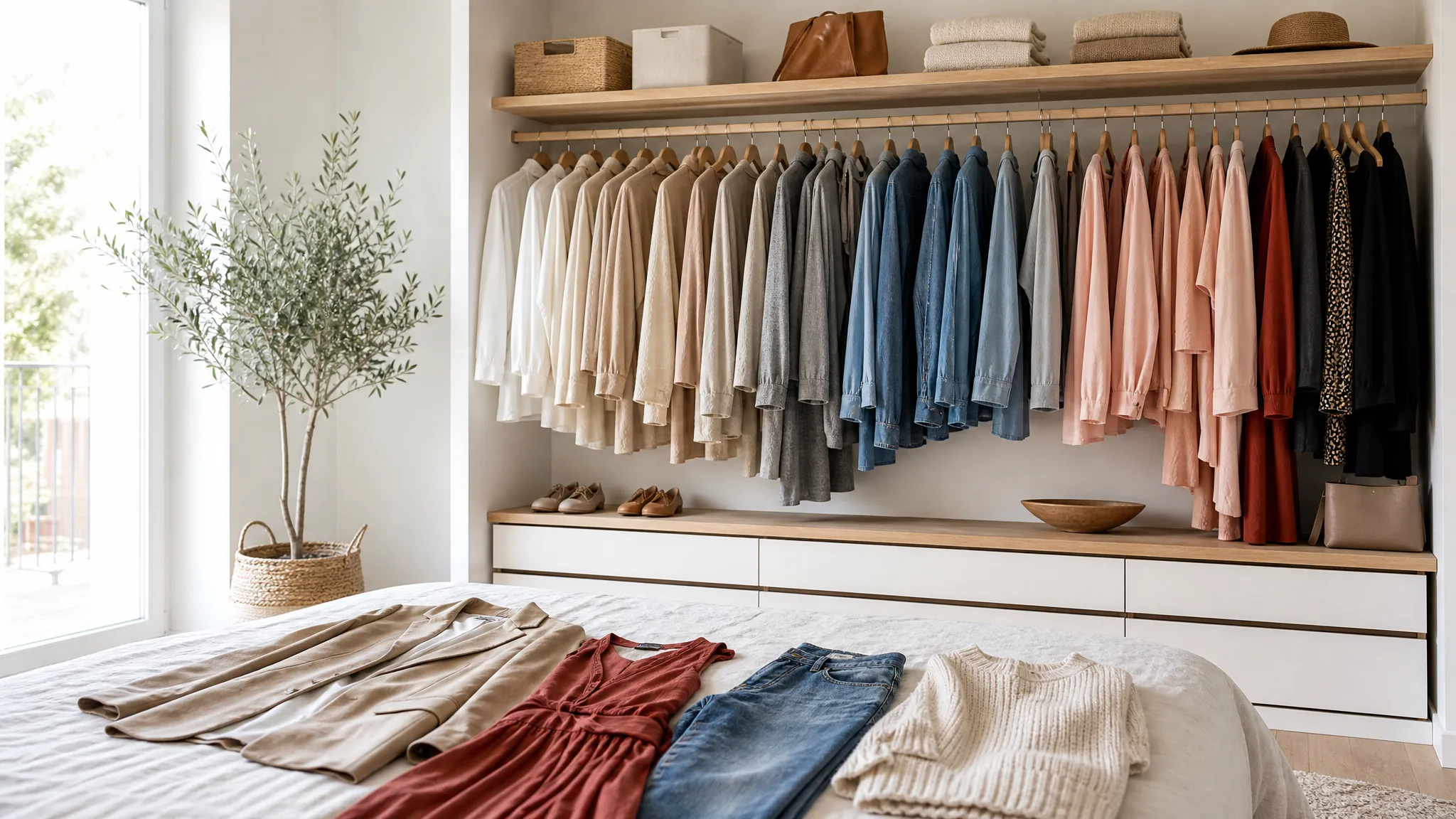
You Know Your Color Season — Now What?
So you've figured out you're a Soft Autumn or a Bright Spring. Maybe you used an AI color analysis tool, or maybe you draped yourself with colored fabrics in front of a mirror for two hours. Either way, you have an answer.
But here's the problem nobody talks about: knowing your season doesn't automatically fix your closet.
I remember staring at my "Soft Summer" palette — those dusty roses, muted lavenders, and soft blue-grays — and thinking, "Great. Now how do I turn this into actual outfits I can wear to work on Monday?"
If that's where you are right now, this guide is for you. I'm going to walk you through building a capsule wardrobe that's completely based on your color season — piece by piece, no overwhelm.
What Is a Capsule Wardrobe (and Why It Works with Color Analysis)
A capsule wardrobe is a small collection of versatile clothing pieces that all mix and match with each other. Most capsule wardrobes contain 30-40 pieces (not counting underwear, workout gear, or special occasion outfits).
Here's why color analysis makes capsule wardrobes work better:
- Everything matches automatically. When every piece is from the same color palette, you can grab any top and any bottom and look intentional.
- No more "nothing to wear" moments. When your colors are cohesive, combinations multiply. 30 pieces can create 100+ outfits.
- Shopping becomes effortless. You have a clear filter: does this color appear in my palette? Yes or no. Decision made in seconds.
- You look polished without trying. Color harmony creates an expensive, put-together look — even in a $20 t-shirt.
The traditional capsule wardrobe advice says "stick to black, white, navy, and gray." But that advice ignores the fact that not everyone looks good in those colors. A Warm Spring looks washed out in cool gray. A Deep Winter doesn't need beige anywhere near their face.
Your color season is your capsule framework.
See your personal color palette now
Upload a photo — get your AI beauty report in 60 seconds.
Step 1: Identify Your Season's Core Neutrals
Every color season has its own set of neutrals — the foundation colors that will make up about 60% of your wardrobe. These are the colors for pants, blazers, coats, and everyday basics.
Here's a breakdown by season type:
Cool Seasons (Winter, Summer):
- True black, charcoal, navy, cool gray, icy white
- Deep Winter adds: dark chocolate brown
- Soft Summer adds: heathered gray, taupe
Warm Seasons (Spring, Autumn):
- Warm brown, camel, olive, ivory, warm beige
- Deep Autumn adds: dark chocolate, forest green
- Warm Spring adds: warm navy, golden tan
Muted Seasons (Soft Summer, Soft Autumn):
- Dusty neutrals: mushroom, stone, sage, soft navy
- Avoid stark black or bright white — opt for charcoal and cream instead
Bright Seasons (Bright Spring, Bright Winter):
- High-contrast neutrals: crisp white, true black, bright navy
- Can handle bold neutral combinations that would overwhelm muted types
Action step: Choose 3-4 neutral colors from your season. These become your "base layer" colors.
Step 2: Choose Your Accent Colors (The Fun Part)
Accent colors are the pieces that bring your wardrobe to life — blouses, knitwear, dresses, accessories. They should make up about 30% of your closet.
Pick 3-5 accent colors from your seasonal palette. Here's how to choose wisely:
-
The "instant glow" color. Which color from your palette makes your skin look the best? That's your primary accent. Wear it closest to your face.
-
The statement color. One bolder shade for days when you want to stand out. Deep Winters might choose emerald green. Warm Autumns might choose burnt orange.
-
The soft rotation color. A lighter or more muted option for variety. Light Springs might add peach. Cool Summers might add dusty rose.
Pro tip: Look at the colors you consistently get compliments in. They're almost always from your seasonal palette, and they should be your accent colors.
Step 3: The 30-Piece Capsule Blueprint
Here's a practical breakdown of what a color-season capsule wardrobe looks like:
Bottoms (7 pieces)
- 2 pairs of jeans/pants in your darkest neutral
- 1 pair of pants in your medium neutral
- 2 skirts (1 casual, 1 dressy) in neutral tones
- 1 pair of tailored trousers
- 1 pair of shorts or linen pants (seasonal)
Tops (10 pieces)
- 3 basic tees in your best neutral shades
- 2 blouses in your accent colors
- 2 knit tops (1 neutral, 1 accent)
- 1 statement top in your boldest season color
- 2 long-sleeve basics (1 neutral, 1 accent)
Layers (5 pieces)
- 1 blazer in your power neutral
- 1 cardigan in a soft accent
- 1 light jacket (denim, leather, or linen)
- 1 heavier coat in your darkest neutral
- 1 vest or lightweight layer
Dresses (4 pieces)
- 1 casual day dress in an accent color
- 1 work-appropriate dress in a neutral
- 1 patterned dress (pattern should contain your palette colors)
- 1 evening/date dress in your statement color
Extras (4 pieces)
- 1 jumpsuit or romper
- 1 matching set
- 2 pieces that are wildcards in your palette
Step 4: The Pattern Rule
Patterns and prints are where most people go wrong with capsule wardrobes. Here's the rule:
Every color in the pattern should exist in your seasonal palette.
A floral dress with warm coral, sage green, and cream is perfect for Soft Autumn — but it would clash with a Cool Summer's palette. A geometric print in navy, white, and bright red works for Bright Winter but overwhelms a Light Spring.
When shopping for patterns:
- Hold the garment up and identify every color in the print
- If more than one color is outside your palette, skip it
- Small patterns are more forgiving than large ones
- Patterns with your neutral colors as the base are the most versatile
Step 5: Building Over Time (The Smart Way)
You don't need to buy 30 pieces tomorrow. Here's a realistic timeline:
Month 1: Audit
- Pull out everything that matches your color season
- Move pieces that don't work to a separate area (don't throw them away yet — wear them for a few weeks and see if you notice the difference)
Month 2-3: Fill the neutrals
- Invest in 2-3 high-quality neutral basics
- These are your most-worn pieces, so spend more per item here
- Think: well-fitting jeans, a great blazer, a quality white or cream tee
Month 4-6: Add accent pieces
- This is where you bring personality in
- Shop secondhand — it's easier to find unique colors at thrift stores than at fast fashion chains
- One new accent piece per month is a sustainable pace
Month 7+: Refine
- Notice which combinations you reach for most
- Replace anything that doesn't get worn
- Start building seasonal rotations (lighter colors for summer, deeper ones for winter)
Common Mistakes to Avoid
After working with my own capsule wardrobe for over a year, here are the pitfalls I've learned to dodge:
1. Going all-neutral. Your wardrobe will feel boring if it's 100% basics. You need those accent pieces for joy and self-expression.
2. Ignoring fabric texture. Color isn't the only factor — a shiny satin in your perfect blue might look cheap, while the same shade in matte cotton looks elevated. Muted seasons especially benefit from matte, textured fabrics.
3. Forgetting about metal tones. Jewelry and hardware matter. Cool seasons shine in silver, platinum, and white gold. Warm seasons glow in gold, brass, and copper. Choose bag hardware, belt buckles, and jewelry accordingly.
4. Being too rigid. A capsule wardrobe is a framework, not a prison. If you love a color that's slightly outside your palette, wear it as a bottom or accessory rather than near your face.
5. Not considering lifestyle. If you work from home, you don't need five blazers. Build your capsule around your actual life, not an aspirational one.
How Technology Makes This Easier
The hardest part of building a color-season capsule wardrobe used to be figuring out your season in the first place. Traditional draping sessions with a color consultant cost $200-500 and require booking weeks in advance.
Today, AI-powered color analysis tools can determine your season from a selfie in seconds. They analyze your skin's undertone, the contrast between your features, and the warmth or coolness of your natural coloring — the same factors a human analyst would assess, but using computer vision trained on thousands of cases.
Once you have your season, you can use digital palette tools to compare against items while shopping online. Some apps even let you virtually "try on" colors before buying — saving the returns and disappointment.
Free tools like aicoloranalysis.io offer an instant AI color analysis that identifies your season and provides a personalized palette, which is a great starting point for planning your capsule wardrobe.
Key Takeaways
- A capsule wardrobe works best when built on your color season — not generic "neutral" advice
- Start with 3-4 season-appropriate neutrals as your base (60% of wardrobe)
- Add 3-5 accent colors that make your skin glow (30% of wardrobe)
- Every pattern should contain colors from your palette
- Build gradually over 6+ months rather than overhauling everything at once
- Use AI color analysis to quickly identify your season and start with confidence
Related Articles
- Color Analysis: The Complete Guide — Everything you need to know about finding your best colors
Want to try AI color analysis yourself?
Upload one photo and get a magazine-level beauty report in 60 seconds.
Start Free Analysis