कलर एनालिसिस के मिथक: TikTok जो 7 बातें गलत बताता है
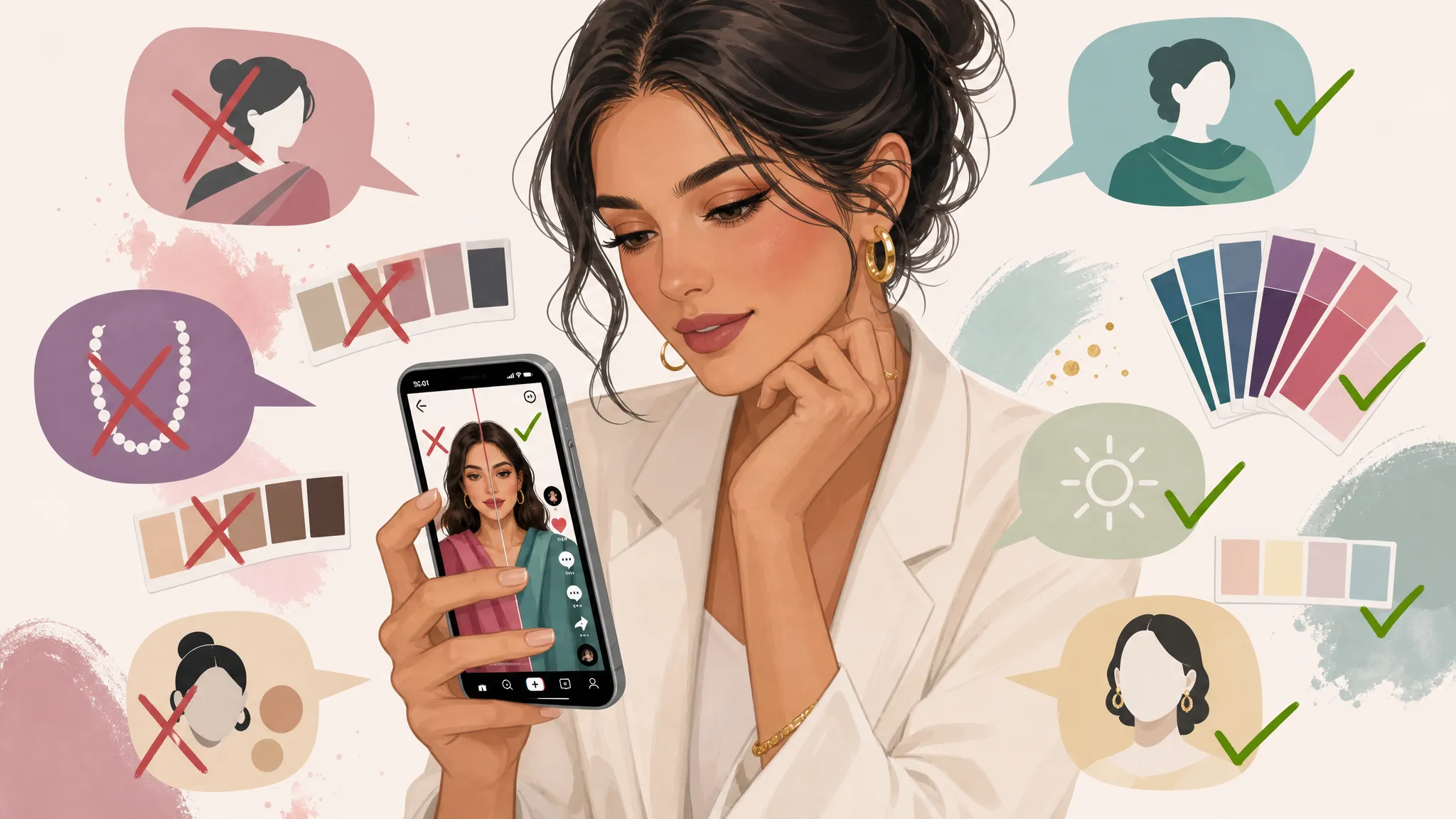
TikTok ने कलर एनालिसिस को वायरल बनाया — लेकिन बहुत कुछ गलत भी किया
मानती हूँ: TikTok ने दो साल में कलर एनालिसिस की जागरूकता के लिए जितना काम किया, उतना प्रोफेशनल स्टाइलिंग इंडस्ट्री ने दो दशकों में नहीं किया। अचानक सबको पता है कि «color season» क्या होता है, और मेरी वो दोस्तें जिन्हें undertone से कभी मतलब नहीं था, मुझे reels भेजकर पूछती हैं — «क्या मैं Soft Summer हूँ?»
यही अच्छी खबर है। बुरी? वायरल होने के साथ गलत जानकारी भी आती है। और TikTok पर सबसे ज़्यादा शेयर होने वाला कुछ कलर एनालिसिस कंटेंट या तो इतना सरल है कि बेकार हो जाता है, या सीधे गलत है।
मैंने सैकड़ों घंटे रंग सिद्धांत पढ़ने, प्रोफेशनल draping के नतीजों की सोशल मीडिया सलाह से तुलना करने, और इन दावों को असली लोगों पर टेस्ट करने में बिताए हैं। यहाँ हैं 7 सबसे बड़े मिथ जो TikTok बार-बार फैलाता है — और विज्ञान और अभ्यास वास्तव में क्या कहते हैं।
मिथ #1: «आपकी नसों का रंग undertone के बारे में सब कुछ बता देता है»
TikTok का दावा: कलाई की नसें देखें। हरी नसें = warm undertone। नीली/बैंगनी नसें = cool undertone। बस।
यह भ्रामक क्यों है: vein test एक शुरुआती बिंदु है, diagnosis नहीं। TikTok जो छोड़ देता है:
- नसों का रंग त्वचा की मोटाई, शरीर की fat percentage और रोशनी की स्थिति से प्रभावित होता है
- medium या olive त्वचा वालों को अक्सर हरी और नीली दोनों नसें दिखती हैं — इसका मतलब सिर्फ normal circulation है, «neutral» होना नहीं
- dehydration, temperature और दिन का समय — सब बदलते हैं कि नसें कितनी दिखाई देती हैं और कैसी रंगीन लगती हैं
- सबसे महत्वपूर्ण: undertone सिर्फ warm vs. cool नहीं है। इसमें depth, chroma (muted vs. clear) और contrast शामिल हैं — vein test इनमें से किसी को भी नहीं देखता
वास्तव में क्या काम करता है: vein test extremes को हटा सकता है (अगर नसें साफ़ हरी हैं, तो शायद आप Cool Winter नहीं हैं)। लेकिन सटीक पढ़ने के लिए कई indicators एक साथ देखने होंगे: त्वचा अलग-अलग metals पर कैसे react करती है, golden या pink tan होती है या नहीं, silver vs. gold fabric चेहरे पर कैसे reflect होता है, और — सबसे भरोसेमंद — specific test colors में draping करने पर त्वचा कैसी दिखती है।
Color Research & Application में प्रकाशित research पुष्टि करती है कि adjacent colors के आधार पर skin color perception काफ़ी बदल जाती है, इसलिए draping (कपड़े चेहरे के पास रखना) gold standard बना हुआ है — कलाई पर एक झटके की नज़र नहीं।
अपनी पर्सनल कलर पैलेट अभी देखें
फोटो अपलोड करें — 60 सेकंड में अपनी AI ब्यूटी रिपोर्ट पाएं।
मिथ #2: «सिर्फ 4 seasons हैं — जो आपको सूट करे वो चुन लो»
TikTok का दावा: आप Spring, Summer, Autumn या Winter हैं। descriptions पढ़ें और जो resonate करे वो चुन लें।
यह गलत क्यों है: 4-season system 1980s का simplified starting point है। modern system 12 sub-seasons use करता है क्योंकि 4 categories इंसानी coloring की असली diversity capture नहीं कर सकतीं।
यह practically क्यों matter करता है: दो लोगों की कल्पना करें जो दोनों «Summer» हैं। एक की बहुत light, cool coloring है low contrast के साथ (Light Summer)। दूसरे की muted, थोड़ी warm-leaning neutral coloring है medium depth के साथ (Soft Summer)। उनकी ideal palettes बहुत अलग हैं — Soft Summer के लिए perfect dusty rose Light Summer को पूरी तरह wash out कर देगा।
4-season model neutral undertones वालों के लिए भी fail होता है। अगर clearly warm या clearly cool नहीं हैं, तो seasons के बीच अटक जाती हैं बिना actionable guidance के। 12-season system इसे handle करता है यह मानकर कि आपकी dominant characteristic (warm, cool, light, deep, bright, या soft) binary warm/cool classification थोपने से ज़्यादा matter करती है।
इसके बजाय क्या करें: 12 seasons को boxes नहीं, spectrum समझें। आपका season यह define करता है कि छह characteristics में से कौन-सी आपकी coloring पर हावी है — न कि जो aesthetic सबसे appealing लगे वो चुनकर।
मिथ #3: «एक selfie से accurately type कर सकती हैं»
TikTok का दावा: selfie लें, color palettes के साथ compare करें, जो best लगे वही आपका season है।
यह unreliable क्यों है: phone cameras कम से कम पाँच तरीकों से color के बारे में झूठ बोलती हैं:
- White balance correction — phone automatically color temperature adjust करता है, warm scenes को cooler और cool scenes को warmer बना देता है। यह directly बदलता है कि skin tone कैसा दिखता है।
- Beauty filters — modern phones पर «no filter» photos भी default में subtle skin smoothing और color correction apply करती हैं।
- Screen calibration — आपकी photo देखने वाला screen brightness, night mode settings और display type के हिसाब से अलग colors देखता है।
- Lighting contamination — artificial light skin पर color cast add करती है। fluorescent सबको green-cool दिखाती है। incandescent सबको warm-yellow।
- Compression artifacts — image compression subtle color transitions बदल देती है — और undertone differences ठीक वहीं «रहते» हैं।
बेहतर क्या काम करता है: professional color analysis controlled conditions use करती है — neutral lighting (5000-6500K daylight या calibrated D65 lamps), makeup-free bare skin, white या grey draping backdrop, और face के पास physical fabric swatches। analyst live skin reactions देखता है: skin clearer या muddier दिखती है? under-eye circles बढ़ते हैं या घटते? face dimension gain करता है या flatten?
अगर professional नहीं देख सकतीं, तो color science algorithms से photo analyze करने वाले AI tools palette images के सामने selfie eyeballing से कहीं ज़्यादा reliable result देते हैं। aicoloranalysis.io जैसे tools common photo artifacts compensate करते हैं और visual impression alone के बजाय actual pixel-level skin tone data analyze करते हैं।
मिथ #4: «season पता चल जाए तो सिर्फ वही colors पहन सकती हैं»
TikTok का दावा: Deep Autumn हैं तो black कभी नहीं पहन सकतीं। Light Spring हैं तो closet से सब dark निकाल फेंको।
यह harmful क्यों है: यह all-or-nothing thinking color analysis को helpful tool से anxiety-inducing cage बना देता है। reality कहीं ज़्यादा nuanced है:
- आपके season की palette आपकी सबसे flattering range है — «allowed» colors की sole list नहीं
- Proportion elimination से ज़्यादा matter करती है — harmonious colors के full outfit में एक «wrong» color accent के रूप में perfectly fine लगता है
- Face से distance matter करती है — top के रूप में clash करने वाले colors shoes, bag या pants में zero effect रखते हैं
- Context सब बदल देता है — daylight में wash out करने वाला black outfit evening lighting में powerful लग सकता है
- Personal expression की value है — technically palette में न हो, लेकिन जो color love करती हैं, उसे पहनकर confidence का अपना glow-up effect होता है
Professional approach: palette को «starting lineup» समझें — वो colors जिन्हें minimal effort में best दिखना हो तो पहुँचती हैं। prison sentence नहीं। कई professionals 70-80% wardrobe palette में रखने की सलाह देते हैं, बाकी जगह simply love करने वाले pieces के लिए।
मिथ #5: «आँखों का रंग season determine करता है»
TikTok का दावा: blue eyes = cool season। brown eyes = warm season। green eyes = autumn।
यह oversimplified क्यों है: eye color कई data points में एक है, और सबसे reliable भी नहीं। कारण:
- brown eyes वाले सभी seasons में हैं — warm और cool दोनों। brown की depth और temperature matter करती है, सिर्फ «brown» नहीं।
- blue eyes वाले warm seasons हो सकते हैं (Light Spring में often clear blue eyes warm skin undertone के साथ)
- eye color cornea के पीछे है और clothing से reflected light से affect होता है — self-diagnosis के लिए especially unreliable
- iris color से ज़्यादा matter करता है eyes, skin और hair के बीच contrast pattern। dark brown eyes, very light skin और dark hair = high contrast (Winter suggest करता है), भले brown «warm» हो
season actually क्या indicate करता है: किसी single feature से ज़्यादा features के बीच relationship matter करती है। specifically:
- Skin undertone (single strongest indicator)
- lightest और darkest features के बीच contrast level
- overall coloring clear/bright दिखती है या muted/soft
- hair color की temperature और depth
मिथ #6: «dark skin / deep complexions के लिए color analysis काम नहीं करता»
TikTok का दावा: «color analysis white लोगों के लिए बनाया गया था।» या: «dark skin वाली सब Deep Winter या Deep Autumn हैं।»
यह गलत और harmful दोनों क्यों है: यह myth इसलिए टिका है क्योंकि early color analysis books में mostly fair-skinned models examples थे। लेकिन system undertone relationships के बारे में है, skin lightness के बारे में नहीं — और हर ethnicity और depth के लिए काम करता है।
deep complexions वाले full range cover करते हैं:
- Cool undertones — ashy, blue-black, या espresso skin → often Deep Winter या Cool Winter
- Warm undertones — golden, copper, या caramel skin → often Deep Autumn या Warm Autumn
- Neutral undertones — strong warm/cool lean के बिना balanced → Soft seasons या True seasons हो सकते हैं
- Bright/clear coloring — high contrast के साथ very vivid features → Bright Spring या Bright Winter
deeper skin के लिए key difference कौन-सा system works नहीं — कौन-से test methods work करते हैं। extremely light pastels से draping deep skin पर readable reactions न दिखा सके, लेकिन jewel tones vs. earth tones draping absolutely काम करता है। skilled analyst same underlying framework use करते हुए method adjust करता है।
representation यहाँ matter करती है: आप full palette potential जानने की deserve करती हैं, सिर्फ «deep» default होकर वहीं छोड़ दिए जाने की नहीं।
मिथ #7: «AI color analysis सिर्फ gimmick है — professional चाहिए»
TikTok का दावा: «वो apps random season pick करती हैं» या «trained human eye ही undertones पढ़ सकती है।»
यह outdated क्यों है: पाँच साल पहले यह claim ज़्यादा sense बनाता था जब color analysis apps basically tech costume पहने quizzes थे। लेकिन technology dramatically बदल चुकी है:
modern AI color analysis use करती है:
- Multiple facial zones (forehead, cheeks, jawline) पर pixel-level skin tone sampling — lighting inconsistencies average out करके
- Color space conversion — RGB camera data को perceptually uniform LAB color space में, जहाँ undertone differences mathematically measurable हो जाती हैं
- Calibrated reference databases से comparison — measured values को thousands of professionally typed individuals से match करना
- Adaptive algorithms — common photo issues (white balance, flash, mixed lighting) compensate करना
perfect है? नहीं। TikTok creator के 15 seconds में selfie देखकर season declare करने से significantly better? बिल्कुल।
honest comparison: certified analyst के साथ professional in-person draping सबसे accurate method रहता है (reputable analysts से roughly 90-95% accuracy)। genuine color science use करने वाले AI tools अगले (photo quality पर roughly 80-90%)। TikTok self-diagnosis last — studies suggest people सिर्फ 30-40% समय correctly self-type करती हैं।
practical reality: professional analysis $150-400 खर्च करती है और weeks ahead booking चाहिए। AI free या low cost पर immediate, reasonably accurate starting point देती है — और चाहें तो बाद में professional से verify कर सकती हैं।
अपने colors actually कैसे जानें (misinformation के बिना)
अगर color analysis education exclusively TikTok से मिली है, यह better path है:
Step 1: समझें 12-season system actually क्या measure करता है — temperature, depth, और chroma। vibes नहीं, aesthetics नहीं, कौन-सा Pinterest board prefer करती हैं वो नहीं।
Step 2: कुछ scientific rigor वाले method से baseline result लें — professional draping session या color science use करने वाला AI analysis tool। जो «choose which palette you like best» कहे, avoid करें।
Step 3: result real life में test करें। recommended colors एक week face के पास पहनें और consistent lighting में photograph करें। फिर बिल्कुल different season के colors try करें। mirror में subtle हो तो भी photos में difference visible होना चाहिए।
Step 4: याद रखें color analysis confidence का tool है, restriction के rules का set नहीं। options expand करने के लिए use करें, limit करने के लिए नहीं।
मुख्य बातें
- Vein test starting point है, diagnosis नहीं — multiple indicators together reliable results देते हैं
- 12-season system human coloring को TikTok के simplified 4-season version से कहीं बेहतर capture करता है
- white balance, filters और screen calibration differences की वजह से phone selfies color typing के लिए unreliable हैं
- season palette आपकी «best» range है — allowed colors की sole list नहीं
- eye color alone season determine नहीं करता; सभी features के बीच relationship matter करती है
- color analysis हर skin depth और ethnicity के लिए काम करता है — poor representation का मतलब system fail नहीं
- modern AI tools genuine color science use करती हैं और social media self-typing से far more reliable हैं
TikTok ने color analysis के लिए सबसे अच्छा curiosity जगाई। सबसे बुरा complex color science को 30-second trick में reduce हो सकती है यह convince करना। truth, हमेशा की तरह, बीच में कहीं है — और इन myths को समझना उसे find करने में मदद करता है।
संबंधित लेख
- पर्सनल कलर एनालिसिस के पीछे का विज्ञान: यह वास्तव में कैसे काम करता है — रंग विज्ञान के मूल सिद्धांत समझाए गए
- ऑनलाइन कलर एनालिसिस क्विज़ गलत क्यों होते हैं — ज़्यादातर quiz-style tools क्यों fail करते हैं
- कलर एनालिसिस: संपूर्ण गाइड — अपने best colors खोजने के लिए जो कुछ भी जानना है
- घर पर कलर एनालिसिस कैसे करें — reliable self-draping methods जो actually काम करते हैं
खुद AI कलर एनालिसिस आज़माना चाहती हैं?
एक फोटो अपलोड करें और 60 सेकंड में मैगज़ीन-स्तर की ब्यूटी रिपोर्ट पाएं।
मुफ्त एनालिसिस शुरू करें