Color Analysis for Dark Skin: Full Guide
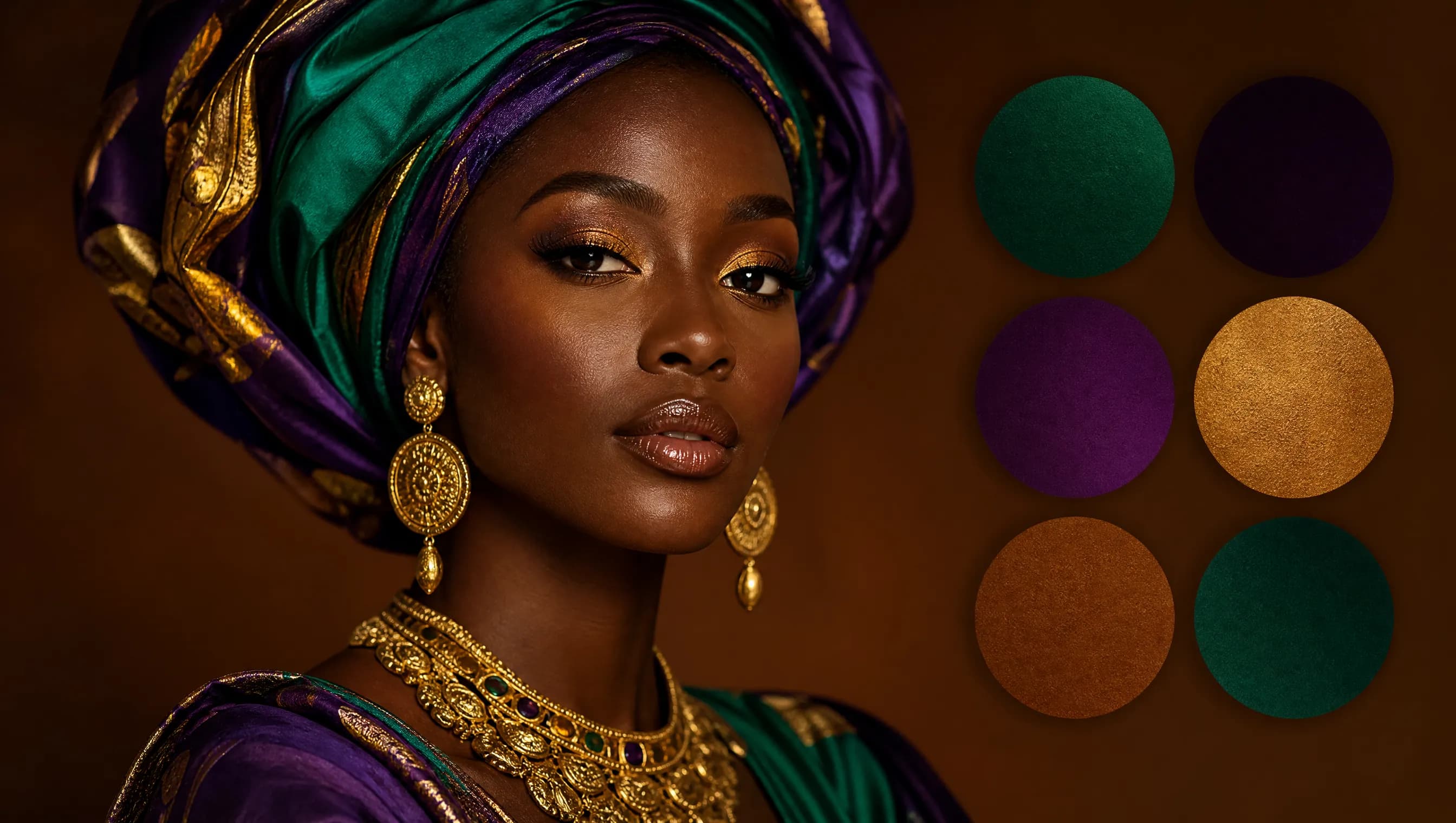
Does Color Analysis Work for Dark Skin?
Absolutely. Color analysis works for every skin tone, from the fairest to the deepest. However, much of the color analysis content online was historically designed around lighter skin tones, which can make it harder for people with dark skin to find relevant guidance.
The fundamental principles — undertone, depth, contrast, and chroma — apply universally. What changes is how these dimensions present in darker skin and which seasonal categories are most common.
Understanding Undertone in Dark Skin
Undertone is the single most important factor in color analysis, and it exists independently of how light or dark your skin is.
Warm Undertone in Dark Skin
- Golden, amber, or red-brown cast
- Veins on the wrist appear olive or green
- Gold jewelry creates a warm glow
- Skin may have a "sunny" quality even in winter
- Common heritage: West Africa, South India, Caribbean
Cool Undertone in Dark Skin
- Blue, red, or plum cast
- Veins appear deep blue or purple
- Silver jewelry flatters more
- Skin may have an "ash" quality
- Common heritage: Central/East Africa, dark-skinned South Asian
Neutral Undertone in Dark Skin
- Even mix without strong warm or cool dominance
- Both gold and silver work equally well
- Veins appear teal or blue-green
- Can wear both warm and cool colors without clashing
See your personal color palette now
Upload a photo — get your AI beauty report in 60 seconds.
Most Common Seasons for Dark Skin
While dark-skinned individuals can be any season, certain types are more common:
Deep Winter
The most common type for cool-toned dark skin with high contrast.
Characteristics:
- Cool or neutral-cool undertone
- Very dark hair (near-black)
- Dark eyes with a clear, bright quality
- High contrast between whites of eyes, teeth, and skin
Best colors: True red, royal blue, emerald green, black, white, magenta, ice blue, deep purple
Deep Autumn
Common for warm-toned dark skin with rich, earthy coloring.
Characteristics:
- Warm undertone with golden or red-brown cast
- Dark brown to black hair (may have warm highlights naturally)
- Dark brown eyes with golden flecks
- Rich, "cozy" quality to overall coloring
Best colors: Rust, olive, dark teal, mustard, chocolate, burnt sienna, bronze, warm cream
Bright Winter
For cool-toned dark skin with extremely high contrast and vivid coloring.
Characteristics:
- Cool undertone
- Jet-black hair
- Very bright, clear eyes
- Dramatic contrast between features
Best colors: Hot pink, cobalt blue, true green, bright white, orange-red, violet, electric blue
Bright Spring
Less common but occurs in warm-toned dark skin with clear, vivid coloring.
Characteristics:
- Warm undertone with a clear, "lit from within" quality
- Dark hair with warm sheen
- Bright, warm eyes
- Fresh and vibrant overall appearance
Best colors: Coral, turquoise, bright green, warm red, golden yellow, tangerine
Colors That Work on Almost All Dark Skin Tones
Regardless of your specific season, these colors tend to be universally flattering on melanin-rich skin:
- White — Creates beautiful contrast
- Rich jewel tones — Emerald, sapphire, ruby, amethyst
- Bold primaries — True red, cobalt blue, bright yellow
- Warm metallics — Gold, bronze, copper (especially for warm undertones)
- Cool metallics — Silver, platinum (especially for cool undertones)
Colors That Often Don't Work
- Pastels (washed-out lavender, baby pink, pale yellow) — Can look ashy against deep skin
- Beige/Tan (unless it matches your exact skin tone) — Can look flat
- Olive drab (for cool undertones) — Creates a sallow look
- Muted dusty tones (for high-contrast individuals) — Dampen natural vibrancy
Getting Accurate AI Color Analysis with Dark Skin
AI color analysis tools have historically struggled with darker skin tones due to training data bias. Here's how to get the best results:
Photo Tips for Dark Skin
-
Lighting is critical — Use natural daylight from a window. Avoid direct sunlight which can create hot spots and wash out undertone signals.
-
Avoid flash — Flash photography can make dark skin appear flat and eliminate the subtle undertone differences AI needs to detect.
-
Neutral background — A white or light gray background helps the AI properly calibrate skin tone readings.
-
Multiple angles — If possible, try photos from slightly different angles. This gives the AI more data points for undertone analysis.
-
Check your result — If the AI gives you a "Light" season (Light Spring or Light Summer), it may be misreading your photos. Deep-skinned individuals are almost always Deep, Warm, Bright, or Cool seasons.
What to Do If Results Feel Wrong
If your AI color analysis result doesn't feel right:
- Retake your photo in better lighting
- Compare the recommended palette against colors you know look great on you
- Try the suggested "avoid" colors — if they actually look good, you may have been mistyped
- Consider whether you might be a neighboring season (e.g., Deep Winter vs. Cool Winter)
Building Your Wardrobe
Start with These Steps
-
Identify your best neutral — For Deep Winter, it's black and navy. For Deep Autumn, it's chocolate brown and olive.
-
Find your "wow" colors — These are the 3-4 shades that consistently get you compliments. They're usually your season's most characteristic hues.
-
Phase out problem colors — Don't throw everything away; just stop buying new items in colors that don't flatter.
-
Invest in face-framing pieces — Tops, scarves, jewelry, and earrings have the most impact because they're closest to your face.
Find Your Colors Today
Ready to discover your exact seasonal color type? Our AI has been trained on diverse skin tones and provides accurate analysis for all complexions.
60 seconds, free, no signup. Get your personalized palette and styling guide.
Related Articles
- Color Analysis: The Complete Guide — Everything you need to know about finding your best colors
- Color Analysis for Dark Skin – Full Guide — Detailed guide for dark skin tones
Want to try AI color analysis yourself?
Upload one photo and get a magazine-level beauty report in 60 seconds.
Start Free Analysis